-
Cognitive Reserve: How Seeking Novelty Keeps Your Brain Decades Younger
At DAYLONGLIFE, we often focus on physical movement and diet for long-term health, but keeping an Ageless Mind requires its own dedicated training ground.
Many people assume that doing the same daily crossword puzzle or playing a familiar memory game is enough to protect cognitive health. However, modern neuroscience reveals a surprising truth: once your brain becomes efficient at a task, it operates on autopilot—demanding very little metabolic energy or synaptic remodeling.
To build true cognitive reserve—the brain’s ability to improvise, find alternate neural pathways, and resist age-related decline—you must intentionally expose your mind to novelty, complexity, and active skill acquisition.
The Neuroscience of Cognitive Reserve & Neurogenesis
Your brain contains roughly 86 billion neurons connected by trillions of synapses. Throughout your entire lifespan, your brain retains the capacity for neuroplasticity—the ability to form new neural connections and physically reorganize itself in response to learning:
- Synaptogenesis Through Challenge: When you tackle a completely unfamiliar skill (like learning a new language, picking up an instrument, or navigating a new city without GPS), your brain is forced to sprout new dendrites and forge fresh synaptic connections.
- Building the Neural Buffer: Cognitive reserve acts like a mental savings account. Individuals with high cognitive reserve can experience physical changes in brain structure with age without exhibiting memory loss or functional decline, because their brains seamlessly reroute information around damaged pathways.
- Dopamine & Motivation Loops: Novel experiences trigger the release of dopamine from the substantia nigra and ventral tegmental area. Dopamine not only enhances mood and motivation, but also acts as a biological bookmark—signaling to the hippocampus that a new memory or skill is valuable enough to consolidate.
3 Science-Backed Ways to Challenge Your Brain Daily
To build cognitive reserve effectively, a task must meet two criteria: it must be novel (something you haven’t mastered) and mentally demanding (requiring focused concentration).

1. Learn a “High-Friction” Skill
- The Habit: Dedicate 15 to 20 minutes a day to a skill that combines cognitive processing with motor coordination or creative problem-solving.
- Examples: Playing the acoustic guitar or piano, learning conversational conversational phrases in a new language, taking up pottery, or learning chess opening strategies.
- Why it works: Complex skills engage multiple brain networks simultaneously—combining auditory, visual, motor, and executive functioning centers into a coordinated neural orchestra.
2. Practice Strategic “Micro-Unfamiliarity”
- The Habit: Break your daily automatic habits by introducing deliberate, small challenges to your routine.
- Examples: Brushing your teeth or eating with your non-dominant hand, taking a completely new walking route home without checking a map app, or learning to read music notation.
- Why it works: Forcing your brain out of automatic execution activates the prefrontal cortex, heightening alertness and stimulating spatial awareness.
3. Switch from Passive Consumption to Active Recall
- The Habit: After reading a chapter of a book, listening to a podcast, or watching a documentary, spend 2 minutes summarizing the key points out loud or writing them down from memory.
- Examples: Keeping a daily “learning journal” where you record three new facts or concepts you encountered during the day.
- Why it works: Passive consumption (scrolling videos or listening casually) builds very little cognitive reserve. Active retrieval forces your brain to reconstruct memory traces, strengthening neural wiring.
A Mind That Never Stops Growing
Brain aging is not an inevitable downhill slope—it is a malleable process heavily influenced by how you use your mind every day. By stepping out of comfortable mental routines and embracing the satisfying friction of learning something new, you ensure that your mind remains sharp, creative, and resilient for decades to come.
-
Stopping Illness Before It Starts: The Ayurvedic Science of Disease Prevention
At DAYLONGLIFE, we view true health not as the absence of illness, but as a state of active, vibrant immunity and systemic balance.
In modern healthcare, we often wait for symptoms to manifest before taking action—reaching for medications only after a virus takes hold or chronic inflammation settles in. In traditional Ayurvedic medicine, prevention is the primary objective of healthcare. The ancient texts state: “Swasthyasya Swasthya Rakshanam”—to protect and preserve the health of the healthy.
Long before a disease expresses itself as a medical diagnosis, it undergoes subtle biological stages of imbalance. By understanding these stages and nourishing your baseline immunity (Ojas), you can stop physical breakdown long before it begins.
The Core Foundations of Ayurvedic Prevention
Ayurvedic preventive care centers around three interconnected pillars that keep your biological systems resilient against environmental pathogens and metabolic stress:
1. Protecting Your Metabolic Fire (Agni)
Your digestive capacity (Agni) is your first line of defense. Strong Agni breaks down food completely into essential nutrients that nourish blood, tissue, and immune cells. Weak or erratic Agni creates undigested metabolic byproduct (Ama), which ferments in the digestive tract and accumulates in vulnerable tissues, creating the ideal conditions for chronic disease.
2. Building Vital Immunity (Ojas)
In Ayurveda, Ojas is the ultimate refined essence of digestion—the biological equivalent of cellular vitality, immune resilience, and stress endurance. When Ojas is strong, pathogens cannot easily take root, energy remains stable, and the mind stays calm under pressure. High Ojas manifests physically as glowing skin, clear eyes, robust digestion, and strong stamina.
3. Aligning with Daily Cycles (Dinacharya)
Your body thrives on rhythmic predictability. Practicing Dinacharya (a structured daily routine) synchronizes your internal biological clock with the natural forces of daylight, temperature, and digestive cycles—optimizing hormone regulation and lowering baseline cortisol.
The 6 Stages of Disease (Shat Kriya Kala)
Ayurveda outlines a sophisticated 6-stage model of disease progression. Disease does not appear overnight; it develops in progressive phases:
- Accumulation (Sanchaya): Doshas (Vata, Pitta, or Kapha) begin to accumulate in their natural digestive sites due to diet, stress, or seasonal shifts.
- Aggravation (Prakopa): Imbalances intensify within the digestive tract, causing early warning signs like mild bloating, heart burn, or heaviness.
- Dissemination (Prasara): The excess imbalance overflows from the gut into the circulatory and lymphatic channels (srotas).
- Relocation (Sthanasamsraya): The imbalanced energy settles into weak points in the body (a vulnerable joint, lung tissue, or organ system).
- Manifestation (Vyakti): Clear physical clinical symptoms emerge (e.g., joint pain, chronic cough, skin rashes).
- Specialization/Chronicity (Bheda): The condition becomes a fully established chronic disease with distinct complications.
The Longevity Advantage: Modern medicine usually detects illness at Stage 5 or 6. Ayurvedic preventive habits are designed to catch and clear imbalances at Stages 1, 2, and 3—nipping health challenges in the bud.
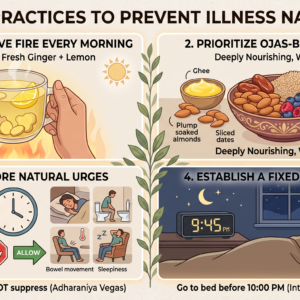
4 Daily Practices to Prevent Illness Naturally
Integrating these four foundational micro-habits into your routine acts as a daily shield for your immune and digestive systems:
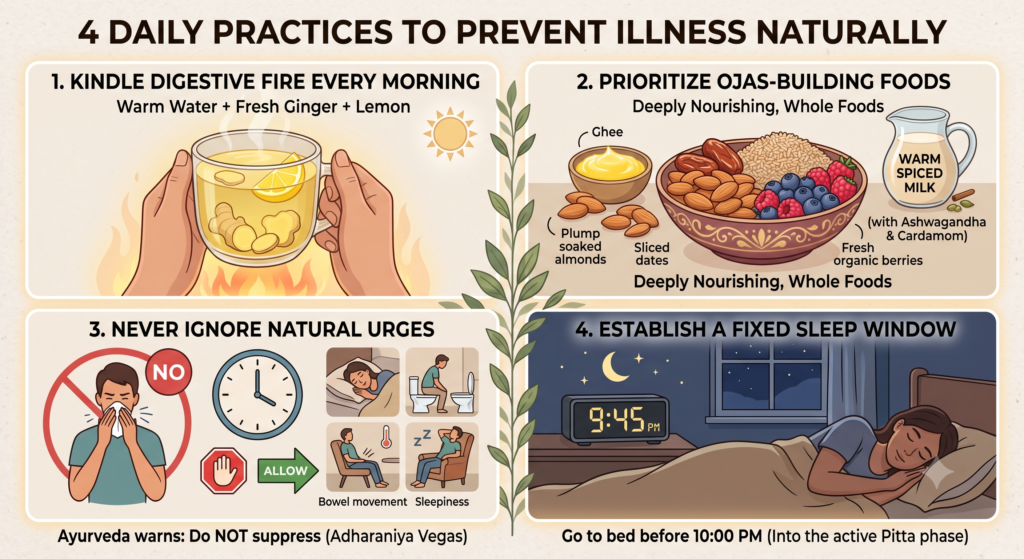
1.Kindle Digestive Fire Every Morning:
Start your day with a cup of warm water infused with fresh ginger slices and a splash of lemon juice. This wakes up sluggish peristalsis, clears overnight metabolic waste, and prepares your stomach for efficient digestion.
2.Prioritize Ojas-Building Foods:
Incorporate deeply nourishing, whole foods into your diet: warm ghee, soaked almonds, dates, cooked whole grains, fresh organic berries, and warm spiced milk (or hemp milk) infused with ashwagandha or cardamom.
3.Never Ignore Natural Urges:
Ayurveda strictly warns against suppressing natural bodily urges (Adharaniya Vegas)—such as sneezing, yawning, urination, bowel movements, or sleepiness. Suppressing these natural release valves creates physical pressure and internal stress in the nervous system.
4.Establish a Fixed Sleep Window:
Go to bed before 10:00 PM (the transition into the active Pitta phase of night). Sleeping during this window allows your liver, brain, and immune system to execute deep cellular repair and detoxification.
Cultivating Your Immune Reserve
Preventive health isn’t about constant worry or overly complex protocols—it is about respecting your body’s natural intelligence. By honoring your digestion, maintaining a steady daily rhythm, and listening to subtle early signals, you create an internal environment where vitality thrives naturally.
How do you support your immune system when you notice early signs of fatigue or stress? Have you tried building a daily wellness routine around digestive health? Share your thoughts in the comments below!
-
Protecting Your Vision: Micro-Habits for Eye Health in a Screen-Filled World
At DAYLONGLIFE, we often focus on heart, brain, and gut health, but your eyes are among the most energy-intensive, delicate organs in your body.
In our digital age, the average person spends over 6 to 8 hours a day staring at backlit screens. This constant near-focus demands immense work from delicate ciliary muscles, while blue light radiation and reduced blink rates cause eye strain, dryness, head tension, and accelerated macular fatigue.
Protecting your vision for the long haul doesn’t require drastic lifestyle overhauls—it comes down to simple, everyday habits that relax ocular muscles, lubricate tissues, and feed your retina essential nutrients.
The Biological Toll of Digital Eye Strain
When you look at a screen or smartphone, three distinct biological stress factors occur simultaneously:
- The “Blink Amnesia” Effect: Normally, we blink about 15 to 20 times per minute, sweeping a fresh layer of tear film over the cornea. When staring at screens, our blink rate drops by up to 50%, leading to rapid tear evaporation, chronic dry eye, and microscopic surface irritation.
- Ciliary Muscle Spasm: The tiny muscles inside your eye must contract continuously to keep close objects in sharp focus. Holding this contraction for hours without a break creates physical fatigue that manifests as tension behind the eyes and brow tightness.
- Retinal Oxidative Stress: The macula—the central area of your retina responsible for sharp, detailed vision—is constantly exposed to high-energy visible (HEV) blue light, which increases free radical damage over time if not counteracted by dietary antioxidants.
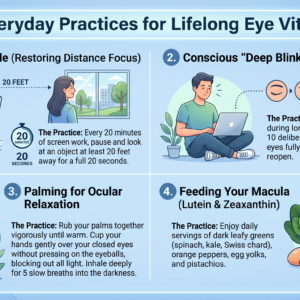
4 Everyday Practices for Lifelong Eye Vitality
Integrating these evidence-backed micro-habits into your work routine will instantly reduce fatigue and protect long-term visual acuity.
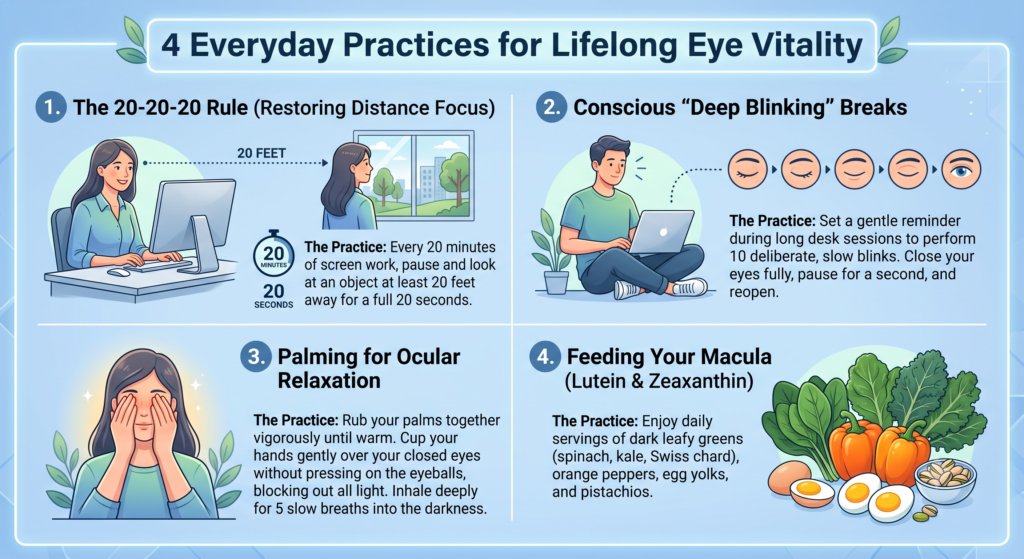
1. The 20-20-20 Rule (Restoring Distance Focus)
- The Practice: Every 20 minutes of screen work, pause and look at an object at least 20 feet away for a full 20 seconds.
- Why it works: Looking into the distance completely relaxes the ciliary muscle inside your eye, breaking the cycle of constant close-focus strain and resetting ocular blood flow.
2. Conscious “Deep Blinking” Breaks
- The Practice: Set a gentle reminder during long desk sessions to perform 10 deliberate, slow blinks. Close your eyes fully, pause for a second, and reopen.
- Why it works: Complete blinks squeeze the meibomian glands along your eyelids, releasing crucial lipid oils that seal in moisture and prevent tears from evaporating rapidly.
3. Palming for Ocular Relaxation
- The Practice: Rub your palms together vigorously until warm. Cup your hands gently over your closed eyes without pressing on the eyeballs, blocking out all light. Inhale deeply for 5 slow breaths into the darkness.
- Why it works: The soothing warmth releases muscle tension around the eye sockets, while complete darkness calms the optic nerve and nervous system.
4. Feeding Your Macula (Lutein & Zeaxanthin)
- The Practice: Enjoy daily servings of dark leafy greens (spinach, kale, Swiss chard), orange peppers, egg yolks, and pistachios.
- Why it works: These foods are rich in lutein and zeaxanthin, fat-soluble carotenoids that act as internal sunglasses. They accumulate directly in the macula, filtering blue light and neutralizing free radicals.
A Quick Daily Ritual for Fresh Eyes
Next time you finish a long stretch of work, don’t immediately reach for your phone to scroll during your break. Step to a window, gaze out at the distant horizon, take three deep breaths, and let your eyes rest in natural light. Your visual health will thank you for years to come.
-
Food of the Gods: Dark Cacao for Brain Flow, Heart Health, and Longevity
At DAYLONGLIFE, we believe that living a long, vibrant life should be deeply nourishing and delicious. Indulgence and longevity are not mutually exclusive—especially when you harness the pure power of dark cacao in The Longevity Kitchen.
Known botanically as Theobroma cacao (translating literally to “Food of the Gods”), unrefined cacao is one of the most chemically complex and antioxidant-dense plant foods on Earth. When prepared without refined sugars or heavy dairy, dark cacao turns from a sweet treat into a potent metabolic and cognitive shield.
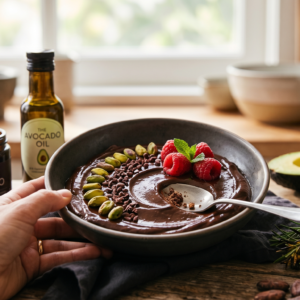
Today, we are sharing a nutrient-rich, velvety breakfast or afternoon bowl: The Silk Cacao & Avocado Longevity Mousse Bowl.
The Science of Dark Cacao for Cellular Longevity
When selecting chocolate for health benefits, quality matters: opt for raw cacao powder or dark chocolate with at least 85% cocoa content.
Here is how dark cacao supports your biological lifespan:
- Flavanols & Cerebrovascular Blood Flow: Cacao is exceptionally high in epicatechin, a monomeric flavanol that stimulates nitric oxide production in endothelial cells. This relaxes arterial walls, improves blood vessel flexibility, lowers blood pressure, and significantly increases blood flow to the brain’s memory centers.
- Mitochondrial Protection: The high polyphenol density in pure cacao neutralizes free radicals in high-energy organs (like the heart and brain), safeguarding cellular mitochondria from oxidative degradation and premature aging.
- Mood & Neurotransmitter Boost: Cacao contains natural theobromine (a gentle, non-jittery stimulant), anandamide (often called the “bliss molecule”), and precursor compounds that support serotonin and dopamine synthesis for calm, sustained focus.
- Rich Source of Essential Minerals: Just two tablespoons of raw cacao provide a substantial dose of magnesium (for muscle relaxation and nervous system balance), iron, zinc, and copper.
Simple Recipe: Silk Cacao & Avocado Longevity Mousse Bowl
This decadent, spoonable smoothie bowl combines raw cacao with healthy monounsaturated fats from avocado and anti-inflammatory cinnamon. It takes under 5 minutes to blend, delivering a low-glycemic, deeply satisfying treat that won’t cause energy crashes.
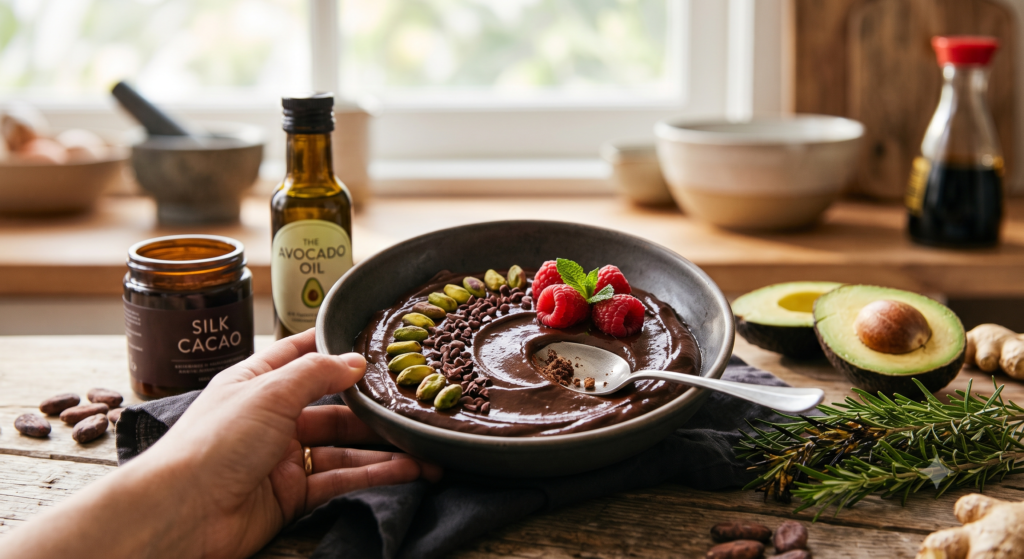
🌿 Ingredients (Serves 2)
- 3 tbsp Organic raw cacao powder (or unsweetened dark cocoa powder)
- 1/2 Ripe avocado (provides a rich, velvety texture and healthy fats)
- 1/2 cup Unsweetened almond milk, coconut milk, or hemp milk
- 1 scoop Unflavored or vanilla plant-based collagen or protein powder (optional)
- 1 tsp Ceylon cinnamon (supports blood sugar control)
- 1 tbsp Pure maple syrup, 2 pitted Medjool dates, or a few drops of liquid stevia (to taste)
- 1 pinch Fine sea salt or pink Himalayan salt (enhances chocolate flavor)
- Toppings: Fresh wild blueberries, toasted coconut flakes, hemp seeds, or raw cacao nibs
🥣 Step-by-Step Instructions
1.Combine the Ingredients:
Add the raw cacao powder, ripe avocado, plant milk, Ceylon cinnamon, sweetener of choice, sea salt, and optional protein powder into a high-speed blender.
2.Blend Until Silky:
Blend on high speed for 45 to 60 seconds, stopping to scrape down the sides if necessary, until the mixture transforms into a thick, glossy, pudding-like consistency.
3.Assemble & Serve:
Spoon the cacao mousse into two chilled ceramic bowls. Top with fresh berries (anthocyanin synergy!), hemp seeds, and a sprinkle of raw cacao nibs for texture. Serve immediately with a spoon.
Longevity Tip: Cacao vs. Cocoa—What’s the Difference?
- Raw Cacao: Made by cold-pressing unroasted cacao beans. It retains the highest concentration of heat-sensitive enzymes, living antioxidants, and minerals.
- Dutch-Processed Cocoa: Treated with an alkalizing agent to reduce acidity. While smoother in flavor, Dutch processing can reduce beneficial flavanol content by up to 60–90%. Always look for raw cacao or non-alkalized cocoa powder on product labels!
-
Golden Hour Elixir: The Cellular Longevity & Hydration Benefits of Grapefruit
At DAYLONGLIFE, we treat every beverage served in The Longevity Kitchen as an opportunity to deliver biological nourishment. While ultra-processed sodas and sugary juices cause rapid blood sugar spikes and systemic inflammation, a carefully crafted botanical elixir can stimulate liver detoxification pathways, enhance vascular flexibility, and revitalize cellular health.
Today, we are showcasing the power of fresh ruby red grapefruit with a crisp, botanical mocktail: The Ruby Citrus & Rosemary Longevity Elixir.
The Science of Grapefruit for Longevity

Bright, aromatic, and pleasantly tart, grapefruit is packed with bioactive plant compounds that support metabolic health and cardiovascular protection:
- Spermidine & Autophagy: Grapefruit contains spermidine, a naturally occurring polyamine compound researched in longevity science for its ability to trigger autophagy—the body’s internal cellular cleanup process that recycles damaged organelles and protein waste.
- Naringenin & Metabolic Balance: The characteristic bitter flavor of grapefruit comes from naringenin, a powerful citrus flavonoid. Naringenin enhances insulin sensitivity, encourages fatty acid oxidation in the liver, and helps maintain balanced blood glucose levels.
- Vascular Health (Vitamin C & Lycopene): Ruby red varieties derive their rich color from lycopene, an antioxidant that protects arterial walls from oxidative damage, paired with high concentrations of Vitamin C for collagen synthesis and endothelial health.
Simple Recipe: The Ruby Citrus & Rosemary Longevity Elixir
This refreshing, low-glycemic drink combines cold-pressed grapefruit juice with anti-inflammatory rosemary, raw apple cider vinegar, and sparkling water for a clean afternoon pick-me-up.
🌿 Ingredients (Serves 2)
- 1 cup Freshly squeezed ruby red grapefruit juice (about 1 large grapefruit)
- 1 tbsp Organic, unfiltered apple cider vinegar (with “the mother”)
- 1 sprig Fresh organic rosemary (plus extra for garnish)
- 1/2 tsp Freshly grated ginger juice or fine ginger paste
- 1 cup Chilled sparkling water or mineral water
- 1 tsp Raw honey or pure liquid stevia (optional, to balance tartness)
- Ice cubes and fresh grapefruit slices for serving
🥣 Step-by-Step Instructions
- Muddle the Aromatics: In a glass cocktail shaker or liquid measuring pitcher, add the fresh rosemary sprig, raw honey (if using), and grated ginger. Gently muddle with a wooden spoon for 15 to 20 seconds to release the aromatic essential oils from the rosemary.
- Combine the Bases: Pour in the fresh ruby red grapefruit juice and apple cider vinegar. Stir briskly so the honey dissolves into the citrus base.
- Strain & Chill: Fill two tall glasses with fresh ice cubes. Strain the grapefruit mixture evenly into both glasses.
- Top & Garnish: Top each glass with chilled sparkling mineral water. Stir gently with a long spoon to combine, then garnish with a fresh sprig of rosemary and a thin slice of ruby red grapefruit.
⚠️ Important Longevity Note: Grapefruit & Medications
Grapefruit contains natural compounds called furanocoumarins, which temporarily inhibit the CYP3A4 enzyme in the small intestine. This enzyme breaks down many common prescription medications (including certain statins, blood pressure drugs, and antihistamines), causing higher absorption levels in the bloodstream.
Safety Check: If you take daily prescription medications, always check with your healthcare provider or pharmacist before introducing fresh grapefruit or grapefruit juice into your regular diet!
-
Unburdening the Body: The Ayurvedic Science of Gentle Daily Detoxification
At DAYLONGLIFE, we view detoxing not as a harsh, restrictive punishment after periods of overindulgence, but as a gentle, natural unburdening of the body.
In mainstream wellness, “detoxes” often mean extreme juice cleanses, fasting, or aggressive laxative teas that shock the system and weaken metabolic fire. In traditional Ayurvedic medicine, true detoxification (Panchakarma or daily Ama-Pachana) is designed to do the exact opposite: gently support your liver and kidneys, restore digestive capacity (Agni), and clear accumulated cellular toxins (Ama) without causing exhaustion.
Here is how to approach detoxification through an Ayurvedic lens to leave your body feeling light, clear, and energized.
The Ayurvedic Perspective: Clearing Ama While Protecting Agni
In Ayurveda, toxins are not just external chemicals—they are also the result of incomplete digestion. When your digestive fire (Agni) is compromised by stress, poor food combinations, late-night eating, or overprocessed foods, undigested material ferments in the gut to create Ama.
Ama is sticky, heavy, and cold. It clogs subtle channels (srotas), leads to brain fog, dulls skin, creates morning joint stiffness, and causes a thick white coating on the tongue.
The Ayurvedic goal of detoxing is simple:
- Kindle Agni so your body can burn off existing Ama.
- Nourish tissues (Dhatus) so you remain strong and grounded throughout the process.
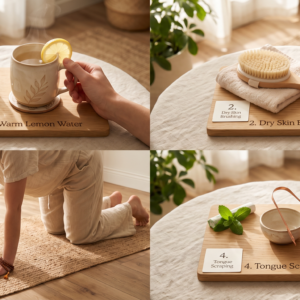
4 Gentle Daily Practices for Ayurvedic Detoxification
You don’t need a drastic 7-day fasting protocol to clear toxins. Incorporating these simple, evidence-backed habits into your daily routine supports your body’s built-in detoxification pathways every single day:
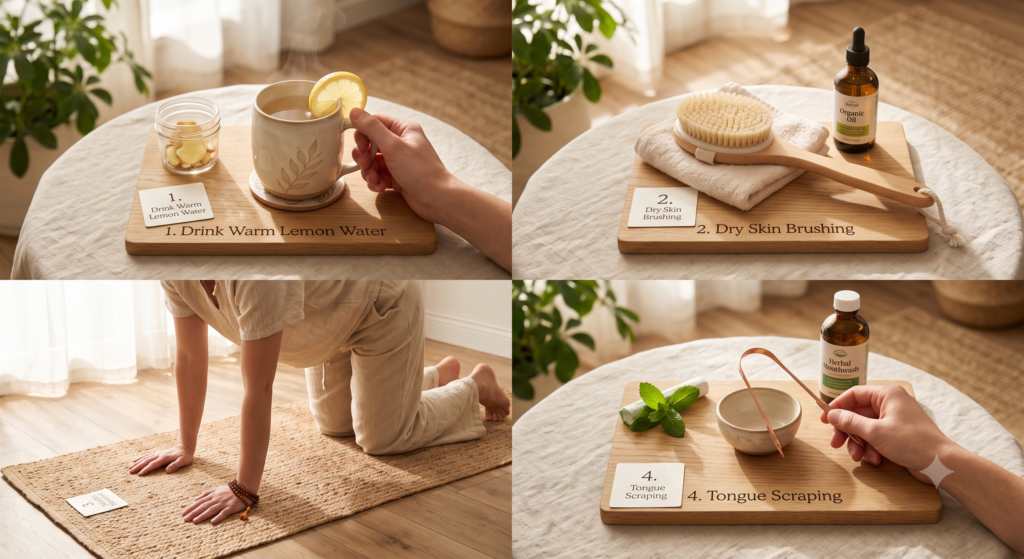
1️⃣ Drink Warm Lemon & Ginger Water 🍋
Start your day with a cup of warm water infused with fresh lemon or ginger. This helps awaken your digestive fire (Agni), hydrate your system, and gently flush out accumulated toxins (Ama).
2️⃣ Dry Skin Brushing (Garshana) 🪮
Using a natural bristle brush, gently stroke your skin toward your heart before showering. This stimulates lymphatic drainage, boosts circulation, and exfoliates dead skin cells.
3️⃣ Mindful Movement or Gentle Yoga 🧘♀️
Spend 10–15 minutes engaging in gentle stretches, yoga postures, or conscious breathing. Physical movement helps release tension, improve circulation, and keep energy flowing freely throughout your body.
4️⃣ Tongue Scraping (Jivha Prakshalana) ✨
Using a copper or stainless steel tongue scraper, gently sweep away the coating that accumulates on your tongue overnight. This simple step supports oral hygiene, improves taste perception, and helps remove toxins before they are reabsorbed.
3 Signs Your Detox is Working (Without Shocking Your Body)
When practicing a gentle Ayurvedic detox, you should never feel shaky, freezing cold, or severely depleted. Instead, you will notice:
- A clean, light feeling in your stomach after eating.
- Increased mental clarity and a reduction in brain fog.
- Clearer skin and more consistent, natural energy throughout the day.
Reclaiming Lightness and Flow
Detoxification isn’t about extreme restriction—it is about restoring your body’s innate wisdom. By listening to your digestive cues, choosing warm, freshly prepared foods, and supporting your daily elimination channels, you allow your vitality to shine through effortlessly.
-
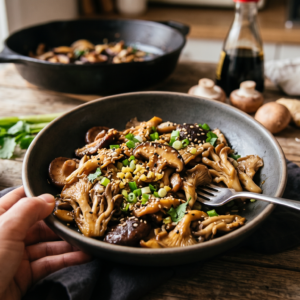
The Fungal Shield: Warm Sesame-Ginger Shiitake & Oyster Mushroom Sauté
At DAYLONGLIFE, we view medicinal mushrooms as nature’s ultimate bridge between The Longevity Kitchen and cellular immunity.
Long celebrated in Eastern medicine and now backed by modern nutritional science, culinary mushrooms contain unique bioactive compounds that support gut health, lower systemic inflammation, and protect cognitive function.
Today, we are showcasing mushrooms with a simple, intensely flavorful, 10-minute recipe: Warm Sesame-Ginger Shiitake & Oyster Mushroom Sauté.
The Longevity & Immune Benefits of Culinary Mushrooms
Including a variety of cultivated mushrooms—like Shiitake, Oyster, Maitake, and Cremini—in your weekly meals provides powerful longevity support:
- Immune Modulation (Beta-Glucans): Mushrooms are rich in beta-glucans, complex polysaccharides that train and prime immune cells (like macrophages and natural killer cells) without overstimulating the system.
- Ergothioneine (The Longevity Antioxidant): Mushrooms are the single highest dietary source of ergothioneine, a unique amino acid antioxidant that accumulates in cellular areas under high oxidative stress (such as the liver, eyes, and brain) to shield DNA and mitochondria.
- Gut Microbiome Support: Mushroom cell walls contain chitin and prebiotic fibers that nourish beneficial gut bacteria, promoting short-chain fatty acid (SCFA) production for lower gut inflammation.
- Cognitive Defense: Compounds in mushrooms stimulate nerve growth factor (NGF) pathways, helping preserve synaptic connections and keep your focus sharp.
Culinary Secret: Dry-Searing for Maximum Flavor & Texture
Many people end up with soggy or rubbery mushrooms because they crowd the pan with cold oil too early.
To achieve a rich, caramelized, umbrella-like sear:
- Dry-sear first: Cook mushrooms in a hot, dry pan with a pinch of sea salt for 2–3 minutes to release their natural moisture.
- Add healthy fats after: Once the water evaporates and the edges turn golden, add your oil (like extra virgin olive oil or toasted sesame oil) and aromatics. This locks in flavor and creates an incredible texture.
Simple Recipe: Warm Sesame-Ginger Shiitake & Oyster Mushroom Sauté
This quick dish pairs earthy, aromatic mushrooms with anti-inflammatory ginger and garlic for a deeply satisfying side dish or grain-bowl topping.
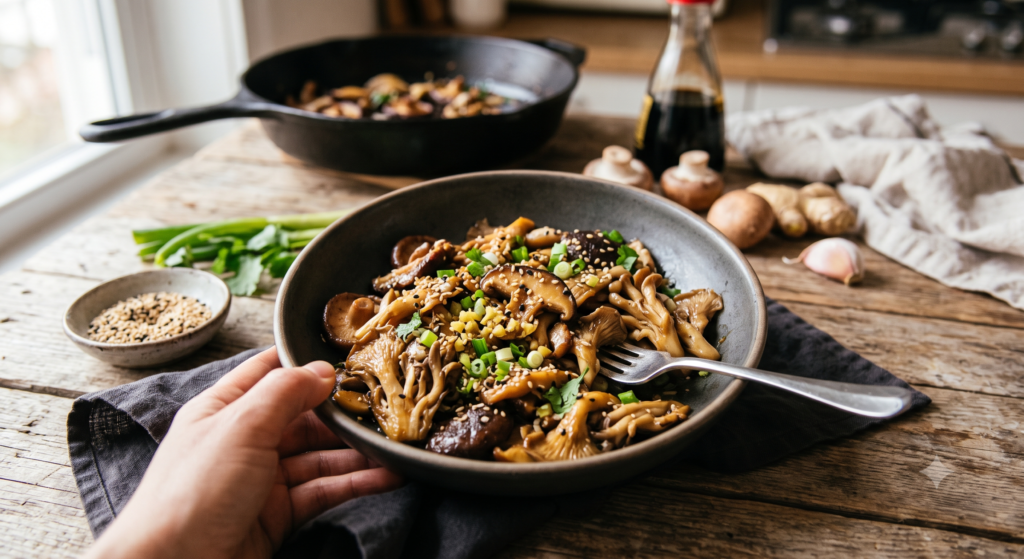
🌿 Ingredients (Serves 2–3)
- 8 oz (225g) Mixed fresh Shiitake and Oyster mushrooms (wiped clean, stems trimmed, sliced)
- 1 tbsp High-quality toasted sesame oil (or extra virgin olive oil)
- 1 tbsp Fresh ginger, finely grated
- 2 cloves Garlic, thinly sliced
- 1 tbsp Tamari (gluten-free soy sauce) or coconut aminos
- 1 tbsp Fresh lemon juice or rice vinegar
- 2 Green onions (scallions), finely chopped
- 1 tbsp Toasted white or black sesame seeds
- Sea salt and freshly cracked black pepper to taste
🥣 Step-by-Step Instructions
- Dry-Sear the Mushrooms: Heat a wide stainless steel or cast-iron skillet over medium-high heat. Add the sliced mushrooms in a single layer without adding any oil. Let them sear undisturbed for 2 to 3 minutes until the bottoms turn golden brown.
- Add Healthy Fats & Aromatics: Turn the heat down to medium. Drizzle in the toasted sesame oil, then add the grated ginger and sliced garlic. Toss gently for 1 to 2 minutes until fragrant.
- Glaze & Deglaze: Pour in the tamari (or coconut aminos) and fresh lemon juice. Stir rapidly for 30 to 45 seconds so the mushrooms absorb the savory glaze and the pan clears.
- Garnish & Serve: Remove from heat immediately. Fold in the green onions, sprinkle with toasted sesame seeds, and season with cracked black pepper. Serve warm over steamed quinoa, brown rice, or as a savory side.
Longevity Tip: Expose Your Mushrooms to Sunlight!
Here is a fascinating longevity hack: mushrooms contain ergosterol, a precursor to Vitamin D. If you place fresh mushrooms stem-side up under direct sunlight for 15 to 30 minutes before cooking, their Vitamin D2 content increases dramatically!
-
The Crown Ritual: How Daily Head Massage Eases Stress, Boosts Focus, and Promotes Vitality
At DAYLONGLIFE, we believe that some of the most transformative self-care practices require no fancy equipment—just a few quiet minutes and your own hands.
In our fast-paced, screen-centric world, tension constantly accumulates in our neck, jaw, and scalp muscles. This subtle tightness restricts blood flow to the head, contributes to tension headaches, and keeps our nervous system stuck in a high-alert state.
Practicing a short, intentional daily head massage (Shiro Abhyanga in Ayurvedic tradition) is a powerful way to melt away mental fatigue, improve scalp circulation, and cultivate deep daily calm.

The Science & Longevity Benefits of Scalp Massage
Your scalp is home to a dense network of blood vessels, sensory nerves, and cranial fascia. Stimulating these tissues yields profound physical and mental benefits:
- Parasympathetic Activation: Gentle, rhythmic pressure on sensory nerves across the scalp triggers the release of endorphins and serotonin while reducing cortisol (the primary stress hormone), helping shift your body into a “rest and digest” state.
- Enhanced Cranial Blood Flow: Massaging the scalp dilates micro-capillaries, delivering fresh oxygen and vital nutrients straight to hair follicles and surrounding tissues.
- Relieving Tension & Screen Fatigue: The galea aponeurotica (the sheet of fascia covering the top of the skull) tightens when we squint at screens or clench our jaws. Massaging this fascia releases stored physical stress, easing eye strain and upper-body stiffness.
A Simple 3-Minute Daily Scalp Massage Ritual
You can practice this quick massage anywhere—at your desk during a working break, in the shower, or right before bed.
Step 1: The Crown Awakening (1 Minute)
- Spread your fingers wide and place your fingertips firmly on your scalp (use the pads of your fingers, not your nails).
- Starting from your hairline above the forehead, make small, firm circular motions, moving slowly backward toward the crown of your head and down to the base of your skull.
- Focus on moving the scalp tissue over the bone, rather than just rubbing your hair.
Step 2: The Temple & Jaw Release (1 Minute)
- Place the palms of your hands or the flats of your fingers against your temples.
- Apply gentle pressure in a circular motion, inhaling deeply for 4 seconds and exhaling slowly for 6 seconds.
- Move down to the muscle right in front of your ears (the masseter muscle) to release tension stored from clenching your jaw during focus.
Step 3: Base of the Skull & Neck Kneading (1 Minute)
- Interlock your fingers behind your head and use your thumbs to apply pressure to the soft hollows at the base of your skull (the occipital ridge).
- Press upward gently while making slow circles, tilting your head back slightly to open up your chest and neck.
- Finish by gently running your fingers down the back of your neck to encourage lymphatic drainage.
Optional: Elevating Your Ritual with Warm Oils
For an extra restorative evening ritual, try applying a few drops of warm, organic oil—such as warm sesame oil for grounding (great for Vata types), cooling coconut oil (ideal for Pitta types), or light jojoba oil infused with a drop of lavender essential oil. Leave the oil in for 15–20 minutes before showering to deeply nourish both your scalp and hair.
A Moment of Pause in a Busy Day
Next time you feel afternoon brain fog setting in or notice tightness creeping into your forehead, don’t rush for another cup of coffee. Close your eyes, take three deep breaths, and give yourself the gift of a brief scalp massage. Your mind and body will thank you.
-
The Ageless Mind: How Daily Walking Keeps Your Brain Plastic, Focused, and Resilient
At DAYLONGLIFE, we often look for complex longevity hacks, but one of the most powerful tools for brain health is also the simplest: taking a walk.
Movement isn’t just physical exercise for your muscles and heart—it is direct nourishment for your nervous system. In modern neuroscience, rhythmic forward movement (like walking) is recognized as a primary stimulus for neuroplasticity, memory retention, and mental rejuvenation.
Stepping away from your desk or house for a daily walk is one of the most effective ways to shield your cognitive health, lower mental stress, and cultivate an ageless mind.
The Brain Science Behind the Stride
When you walk, complex neurological processes spark across your brain and body:

- BDNF Production (Brain “Fertilizer”): Walking stimulates the release of Brain-Derived Neurotrophic Factor (BDNF), a critical protein that supports the growth, survival, and repair of neurons—particularly in the hippocampus, the brain’s memory center.
- Optic Flow & Anxiety Reduction: Moving forward causes visual scenes to pass by your eyes—a biological process called optic flow. Research shows that optic flow naturally quietens the amygdala (the brain’s threat center), instantly lowering anxiety and systemic stress markers.
- Enhanced Cerebral Blood Flow: Walking increases cardiac output and arterial dilation, pumping fresh oxygen, glucose, and essential nutrients straight to your prefrontal cortex—the region responsible for focus, decision-making, and creative thinking.
3 Walking Styles for Cognitive Longevity
Not all walks serve the same purpose. Tailor your walk to what your mind needs most today:
1. The Morning “Circadian Anchor” Walk
- How to do it: Step outside within 1 hour of waking for a 15-to-20-minute walk without wearing sunglasses. Look toward the open sky as you move.
- Brain Benefit: Sunlight exposure combined with movement anchors your circadian clock, clears morning sleep inertia, and optimizes cortisol levels for steady daytime focus.
2. The “Mind-Wandering” Working Break
- How to do it: Leave your phone in your pocket (or at your desk) and take a 10-minute walk without listening to podcasts or music. Let your eyes scan the horizon and allow your thoughts to drift freely.
- Brain Benefit: Activates the brain’s Default Mode Network (DMN), allowing your subconscious mind to consolidate memories, process complex ideas, and generate creative breakthroughs.
3. The Post-Meal Metabolic Stroll
- How to do it: Take a gentle 10-to-15-minute walk right after lunch or dinner.
- Brain Benefit: Light movement after eating assists glucose uptake into muscle tissue, flattening post-meal blood sugar spikes. Preventing sharp glucose spikes protects brain capillaries and wards off afternoon brain fog.
Make It a Ritual, Not a Chore
You don’t need a grueling workout to keep your brain sharp. A brisk, intentional 15-minute walk taken once or twice a day accumulates into thousands of extra steps of cerebral blood flow every week.
Next time you feel stuck on a problem, tired from screen time, or mentally overwhelmed, don’t try to force your focus sitting down. Put on your shoes, step outside, and let your stride clear your mind.
-
Hydration & Rejuvenation: Chilled Sesame-Cucumber Salad with Fresh Herbs
At DAYLONGLIFE, we often look to nature’s simplest ingredients to unlock everyday vitality. While cucumbers are often thought of as a humble salad staple, incorporating this water-dense, antioxidant-rich botanical into your weekly routine provides profound cellular hydration, skin elasticity, and digestive support.
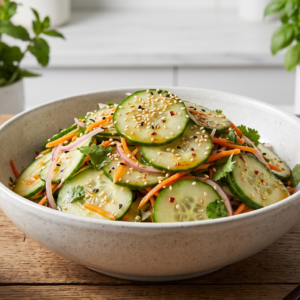
Today, we are highlighting cucumbers as a star ingredient in The Longevity Kitchen with an Asian-inspired, deeply refreshing recipe: Chilled Sesame-Cucumber Salad with Fresh Herbs & Toasted Seeds.
Why Cucumbers are a Longevity Essential
Cucumbers deliver far more than a satisfying crunch. When enjoyed raw with their nutrient-rich skin intact, their wellness benefits shine:
- Cellular Hydration & Fluid Balance: Made of over 95% structured cellular water, cucumbers hydrate at a deep tissue level while supplying essential electrolytes like potassium and magnesium to support blood pressure regulation.
- Silica & Skin Health: Abundant in silica (silicon dioxide), cucumbers foster collagen production, strengthen connective tissues, and preserve skin elasticity and joint flexibility.
- Fisetin & Cellular Renewal: Cucumbers contain fisetin, a powerful senolytic flavonol researched for its ability to clear aged cells, reduce neuroinflammation, and support cognitive health.
- Gut Soothing & Digestion: Mild and cooling, cucumbers soothe the digestive tract (Agni), reduce internal heat, and provide soluble fiber (pectin) to feed beneficial gut flora.
Simple Recipe: Chilled Sesame-Cucumber Salad
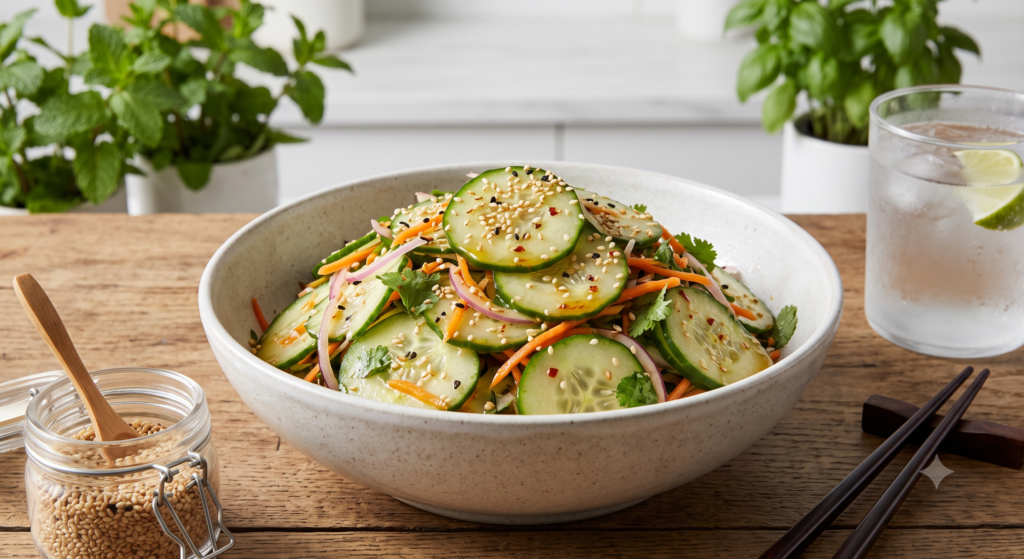
This crisp, vibrant dish balances cool, hydrating cucumbers with warm, anti-inflammatory sesame oil and ginger. It takes under 10 minutes to prepare and serves as a perfect side dish for any summer meal.
🌿 Ingredients (Serves 2–3)
- 2 large Organic Persian or English cucumbers (washed, partially peeled in ribbons)
- 1 tbsp Pure toasted sesame oil
- 1 tbsp Unfiltered apple cider vinegar or rice vinegar
- 1 tsp Freshly grated ginger
- 1 small clove Garlic, finely minced
- 1 tbsp Raw sesame seeds (black or white), toasted
- 1/2 cup Fresh cilantro or mint leaves, roughly chopped
- A generous pinch of sea salt and freshly cracked black pepper
- Optional: A light pinch of red chili flakes or a drizzle of raw honey
🥣 Step-by-Step Instructions
- Smash & Slice the Cucumbers: Place the cucumbers on a cutting board. Using the flat side of a chef’s knife, gently smash them down until they crack open. (Smashing breaks open the cellular walls, allowing the dressing to penetrate deep into the flavor pockets!) Slice diagonally into bite-sized chunks.
- Whisk the Dressing: In a small bowl, whisk together the toasted sesame oil, apple cider vinegar, grated ginger, minced garlic, sea salt, and black pepper.
- Toss & Marinate: Transfer the smashed cucumber chunks into a medium bowl. Pour the sesame-ginger dressing over top and toss well. Let it sit for 5 minutes at room temperature (or chill in the fridge) so the flavors absorb.
- Garnish & Serve: Fold in the fresh cilantro (or mint) and sprinkle generously with toasted sesame seeds. Serve chilled and enjoy!
Longevity Tip: Keep the Peel On!
The dark green skin of the cucumber contains the highest concentration of silica, fiber, and Vitamin K. Always opt for organic cucumbers when possible, scrub them clean, and leave most of the peel intact to capture every bit of their nutrient power!