The Longevity Kitchen
-
Crisp Vitality: Braised Lettuce with Garlic, Ginger & Sesame
At DAYLONGLIFE, we often think of lettuce merely as a cold, crunchy base for raw salads. But in traditional longevity cultures—especially in Mediterranean and Asian culinary traditions—lettuce is frequently cooked.
Gentle heating transforms humble greens, breaking down tough plant fibers while preserving delicate vitamins and creating a warm, comforting side dish that is remarkably easy on the digestive system.
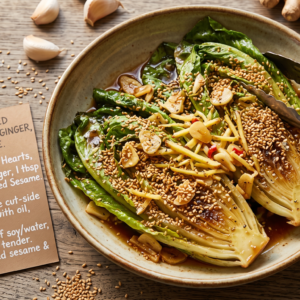
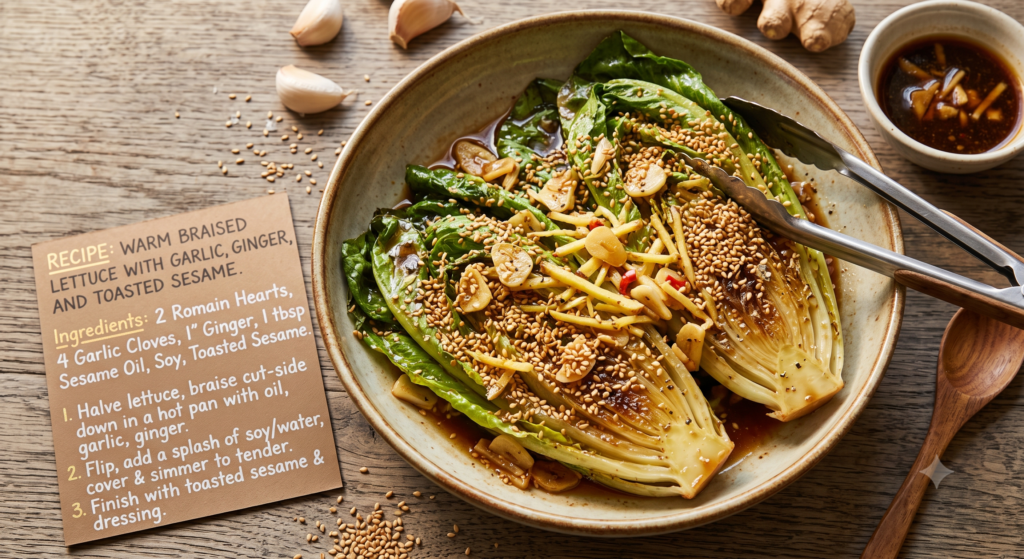
Today, we are showcasing cooked lettuce as a hero ingredient in The Longevity Kitchen with a simple, anti-inflammatory recipe: Warm Braised Lettuce with Garlic, Ginger, and Toasted Sesame.
Why Cooked Lettuce Belongs in a Longevity Diet
Lettuce—particularly dark leafy varieties like Romaine, butterhead, or Little Gem—is an understated power vegetable loaded with vital nutrients:
- Heart-Healthy Folate & Vitamin K: Darker lettuces are rich in Vitamin K, which supports bone density and arterial health, as well as folate, an essential B-vitamin for cellular repair and DNA synthesis.
- Gentle on Digestive Fire: While raw salads can sometimes cause bloating or digestive strain (especially for sensitive gut types or during cooler seasons), gently braising or stir-frying lettuce wilts the greens, making their fiber much easier to digest while keeping nutrient absorption high.
- Hydration & Antioxidants: Lettuce has a very high water content combined with polyphenols and quercetin, helping to hydrate cells from within and soothe systemic inflammation.
Simple Recipe: Warm Braised Romaine with Ginger & Garlic
This quick 10-minute dish brings out a mild, buttery sweetness in lettuce, elevated by warming aromatics and healthy fats.
🌿 Ingredients (Serves 2–3)
- 2 heads Fresh Romaine or Little Gem lettuce (washed, dried thoroughly, and sliced lengthwise into halves or quarters)
- 1.5 tbsp Extra virgin olive oil or toasted sesame oil
- 2 cloves Garlic, thinly sliced
- 1 tsp Fresh ginger, julienned or finely grated
- 1.5 tbsp Low-sodium tamari or coconut aminos
- 1 tsp Toasted sesame seeds
- Optional: A light drizzle of raw honey or maple syrup, and a pinch of chili flakes for mild heat
🥣 Step-by-Step Instructions
- Prep the Greens: Trim the base of the lettuce heads, leaving enough stem so the leaves stay intact when cut lengthwise into halves or quarters.
- Warm the Aromatics: Heat the olive oil (or sesame oil) in a wide skillet over medium heat. Add the sliced garlic and ginger, sautéing gently for 30 to 45 seconds until fragrant without burning.
- Sear the Lettuce: Place the lettuce quarters cut-side down in the pan in a single layer. Press down gently with tongs and let them sear undisturbed for 2 minutes until lightly golden and caramelized.
- Glaze & Wilt: Turn the lettuce pieces over. Drizzle the tamari (or coconut aminos) directly over the lettuce. Cover the skillet with a lid and let it steam/braise for 1 to 2 minutes until the leaves are slightly wilted but still retain a bright green color and crisp center.
- Garnish & Serve: Transfer the warm lettuce to a serving platter, pour the garlic-ginger oil juices from the pan over top, and sprinkle generously with toasted sesame seeds.
Longevity Tip: The Art of Light Cooking
The key to cooking lettuce for maximum health benefits is speed. A quick sear or light steam preserves heat-sensitive antioxidants like Vitamin C while softening insoluble fiber.
Pairing warm greens with healthy fats (like sesame oil or extra virgin olive oil) ensures that fat-soluble vitamins (A and K) are easily absorbed by your body!
Have you ever tried cooking or braising lettuce instead of eating it raw? What is your favorite warm leafy green side dish? Share your thoughts in the comments below!
-
The Longevity Root: Golden Roasted Carrots with Turmeric & Olive Oil
At DAYLONGLIFE, we love celebrating humble, whole-food ingredients that punch far above their weight in nutritional power. Among all the vegetables in your crisper drawer, few are as versatile, accessible, and deeply nourishing as the carrot.
In modern longevity science and traditional culinary wisdom, carrots are celebrated as a true “longevity root.” Packed with potent antioxidants, dietary fiber, and essential vitamins, this vibrant orange vegetable is a core staple in anti-inflammatory diets and Blue Zone-inspired cooking.
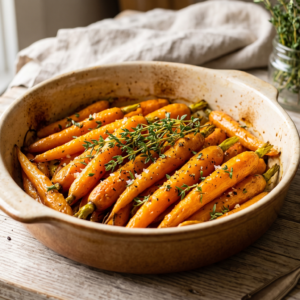
Today, we are sharing a signature Longevity Kitchen dish: Golden Roasted Carrots with Turmeric, Garlic, and Extra Virgin Olive Oil. It is warm, sweet, savory, and designed to maximize nutrient absorption while delighting your senses.
Why Carrots are a Longevity Powerhouse
Carrots offer far more than just a sweet crunch. When prepared with healthy fats and warm spices, their health benefits soar:
- Beta-Carotene & Vitamin A: Carrots are rich in beta-carotene, an antioxidant that converts to Vitamin A in the body. It protects cellular health, supports immune resilience, and preserves sharp vision as we age.
- Gut-Nourishing Fiber: The soluble and insoluble fibers in carrots feed beneficial gut bacteria, promoting a balanced microbiome—the command center for healthy aging and immunity.
- Bioavailability Boosted by Cooking: Cooking carrots with healthy fats (like extra virgin olive oil) breaks down their tough plant cell walls, making beta-carotene significantly easier for your body to absorb!
Simple Recipe: Golden Roasted Carrots with Turmeric & Thyme
This side dish transforms simple root vegetables into a rich, caramel-tinged delicacy that pairs beautifully with toasted grains, legumes, or a fresh leafy green salad.
🌿 Ingredients (Serves 4)
- 1.5 lbs (700g) Whole organic carrots (peeled, or scrubbed clean with tops trimmed)
- 2.5 tbsp Extra virgin olive oil
- 1 tsp Ground turmeric
- 1/2 tsp Ground cumin or coriander seeds
- 3 cloves Garlic, finely minced or grated
- 3–4 sprigs Fresh thyme or rosemary
- 1/2 tsp Sea salt & a generous pinch of freshly cracked black pepper (essential for unlocking turmeric’s absorption!)
- Optional garnish: Fresh parsley, toasted pumpkin seeds (pepitas), or a squeeze of fresh lemon juice
🥣 Step-by-Step Instructions
- Preheat & Prepare: Preheat your oven to 400°F (200°C). Slice large carrots in half lengthwise (or into thick diagonal coins) so they roast evenly.
- Make the Anti-Inflammatory Oil: In a small bowl, whisk together the extra virgin olive oil, ground turmeric, cumin/coriander, minced garlic, sea salt, and black pepper.
- Toss & Coat: Arrange the carrots on a parchment-lined baking sheet. Pour the spiced olive oil mixture over the carrots and toss well until every piece is evenly golden. Scatter fresh thyme sprigs across the tray.
- Roast to Perfection: Roast in the oven for 25 to 30 minutes, flipping halfway through. The carrots should be fork-tender with lightly caramelized, golden-brown edges.
- Finish & Serve: Transfer to a warm serving platter, discard the crisp thyme stems, and drizzle with a fresh squeeze of lemon juice or top with crunchy toasted pumpkin seeds.
Cooking Tip for Maximum Vitality
Always pair turmeric with a pinch of black pepper and a healthy fat. Black pepper contains piperine, a natural compound that enhances your body’s absorption of curcumin (the active anti-inflammatory compound in turmeric) by up to 2,000%!
Enjoying root vegetables roasted slowly with warm spices is a beautiful, grounding way to honor your body and bring longevity directly onto your dinner table.
How do you like to prepare root vegetables at home? Have you tried roasting carrots with turmeric before? Share your thoughts in the comments below!
-
The Longevity Kitchen: How Blue Zone & Anti-Inflammatory Cooking Makes Eating Healthy Delicious
At DAYLONGLIFE, we believe that nourishing your body for a long, vibrant life should never feel like a sacrifice. Healthy eating shouldn’t be about restrictive diets or bland, tasteless meals.
Welcome to The Longevity Kitchen—a space where time-tested culinary traditions intersect with modern anti-inflammatory science. Here, wellness is served warm, aromatic, and deeply satisfying.
What is “The Longevity Kitchen”?
The concept of the Longevity Kitchen is inspired by two powerful principles:
- Blue Zone Diets: The dietary wisdom of the world’s longest-living populations—from the sunny hills of Sardinia, Italy, and the coastal villages of Okinawa, Japan, to the Nicoya Peninsula in Costa Rica.
- Anti-Inflammatory Cooking: Utilizing rich, natural ingredients that actively soothe systemic inflammation—the underlying trigger behind accelerated aging and chronic fatigue.
When you bring these two worlds together in your home kitchen, healthy food ceases to be a chore; it becomes a daily celebration of flavor and vitality.
4 Pillars of a Longevity-Focused Pantry
You don’t need exotic supplements or complicated recipes to transform your daily meals. The secret lies in stocking your kitchen with nutrient-dense, flavorful staples:
1. Plant-Forward Protein & Fiber
In the Blue Zones, beans, legumes, and whole grains are the unsung heroes of the dinner table.
- The Longevity Staples: Chickpeas, lentils, black beans, and ancient grains like quinoa or farro.
- Why It Matters: Packed with complex carbohydrates and prebiotic fiber, these ingredients nourish your gut microbiome, regulate blood sugar, and keep you feeling full for hours.
2. Healthy Fats as Flavor Anchors
Low-fat diets are a thing of the past. Longevity cooking relies on high-quality, unrefined fats that protect your cardiovascular system and brain health.
- The Longevity Staples: Extra virgin olive oil, cold-pressed avocado oil, walnuts, almonds, and flaxseeds.
- Why It Matters: Extra virgin olive oil contains oleocanthal, a natural compound with powerful anti-inflammatory effects that rival low-dose ibuprofen—plus, it makes roasted vegetables taste incredible!
3. Vibrant Anti-Inflammatory Spices
Spices do far more than elevate flavor; they are natural powerhouses of antioxidants and bio-active compounds.
- The Longevity Staples: Turmeric, ginger, garlic, rosemary, oregano, and black pepper.
- Why It Matters: Fresh garlic and ginger boost immune resilience, while turmeric (paired with a pinch of black pepper) helps neutralize free radicals and reduce joint stiffness.
4. Antioxidant-Rich Leafy Greens & Vegetables
The more color on your plate, the wider the spectrum of phytonutrients your body receives.
- The Longevity Staples: Kale, Swiss chard, purple sweet potatoes, vine-ripened tomatoes, and wild mushrooms.
- Why It Matters: These colorful vegetables help repair cellular damage and protect your DNA from oxidative stress.
Simple Recipe: One-Pot Tuscan White Bean & Kale Stew
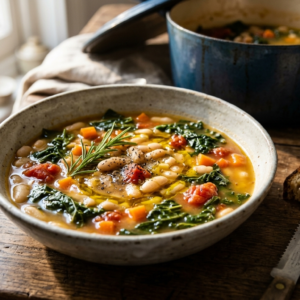
Want to try Longevity Kitchen cooking tonight? This simple, heart-warming recipe takes under 30 minutes, uses basic pantry items, and tastes like a warm hug from the Mediterranean coast.
🌿 Ingredients (Serves 4)
- 2 tbsp Extra virgin olive oil
- 1 medium Yellow onion, diced
- 2 stalks Celery, sliced
- 2 large Carrots, chopped
- 4 cloves Garlic, minced
- 1 tsp Dried oregano or fresh rosemary, finely chopped
- 2 cans (15 oz each) Cannellini beans (rinsed and drained)
- 1 can (14 oz) Diced fire-roasted tomatoes
- 4 cups Vegetable broth
- 2 cups Fresh Tuscan kale (stems removed, leaves chopped)
- Sea salt and freshly cracked black pepper to taste
🥣 Step-by-Step Instructions
- Sauté the Base: Heat olive oil in a large dutch oven or soup pot over medium heat. Add the onion, celery, and carrots. Cook for 5–7 minutes until soft and fragrant.
- Bloom the Aromatics: Stir in the minced garlic and oregano/rosemary. Sauté for another 60 seconds until aromatic.
- Simmer the Stew: Pour in the diced tomatoes, cannellini beans, and vegetable broth. Bring to a gentle boil, then lower the heat, cover, and simmer for 15 minutes.
- Wilt the Greens: Stir in the chopped kale and let it simmer uncovered for 3–5 minutes until tender.
- Serve & Enjoy: Ladle into warm bowls, top with a generous drizzle of raw extra virgin olive oil, and serve with toasted sourdough bread.
Cooking as a Daily Longevity Practice
In longevity regions like Okinawa or Ikaria, cooking isn’t rushed. It is an intentional, grounding ritual. Slicing fresh vegetables, inhaling the scent of herbs, and sharing a home-cooked meal with loved ones reduces stress and feeds the soul just as much as the body.
Healthy eating isn’t about perfection; it’s about introducing delicious, vibrant, real food onto your table, one meal at a time.
What is your favorite anti-inflammatory ingredient or Mediterranean dish to cook at home? Tell us in the comments below!