Everyday Wellness
-
Protecting Your Vision: Micro-Habits for Eye Health in a Screen-Filled World
At DAYLONGLIFE, we often focus on heart, brain, and gut health, but your eyes are among the most energy-intensive, delicate organs in your body.
In our digital age, the average person spends over 6 to 8 hours a day staring at backlit screens. This constant near-focus demands immense work from delicate ciliary muscles, while blue light radiation and reduced blink rates cause eye strain, dryness, head tension, and accelerated macular fatigue.
Protecting your vision for the long haul doesn’t require drastic lifestyle overhauls—it comes down to simple, everyday habits that relax ocular muscles, lubricate tissues, and feed your retina essential nutrients.
The Biological Toll of Digital Eye Strain
When you look at a screen or smartphone, three distinct biological stress factors occur simultaneously:
- The “Blink Amnesia” Effect: Normally, we blink about 15 to 20 times per minute, sweeping a fresh layer of tear film over the cornea. When staring at screens, our blink rate drops by up to 50%, leading to rapid tear evaporation, chronic dry eye, and microscopic surface irritation.
- Ciliary Muscle Spasm: The tiny muscles inside your eye must contract continuously to keep close objects in sharp focus. Holding this contraction for hours without a break creates physical fatigue that manifests as tension behind the eyes and brow tightness.
- Retinal Oxidative Stress: The macula—the central area of your retina responsible for sharp, detailed vision—is constantly exposed to high-energy visible (HEV) blue light, which increases free radical damage over time if not counteracted by dietary antioxidants.
4 Everyday Practices for Lifelong Eye Vitality
Integrating these evidence-backed micro-habits into your work routine will instantly reduce fatigue and protect long-term visual acuity.
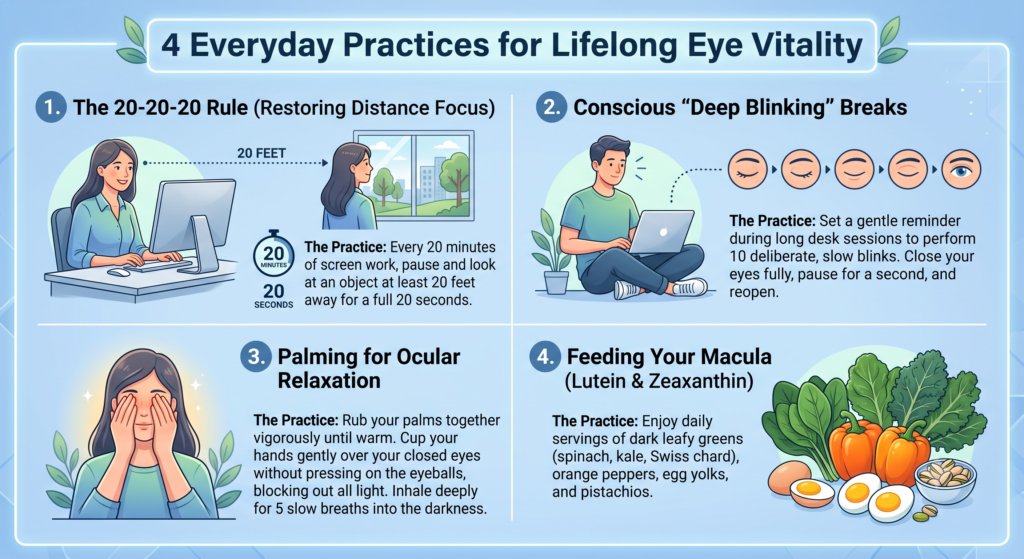
1. The 20-20-20 Rule (Restoring Distance Focus)
- The Practice: Every 20 minutes of screen work, pause and look at an object at least 20 feet away for a full 20 seconds.
- Why it works: Looking into the distance completely relaxes the ciliary muscle inside your eye, breaking the cycle of constant close-focus strain and resetting ocular blood flow.
2. Conscious “Deep Blinking” Breaks
- The Practice: Set a gentle reminder during long desk sessions to perform 10 deliberate, slow blinks. Close your eyes fully, pause for a second, and reopen.
- Why it works: Complete blinks squeeze the meibomian glands along your eyelids, releasing crucial lipid oils that seal in moisture and prevent tears from evaporating rapidly.
3. Palming for Ocular Relaxation
- The Practice: Rub your palms together vigorously until warm. Cup your hands gently over your closed eyes without pressing on the eyeballs, blocking out all light. Inhale deeply for 5 slow breaths into the darkness.
- Why it works: The soothing warmth releases muscle tension around the eye sockets, while complete darkness calms the optic nerve and nervous system.
4. Feeding Your Macula (Lutein & Zeaxanthin)
- The Practice: Enjoy daily servings of dark leafy greens (spinach, kale, Swiss chard), orange peppers, egg yolks, and pistachios.
- Why it works: These foods are rich in lutein and zeaxanthin, fat-soluble carotenoids that act as internal sunglasses. They accumulate directly in the macula, filtering blue light and neutralizing free radicals.
A Quick Daily Ritual for Fresh Eyes
Next time you finish a long stretch of work, don’t immediately reach for your phone to scroll during your break. Step to a window, gaze out at the distant horizon, take three deep breaths, and let your eyes rest in natural light. Your visual health will thank you for years to come.
-
The Crown Ritual: How Daily Head Massage Eases Stress, Boosts Focus, and Promotes Vitality
At DAYLONGLIFE, we believe that some of the most transformative self-care practices require no fancy equipment—just a few quiet minutes and your own hands.
In our fast-paced, screen-centric world, tension constantly accumulates in our neck, jaw, and scalp muscles. This subtle tightness restricts blood flow to the head, contributes to tension headaches, and keeps our nervous system stuck in a high-alert state.
Practicing a short, intentional daily head massage (Shiro Abhyanga in Ayurvedic tradition) is a powerful way to melt away mental fatigue, improve scalp circulation, and cultivate deep daily calm.

The Science & Longevity Benefits of Scalp Massage
Your scalp is home to a dense network of blood vessels, sensory nerves, and cranial fascia. Stimulating these tissues yields profound physical and mental benefits:
- Parasympathetic Activation: Gentle, rhythmic pressure on sensory nerves across the scalp triggers the release of endorphins and serotonin while reducing cortisol (the primary stress hormone), helping shift your body into a “rest and digest” state.
- Enhanced Cranial Blood Flow: Massaging the scalp dilates micro-capillaries, delivering fresh oxygen and vital nutrients straight to hair follicles and surrounding tissues.
- Relieving Tension & Screen Fatigue: The galea aponeurotica (the sheet of fascia covering the top of the skull) tightens when we squint at screens or clench our jaws. Massaging this fascia releases stored physical stress, easing eye strain and upper-body stiffness.
A Simple 3-Minute Daily Scalp Massage Ritual
You can practice this quick massage anywhere—at your desk during a working break, in the shower, or right before bed.
Step 1: The Crown Awakening (1 Minute)
- Spread your fingers wide and place your fingertips firmly on your scalp (use the pads of your fingers, not your nails).
- Starting from your hairline above the forehead, make small, firm circular motions, moving slowly backward toward the crown of your head and down to the base of your skull.
- Focus on moving the scalp tissue over the bone, rather than just rubbing your hair.
Step 2: The Temple & Jaw Release (1 Minute)
- Place the palms of your hands or the flats of your fingers against your temples.
- Apply gentle pressure in a circular motion, inhaling deeply for 4 seconds and exhaling slowly for 6 seconds.
- Move down to the muscle right in front of your ears (the masseter muscle) to release tension stored from clenching your jaw during focus.
Step 3: Base of the Skull & Neck Kneading (1 Minute)
- Interlock your fingers behind your head and use your thumbs to apply pressure to the soft hollows at the base of your skull (the occipital ridge).
- Press upward gently while making slow circles, tilting your head back slightly to open up your chest and neck.
- Finish by gently running your fingers down the back of your neck to encourage lymphatic drainage.
Optional: Elevating Your Ritual with Warm Oils
For an extra restorative evening ritual, try applying a few drops of warm, organic oil—such as warm sesame oil for grounding (great for Vata types), cooling coconut oil (ideal for Pitta types), or light jojoba oil infused with a drop of lavender essential oil. Leave the oil in for 15–20 minutes before showering to deeply nourish both your scalp and hair.
A Moment of Pause in a Busy Day
Next time you feel afternoon brain fog setting in or notice tightness creeping into your forehead, don’t rush for another cup of coffee. Close your eyes, take three deep breaths, and give yourself the gift of a brief scalp massage. Your mind and body will thank you.
-
The Mindful Rinse: How Washing Your Face Daily Restores Skin, Mind, and Rhythm
At DAYLONGLIFE, we often look for wellness in high-effort habits, but real vitality lives in the subtle, daily rituals we repeat every morning and evening.
Washing your face is one of the very first things you do to greet the day and one of the last things you do before rest. Yet, it is often rushed through as a mindless chore. When approached with intention, this simple two-minute habit becomes a grounding physical reset—clearing environmental pollutants, encouraging skin cell longevity, and signaling a fresh start to your nervous system.
Here is how to turn your daily face wash into a restorative micro-ritual for skin health and mental clarity.
The Health & Longevity Science of Clean Skin
Throughout the day, your skin acts as a protective shield, accumulating urban particulate matter, sweat, sebum, and microscopic environmental pollutants. At night, it undergoes a natural cellular repair cycle. Proper cleansing supports this natural rhythm:
- Preventing Oxidative Stress: Airborne pollution and heavy metals adhere to skin sebum, generating free radicals that break down collagen and accelerate premature photoaging. A gentle wash removes these oxidative triggers before they penetrate deeper layers.
- Encouraging Cellular Renewal: Removing dead surface skin cells and excess oil keeps pores clear, allowing your skin to breathe and absorb nutrients from nighttime facial oils or moisturizers.
- Vagal Nerve Stimulation: Cool or lukewarm water splashed gently across the lower face stimulates sensory nerves, helping quiet an overactive mind and transition your body out of stress mode.

Morning vs. Night: Tailoring Your Face Wash Routine
Your skin has different needs depending on the time of day. Treating morning and evening cleansing differently helps protect your skin’s delicate lipid barrier.
🌅 The Morning Reset: Awakening the Senses
- The Goal: Gently remove overnight oils and metabolic waste without stripping natural moisture.
- The Technique: Splash your face with lukewarm or cool water. If you have dry or sensitive skin, a simple water rinse or a tiny drop of a gentle, non-foaming cleanser is all you need.
- The Mindset: Use the cool water as a sensory alarm clock to clear morning brain fog and set a calm tone for the day ahead.
🌙 The Evening Ritual: Washing Away the Day
- The Goal: Thoroughly clear away buildup, sunscreen, makeup, and urban pollutants gathered throughout the day.
- The Technique: Use a mild, pH-balanced, natural cleanser. Gently massage it into your skin using upward circular motions for at least 60 seconds, paying extra attention to the jawline, nose, and forehead.
- The Mindset: As the water rinses off the cleanser, consciously visualize washing away the mental fatigue, screen strain, and stress accumulated during your workday.
4 Golden Rules for Gentle Facial Cleansing
- Mind Your Water Temperature: Avoid hot water! Hot water strips natural oils, dilates fragile capillaries, and triggers redness or inflammation. Stick to lukewarm water for washing and cool water for a refreshing finish.
- Use Your Fingertips (Ditch the Harsh Scrubs): Aggressive physical scrubs create micro-tears in the skin barrier. Your clean fingertips, using soft circular pressure, are all you need to cleanse effectively.
- Pat, Don’t Rub: When drying off, gently pat your face with a clean, soft cotton or bamboo towel. Avoid dragging or rubbing the towel across delicate facial tissue.
- Seal in Moisture Immediately: Apply your favorite natural facial serum or moisturizer within 60 seconds of washing while your skin is still slightly damp to lock in maximum hydration.
A Moment of Quiet Connection
In a world filled with endless notifications and busy schedules, your morning and evening face wash offers a guaranteed moment of quiet pause. Use it as a daily sanctuary to pause, breathe, feel the water, and show your body a moment of simple appreciation.
-
The Daily Reset: How Gentle Stretching Protects Mobility, Posture, and Vitality
At DAYLONGLIFE, we believe that true longevity isn’t just about adding years to your life—it is about keeping your body fluid, pain-free, and full of energy every single day.
In a world dominated by long hours of sitting, staring at screens, and repetitive posture, our muscles and connective tissues (fascia) naturally tighten. Over time, this chronic tightness leads to poor posture, joint stiffness, shallow breathing, and reduced circulation.
Integrating a short, intentional daily stretching ritual into your routine is one of the most effective, accessible ways to unwind physical stress, protect joint mobility, and keep your body moving gracefully through the decades.
The Biological & Longevity Benefits of Daily Stretching
Stretching does far more than lengthen muscles. It acts as a biological signal that restores balance across your entire system:
- Circulation & Fascial Health: Stretching gently pulls on fascia—the web of connective tissue surrounding your muscles and organs—stimulating blood flow, delivering oxygen, and hydrating tissues to maintain flexibility.
- Vagal Nerve Stimulation & Stress Relief: Slow, deep stretching paired with intentional breathing activates the parasympathetic nervous system (“rest and digest”). This lowers cortisol, drops your heart rate, and signals to your brain that you are safe.
- Joint & Spine Longevity: By maintaining range of motion in your hips, spine, and shoulders, daily stretching distributes physical load evenly, preventing wear and tear on cartilage and protecting against lower back pain.
4 Essential Daily Stretches for Whole-Body Vitality
You don’t need an hour-long yoga class to experience the benefits of stretching. Spending just 5 to 10 minutes on these four foundational movements will reset your posture and ease daily tension:
1. The Cat-Cow Flow (Spinal Mobility)

- Target Area: Entire spine, chest, and neck.
- How to do it: Start on all fours with hands under shoulders and knees under hips. On an inhale, arch your back gently, lifting your chest and tailbone toward the sky (Cow). On an exhale, round your spine, tucking your chin toward your chest (Cat). Repeat rhythmically for 8–10 slow breaths.
- Why it matters: Lubricates the spinal discs and relieves upper back and neck tension caused by screen time.
2. Low Lunge with Hip Opener (Releasing Sitting Tension)

- Target Area: Hip flexors, psoas, and quads.
- How to do it: Step your right foot forward into a lunge, dropping your left knee to the floor (use a folded towel for padding if needed). Gently shift your hips forward until you feel a comfortable stretch in the front of your left hip. Keep your torso tall and hold for 30–45 seconds per side, breathing deeply.
- Why it matters: Tight hip flexors from prolonged sitting pull on the lower back, causing anterior pelvic tilt and lower back discomfort.
3. Doorway Chest & Shoulder Opener (Posture Correction)

- Target Area: Pectoral muscles, front shoulders, and chest.
- How to do it: Stand in an open doorway. Bend your elbows at a 90-degree angle and place your forearms against the doorframe. Step one foot forward gently until you feel a subtle, restorative opening across your chest and shoulders. Hold for 30–45 seconds.
- Why it matters: Counteracts the rounded-shoulder posture (“tech neck”) that compresses the lungs and limits full diaphragmatic breathing.
4. Legs-Up-the-Wall Pose (Viparita Karani) (Nervous System & Venous Reset)

- Target Area: Hamstrings, lower back, and circulatory system.
- How to do it: Sit close to a clear wall, swing your legs up against the wall, and lie flat on your back with your arms resting gently by your sides. Close your eyes and focus on slow, belly-filling exhales for 3 to 5 minutes.
- Why it matters: A classic restorative pose in both modern physical therapy and traditional yoga. It promotes lymphatic drainage, eases heavy legs, and deeply calms the nervous system before sleep.
3 Simple Rules for Safe, Mindful Stretching
- Never Force a Stretch: Stretch to the point of gentle tension, never sharp pain. Your body should feel like it is surrendering into the movement, not fighting it.
- Breathe Into the Resistance: Inhale to create space; exhale to melt deeper into the hold. Deep, slow breathing signals your muscles to relax their protective reflexes.
- Consistency Over Intensity: Five minutes of daily, gentle movement is far more effective for long-term mobility than a single intense session once a week.
Unwind Your Body, Ease Your Mind
Stretching is a quiet act of self-care—a physical reminder to pause, check in with your body, and release whatever tension you have been holding throughout the day.
Whether you practice these stretches right after waking up to invite morning energy or before bed to prepare for restorative sleep, your body will thank you for the extra care.
What area of your body holds the most tension during the workday—your shoulders, lower back, or hips? What is your favorite daily stretch? Share your thoughts in the comments below!
-
Solar Vitality: The Science & Ritual of Mindful Sunbathing for Longevity
At DAYLONGLIFE, we believe that true longevity isn’t found only in what we eat or drink, but in how we align our bodies with the natural forces around us. Chief among these is light.
Long before modern supplements existed, traditional cultures revered the sun as a primary source of vitality, healing, and balance. In today’s indoor-centric world, intentional, mindful sunbathing—getting safe, natural sunlight exposure—is one of the most effective, free habits you can adopt for overall wellness.
Here is how light shapes human biology, and how you can harness the sun safely to support sleep, mood, immunity, and cellular health.
The Health Science Behind Natural Sunlight
Sunlight is far more than visible light; it is a complex spectrum of electromagnetic radiation, including ultraviolet (UV) and infrared light, that triggers critical chemical reactions in the body:
- Circadian Rhythm & Sleep Quality: Morning sunlight hitting the photoreceptors in your eyes signals your brain’s master clock (the suprachiasmatic nucleus) to stop melatonin production and boost morning cortisol. This sets an internal timer, ensuring robust melatonin synthesis 12 to 14 hours later for deep, restorative sleep.
- Vitamin D & Immune Resilience: Sunlight exposure (specifically UVB rays) triggers the synthesis of Vitamin D3 in the skin. Vitamin D acts like a hormone, regulating bone density, calcium absorption, immune defense, and cardiovascular function.
- Nitric Oxide & Heart Health: Sunlight stimulates the release of nitric oxide from skin storage into the bloodstream, dilating blood vessels, lowering blood pressure, and supporting vascular health.
- Serotonin & Mental Clarity: Sun exposure stimulates serotonin production in the brain, improving mood, reducing anxiety, and creating a sense of calm focus.
4 Principles for Safe & Mindful Sunbathing

To gain maximum vitality from the sun without risking skin damage or accelerated photoaging, mindfulness and timing are key.
1. The Morning Light Anchor (No Sunglasses, No Glass)
- The Ritual: Within 30 to 60 minutes of waking, step outside for 10 to 15 minutes. Look toward the morning sky (never directly at the sun) without wearing sunglasses, glasses, or looking through a window.
- Why It Matters: Windows block essential wavelengths (like infrared and specific UV spectrums). Unfiltered morning light anchors your biological clock, clears brain fog, and prepares your nervous system for the day ahead.
2. Gentle Skin Exposure (Mid-Morning to Midday)
- The Ritual: Expose large areas of skin (arms, legs, torso) to natural sunlight for 10 to 20 minutes, depending on your skin sensitivity, climate, and time of year.
- Why It Matters: Short, un-sunscreened exposure allows your skin to synthesize natural Vitamin D efficiently. Once your short exposure window ends, apply a clean, non-toxic mineral sunscreen (zinc oxide) or seek shade to prevent redness or sunburn.
3. Practice Infrared Grounding in Late Afternoon
- The Ritual: As the sun sets, the light spectrum shifts toward near-infrared wavelengths. Spend 15 minutes sitting outdoors during the golden hour.
- Why It Matters: Near-infrared light penetrates deep into muscle tissue and mitochondria, stimulating cellular repair (ATP production) and soothing systemic inflammation without the burning risk of intense UV rays.
4. Hydrate and Nourish Your Skin from Within
- The Ritual: Sip warm water or antioxidant-rich herbal teas after sun exposure, and nourish your skin internally with healthy fats (like extra virgin olive oil and wild salmon) rich in polyphenols and omega-3s.
- Why It Matters: Internal antioxidants enhance your skin’s natural resilience to light, while proper hydration maintains skin elasticity and moisture balance.
Solar Energy as Everyday Medicine
Sunlight is a fundamental nutrient that modern life often starves us of. Stepping outside to feel warm rays on your skin isn’t just a pleasant break—it is a vital biological reset.
Tomorrow morning, take your warm water or tea outside, pause for a few quiet minutes in the sunlight, and welcome the day’s vitality.
Do you have a morning outdoor routine? How does stepping into natural sunlight change your energy levels during the day? Share your experiences in the comments below!
-
The Mindful Shower: Transforming a Daily Habit into an Everyday Wellness Ritual
At DAYLONGLIFE, we believe that true longevity isn’t built solely through grand lifestyle overhauls. It is woven into the quiet, repetitive micro-habits of your day.
Taking a daily shower is often treated as a rushed item on a morning checklist or a mindless task before bed. But when approached with intention, your daily shower can become a powerful hydrotherapy ritual—a sacred space to wash away stress, regulate your nervous system, and awaken your senses.
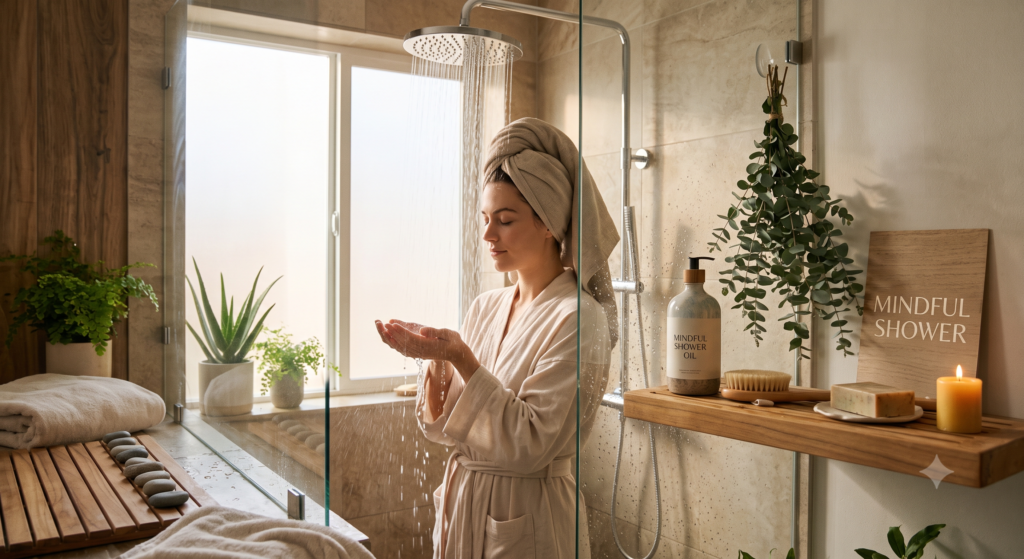
Here is how you can transform your daily shower from a routine chore into a restorative wellness experience for body and mind.
The Physical & Mental Benefits of Mindful Hydrotherapy
Water has been used as a therapeutic tool for centuries across cultures—from ancient Roman baths to traditional Japanese onsen. Adjusting your daily shower routine brings measurable benefits:
- Nervous System Reset: Switching between warm and cool water temperatures stimulates the vagus nerve, helping transition your body from high-alert stress into a calm, centered state.
- Enhanced Circulation: Warm water expands blood vessels (vasodilation) to soothe sore muscles, while a cool finish constricts them, driving oxygenated blood to your vital organs.
- Sensory Grounding: The tactile sensation of flowing water acts as a physical “circuit breaker” for overthinking, pulling your focus back into the present physical moment.
4 Ways to Elevate Your Daily Shower Ritual
1. The Power of Contrast Hydration (Warm to Cool Finish)
Instead of staying at a single warm temperature, end your shower with a deliberate temperature shift.
- How to do it: Enjoy your warm, cleansing shower as usual. During the final 30 to 60 seconds, gradually turn the tap to cool or cold water. Focus on taking steady, deep breaths.
- Why it works: Cold water triggers a brief releasing of endorphins, boosts circulation, tightens skin pores, and leaves you feeling crisp and mentally sharp without caffeine jitters.
2. Aromatherapy Shower Steams
Bring the calming essence of a spa into your home bathroom using the power of natural essential oils.
- How to do it: Before stepping into the water, sprinkle a few drops of Eucalyptus, Lavender, or Peppermint essential oil directly onto the shower floor or a damp washcloth placed away from the direct stream of water.
- Why it works: As the hot steam rises, it diffuses the essential oils. Inhaling eucalyptus opens up respiratory pathways and clears morning sinuses, while lavender calms evening anxiety.
3. Mindful Washing & Sensory Presence
It is easy to spend your shower mentally rehearsing your work day or replaying past conversations. Practice bringing your full awareness to the physical experience.
- How to do it: Notice the temperature of the water against your skin, the sound of the droplets, and the gentle scent of your soap. As you rinse off, visualize washing away mental fatigue, physical tension, and the stress of the day.
4. Post-Shower Nourishment: Locking in Moisture
Wellness doesn’t stop the moment you turn off the tap. The minutes right after your shower are the most critical for skin health.
- How to do it: Gently pat—don’t rub—your skin dry with a soft towel, leaving it slightly damp. Immediately apply a warm natural body oil (such as organic sesame, jojoba, or almond oil) or a rich moisturizer.
- Why it works: Applying oil or moisturizer to damp skin locks in hydration, supports your skin’s natural barrier, and acts as a comforting self-care ritual (inspired by Ayurvedic Abhyanga).
Wash Away the Day, Welcome Vitality
Your daily shower is one of the few moments in a busy day where you are completely free from screens, notifications, and demands. Treat it as a daily sanctuary to reset your energy, honor your physical body, and step back out into the world refreshed.
Do you prefer invigorating morning showers or calming evening showers? Have you ever tried ending your shower with a cool splash? Share your daily routine in the comments below!
-
Hydration for Longevity: How Mindful Water Drinking Transforms Your Everyday Wellness
At DAYLONGLIFE, we often look at wellness through the lens of nourishing meals, soothing teas, and quiet moments of reflection. Yet, the most powerful foundation for vibrant health and longevity is also the simplest: water.
Water makes up roughly 60% of our adult bodies, acting as the primary medium for cellular repair, nutrient transport, joint lubrication, and brain function. However, true hydration isn’t just about chugging eight glasses a day—it is about how, when, and what temperature you drink to truly nourish your system.
Here is how you can transform simple water drinking into a restorative, daily wellness ritual.
1. The Power of Warm Water First Thing in the Morning
When you wake up after 7 to 8 hours of sleep, your body is naturally dehydrated. Rehydrating before anything else is one of the kindest gifts you can give your digestive system.
- The Wellness Habit: Before reaching for coffee or breakfast, sip a large mug of warm or room-temperature water.
- The Longevity Benefit: Warm water gently awakens your gastrointestinal tract, stimulates natural bowel movements, and flushes out overnight cellular waste—all without shocking your internal digestive fire (Agni).
2. Temperature Matters: Ditch the Ice Cold Water
While a glass of ice-cold water might feel refreshing, traditional holistic health practices and Ayurvedic wisdom advise against drinking icy liquids with meals.
- The Wellness Habit: Opt for room-temperature, lukewarm, or warm water throughout the day.
- The Longevity Benefit: Ice-cold water constricts blood vessels in your stomach and hardens fats from your food, forcing your body to work harder to digest nutrients. Warm water keeps digestion fluid, efficient, and stress-free.
3. Sip Slowly, Don’t Chug
When you gulp down a large bottle of water all at once, your body cannot absorb it efficiently, and much of it passes straight through your kidneys.
- The Wellness Habit: Keep a beautiful glass or ceramic mug near your desk or kitchen counter, and take small, intentional sips continuously throughout the day.
- The Longevity Benefit: Slow sipping allows your saliva—which is alkaline—to mix with the water, neutralizing stomach acid and allowing your cells to absorb moisture gradually and deeply.
4. Boost Your Water with Natural Electrolytes
Plain water is great, but adding subtle, natural ingredients enhances its bio-availability, turning a routine drink into an anti-inflammatory elixir.
- Simple Longevity Enhancers:
- Fresh Lemon or Lime: Adds vitamin C and alkalizes the body once digested.
- A Thin Slice of Fresh Ginger: Soothes inflammation and boosts sluggish metabolism.
- A Pinch of Mineral-Rich Himalayan Salt: Replaces vital trace minerals to help your cells retain optimal hydration.
- Fresh Mint Leaves or Cucumber: Provides a cooling, refreshing taste during warmer afternoons.
5. Stop Drinking Large Amounts During Meals
Water is essential for digestion, but timing is everything.
- The Wellness Habit: Drink plenty of water 30 minutes before a meal, or wait 30 minutes after you finish. During meals, restrict yourself to small, warm sips if needed.
- The Longevity Benefit: Flooding your stomach with liquid while eating dilutes essential digestive enzymes and stomach acids, leading to bloating, indigestion, and poor nutrient absorption.
Make Hydration a Mindful Anchor
Drinking water doesn’t have to be a boring task on a checklist. Let each cup be a moment to pause, breathe, and honor the body that carries you through life.
Start tomorrow morning with a warm glass of lemon water, sip slowly, and notice the soft boost in your energy and clarity!
How do you like to drink your water during the day? Do you prefer warm herbal infusions or lemon-infused water? Share your routine in the comments below!
-
Gentle Habits for Graceful Aging: The Art of Everyday Wellness
At DAYLONGLIFE, we believe that true longevity isn’t built through drastic, temporary revamps or intense biohacking trends. It is forged in the quiet, repeated choices we make every single day.
Welcome to our guide on Everyday Wellness—a philosophy grounded in simple, sustainable, and enjoyable daily habits that invite balance into your body and mind, helping you walk gracefully alongside the passage of time.
What is “Micro-Wellness”?
Micro-wellness is the art of weaving tiny, low-effort health practices into your existing routine. Instead of overhauling your life overnight, you introduce small “anchors” that support your cellular health, nervous system, and emotional well-being.
Over months and years, these micro-habits compound into macro-vitality.
4 Sustainable Daily Rituals for Graceful Living
Here are four effortless rituals you can start integrating today to nourish your energy and longevity:
1. The 10-Minute Morning Light Reset
Before reaching for your phone or brewing your morning coffee, step outside or look through a bright window for 5 to 10 minutes.
- Why it matters: Morning sunlight hits the photoreceptors in your eyes, signaling your brain to stop producing melatonin and start releasing cortisol in a healthy, natural rhythm. This anchors your circadian clock, boosts daytime alertness, and sets the stage for deep, restorative sleep at night.
2. Mindful Hydration with a Warm Twist
Hydration is key to joint flexibility, clear skin, and cellular repair. Elevate your morning water habit by sipping warm or room-temperature water—perhaps with a slice of fresh lemon or a thin piece of ginger.
- Why it matters: In traditional holistic wellness, ice-cold water can shock your digestive system. Warm water gently awakens your metabolic pathways, aids digestion, and keeps your system hydrated without extra stress.
3. The “Post-Meal Movement Snacking”
Instead of sitting down immediately after lunch or dinner, take a gentle 5- to 10-minute walk. If you are at the office, simply pace around or do a few gentle spinal twists.
- Why it matters: Light movement right after eating helps your muscles absorb glucose from your meal, preventing sharp blood sugar spikes and afternoon energy crashes. It is a cornerstone practice in many of the world’s longest-living communities.
4. An Evening “Unwind Hour”
Transitioning smoothly into night is essential for long-term health. Set a soft alarm one hour before your intended bedtime to cue your wind-down routine:
- Dim bright overhead lights.
- Put devices in another room or turn on “Do Not Disturb.”
- Spend a few minutes journaling, reading a physical book, or doing slow breathing exercises.
- Why it matters: Lowering light and stimulation encourages natural melatonin production, giving your body the deep recovery time it needs to repair tissues and cleanse brain metabolic waste overnight.
The Mindset Shift: Consistency Over Perfection
Aging gracefully is not about striving for eternal youth; it is about honoring the vessel you live in so it can support you with strength, clarity, and joy at every stage of life.
If you miss a day, offer yourself grace. Pick up your warm water or morning walk the next day. Small steps, taken consistently with love, are what turn ordinary days into a long, vibrant life.