Ayurveda Health
-
Stopping Illness Before It Starts: The Ayurvedic Science of Disease Prevention
At DAYLONGLIFE, we view true health not as the absence of illness, but as a state of active, vibrant immunity and systemic balance.
In modern healthcare, we often wait for symptoms to manifest before taking action—reaching for medications only after a virus takes hold or chronic inflammation settles in. In traditional Ayurvedic medicine, prevention is the primary objective of healthcare. The ancient texts state: “Swasthyasya Swasthya Rakshanam”—to protect and preserve the health of the healthy.
Long before a disease expresses itself as a medical diagnosis, it undergoes subtle biological stages of imbalance. By understanding these stages and nourishing your baseline immunity (Ojas), you can stop physical breakdown long before it begins.
The Core Foundations of Ayurvedic Prevention
Ayurvedic preventive care centers around three interconnected pillars that keep your biological systems resilient against environmental pathogens and metabolic stress:
1. Protecting Your Metabolic Fire (Agni)
Your digestive capacity (Agni) is your first line of defense. Strong Agni breaks down food completely into essential nutrients that nourish blood, tissue, and immune cells. Weak or erratic Agni creates undigested metabolic byproduct (Ama), which ferments in the digestive tract and accumulates in vulnerable tissues, creating the ideal conditions for chronic disease.
2. Building Vital Immunity (Ojas)
In Ayurveda, Ojas is the ultimate refined essence of digestion—the biological equivalent of cellular vitality, immune resilience, and stress endurance. When Ojas is strong, pathogens cannot easily take root, energy remains stable, and the mind stays calm under pressure. High Ojas manifests physically as glowing skin, clear eyes, robust digestion, and strong stamina.
3. Aligning with Daily Cycles (Dinacharya)
Your body thrives on rhythmic predictability. Practicing Dinacharya (a structured daily routine) synchronizes your internal biological clock with the natural forces of daylight, temperature, and digestive cycles—optimizing hormone regulation and lowering baseline cortisol.
The 6 Stages of Disease (Shat Kriya Kala)
Ayurveda outlines a sophisticated 6-stage model of disease progression. Disease does not appear overnight; it develops in progressive phases:
- Accumulation (Sanchaya): Doshas (Vata, Pitta, or Kapha) begin to accumulate in their natural digestive sites due to diet, stress, or seasonal shifts.
- Aggravation (Prakopa): Imbalances intensify within the digestive tract, causing early warning signs like mild bloating, heart burn, or heaviness.
- Dissemination (Prasara): The excess imbalance overflows from the gut into the circulatory and lymphatic channels (srotas).
- Relocation (Sthanasamsraya): The imbalanced energy settles into weak points in the body (a vulnerable joint, lung tissue, or organ system).
- Manifestation (Vyakti): Clear physical clinical symptoms emerge (e.g., joint pain, chronic cough, skin rashes).
- Specialization/Chronicity (Bheda): The condition becomes a fully established chronic disease with distinct complications.
The Longevity Advantage: Modern medicine usually detects illness at Stage 5 or 6. Ayurvedic preventive habits are designed to catch and clear imbalances at Stages 1, 2, and 3—nipping health challenges in the bud.
4 Daily Practices to Prevent Illness Naturally
Integrating these four foundational micro-habits into your routine acts as a daily shield for your immune and digestive systems:
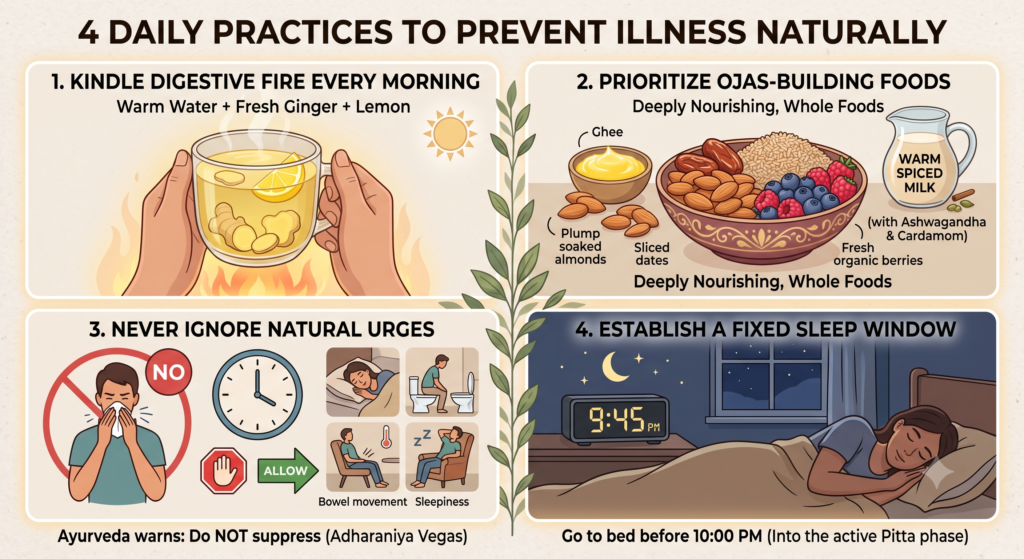
1.Kindle Digestive Fire Every Morning:
Start your day with a cup of warm water infused with fresh ginger slices and a splash of lemon juice. This wakes up sluggish peristalsis, clears overnight metabolic waste, and prepares your stomach for efficient digestion.
2.Prioritize Ojas-Building Foods:
Incorporate deeply nourishing, whole foods into your diet: warm ghee, soaked almonds, dates, cooked whole grains, fresh organic berries, and warm spiced milk (or hemp milk) infused with ashwagandha or cardamom.
3.Never Ignore Natural Urges:
Ayurveda strictly warns against suppressing natural bodily urges (Adharaniya Vegas)—such as sneezing, yawning, urination, bowel movements, or sleepiness. Suppressing these natural release valves creates physical pressure and internal stress in the nervous system.
4.Establish a Fixed Sleep Window:
Go to bed before 10:00 PM (the transition into the active Pitta phase of night). Sleeping during this window allows your liver, brain, and immune system to execute deep cellular repair and detoxification.
Cultivating Your Immune Reserve
Preventive health isn’t about constant worry or overly complex protocols—it is about respecting your body’s natural intelligence. By honoring your digestion, maintaining a steady daily rhythm, and listening to subtle early signals, you create an internal environment where vitality thrives naturally.
How do you support your immune system when you notice early signs of fatigue or stress? Have you tried building a daily wellness routine around digestive health? Share your thoughts in the comments below!
-
Unburdening the Body: The Ayurvedic Science of Gentle Daily Detoxification
At DAYLONGLIFE, we view detoxing not as a harsh, restrictive punishment after periods of overindulgence, but as a gentle, natural unburdening of the body.
In mainstream wellness, “detoxes” often mean extreme juice cleanses, fasting, or aggressive laxative teas that shock the system and weaken metabolic fire. In traditional Ayurvedic medicine, true detoxification (Panchakarma or daily Ama-Pachana) is designed to do the exact opposite: gently support your liver and kidneys, restore digestive capacity (Agni), and clear accumulated cellular toxins (Ama) without causing exhaustion.
Here is how to approach detoxification through an Ayurvedic lens to leave your body feeling light, clear, and energized.
The Ayurvedic Perspective: Clearing Ama While Protecting Agni
In Ayurveda, toxins are not just external chemicals—they are also the result of incomplete digestion. When your digestive fire (Agni) is compromised by stress, poor food combinations, late-night eating, or overprocessed foods, undigested material ferments in the gut to create Ama.
Ama is sticky, heavy, and cold. It clogs subtle channels (srotas), leads to brain fog, dulls skin, creates morning joint stiffness, and causes a thick white coating on the tongue.
The Ayurvedic goal of detoxing is simple:
- Kindle Agni so your body can burn off existing Ama.
- Nourish tissues (Dhatus) so you remain strong and grounded throughout the process.
4 Gentle Daily Practices for Ayurvedic Detoxification
You don’t need a drastic 7-day fasting protocol to clear toxins. Incorporating these simple, evidence-backed habits into your daily routine supports your body’s built-in detoxification pathways every single day:

1️⃣ Drink Warm Lemon & Ginger Water 🍋
Start your day with a cup of warm water infused with fresh lemon or ginger. This helps awaken your digestive fire (Agni), hydrate your system, and gently flush out accumulated toxins (Ama).
2️⃣ Dry Skin Brushing (Garshana) 🪮
Using a natural bristle brush, gently stroke your skin toward your heart before showering. This stimulates lymphatic drainage, boosts circulation, and exfoliates dead skin cells.
3️⃣ Mindful Movement or Gentle Yoga 🧘♀️
Spend 10–15 minutes engaging in gentle stretches, yoga postures, or conscious breathing. Physical movement helps release tension, improve circulation, and keep energy flowing freely throughout your body.
4️⃣ Tongue Scraping (Jivha Prakshalana) ✨
Using a copper or stainless steel tongue scraper, gently sweep away the coating that accumulates on your tongue overnight. This simple step supports oral hygiene, improves taste perception, and helps remove toxins before they are reabsorbed.
3 Signs Your Detox is Working (Without Shocking Your Body)
When practicing a gentle Ayurvedic detox, you should never feel shaky, freezing cold, or severely depleted. Instead, you will notice:
- A clean, light feeling in your stomach after eating.
- Increased mental clarity and a reduction in brain fog.
- Clearer skin and more consistent, natural energy throughout the day.
Reclaiming Lightness and Flow
Detoxification isn’t about extreme restriction—it is about restoring your body’s innate wisdom. By listening to your digestive cues, choosing warm, freshly prepared foods, and supporting your daily elimination channels, you allow your vitality to shine through effortlessly.
-
Synchronizing with Nature: A Simple Seasonal Diet Plan (Ritucharya) for Year-Round Vitality
At DAYLONGLIFE, we view true health as an extension of the natural world around us. In modern life, we have access to every fruit and vegetable 365 days a year, yet our internal biology still moves to the ancient rhythm of the changing seasons.
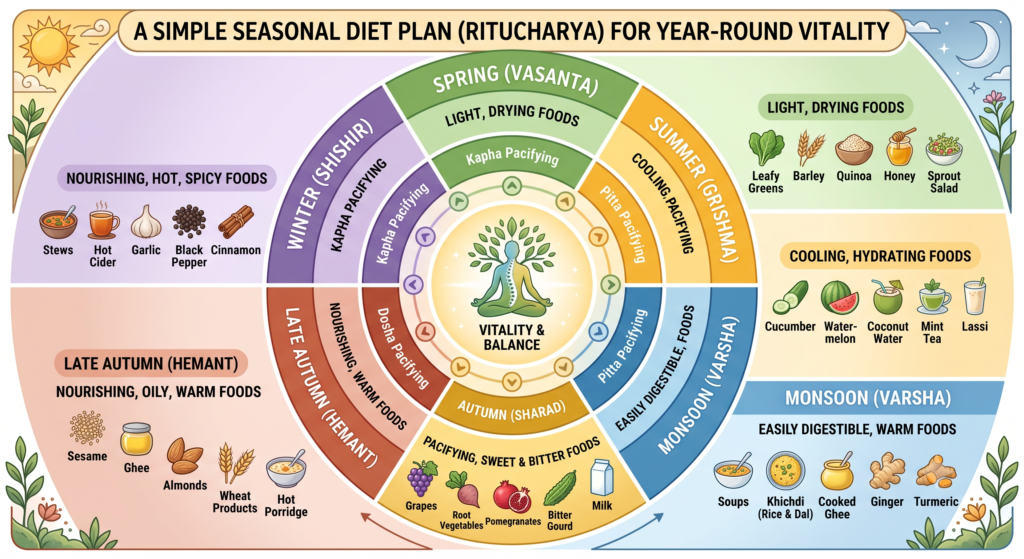
In Ayurvedic medicine, the practice of aligning your diet and habits with seasonal shifts is called Ritucharya (Ritu = season, Charya = regimen). Just as nature sheds its leaves in autumn and blossoms in spring, our digestive fire (Agni) and energetic forces (Doshas) naturally shift throughout the year.
By making simple, seasonal adjustments to what you put on your plate, you can prevent seasonal illness, reduce chronic inflammation, and maintain steady energy year-round.
🌿 The Golden Rule: Ritushandhi (The Seasonal Transition)
Before diving into each season, there is a crucial Ayurvedic concept to remember: Ritushandhi—the 14-day transition period between two seasons (the last 7 days of the outgoing season and the first 7 days of the incoming one).
During this delicate phase, your gut microbiome and digestive capacity fluctuate. Slowly taper off your old dietary habits and gently introduce new seasonal foods rather than changing your diet abruptly.
☀️ 1. Summer (Grishma): Cool, Hydrate & Soothe
- Dominant Element: Fire & Air (Pitta increases, Vata accumulates)
- Digestive State: Mildly lowered Agni due to external ambient heat.
During the intense heat of summer, the body expends energy staying cool. Eating heavy, spicy, or greasy foods overburdens digestion and triggers internal heat (acid reflux, skin flare-ups, and irritability).
- Foods to Emphasize: Hydrating, sweet, and cooling foods. Fresh cucumber, sweet berries, watermelon, coconut water, leafy green salads, zucchini, and ghee.
- Spices to Use: Cooling herbs like fresh mint, cilantro, fennel, cardamom, and rose water.
- What to Minimize: Excessively spicy, salty, sour, or fried foods, as well as iced drinks (which paradoxically shock and dampen digestive fire).
🍂 2. Autumn & Early Winter (Sharad & Hemanta): Ground, Warm & Nourish
- Dominant Element: Air & Ether (Vata rises)
- Digestive State: Strong, active Agni.
As the weather turns cool, dry, and windy, Vata dosha becomes active. The body naturally craves heavier, warming foods to build internal insulation and keep the nervous system grounded.
- Foods to Emphasize: Warm, cooked, and slightly unctuous foods. Roasted root vegetables (sweet potatoes, carrots, pumpkin), whole grains (oats, brown rice, quinoa), cooked lentils, healthy fats (ghee, extra virgin olive oil, sesame oil), and toasted nuts.
- Spices to Use: Ground cinnamon, nutmeg, ginger, clove, and turmeric.
- What to Minimize: Raw, cold salads, dry crackers, iced water, and skipped meals (which exacerbate dryness and bloating).
❄️ 3. Late Winter & Spring (Shishira & Vasanta): Lighten, Cleanse & Invigorate
- Dominant Element: Earth & Water (Kapha accumulates in winter and melts in spring)
- Digestive State: Sluggish or congested Agni.
In late winter and early spring, cold moisture builds up in the environment. As the weather warms, accumulated Kapha begins to “melt,” often manifesting as seasonal allergies, brain fog, heavy fatigue, or sluggish digestion. Spring is nature’s natural detoxification window.
- Foods to Emphasize: Light, bitter, pungent, and astringent foods. Bitter greens (arugula, dandelion, kale), steamed cruciferous vegetables, legumes, mung bean soups, berries, and warm lemon water.
- Spices to Use: Black pepper, cayenne, cumin, mustard seeds, and raw honey (never heated).
- What to Minimize: Heavy dairy (cheese, thick cream), refined sugars, fried or oily foods, and heavy wheat dishes.
🌧️ 4. Monsoon / Rainy Season (Varsha): Protect & Digest
- Dominant Element: Water & Humidity (Vata & Pitta fluctuate)
- Digestive State: Weakened or delicate Agni due to atmospheric dampness.
In regions experiencing a distinct rainy or monsoon season, humidity weakens digestive capacity while environmental bacteria rise. The goal during this time is to protect the digestive tract and consume easily digestible fare.
- Foods to Emphasize: Light, warm, cooked soups, broths, aged grains, kitchari, and thoroughly cooked vegetables.
- Spices to Use: Fresh ginger, garlic, hing (asafoetida), and black pepper to kindle digestive fire.
- What to Minimize: Raw street foods, uncooked leafy greens, heavy seafood, and excessive cold liquids.
💡 3 Simple Steps to Start Today
- Eat What is Locally in Season: Walk through your local farmers’ market. Whatever is growing naturally in your local climate right now is precisely what your body is designed to digest.
- Match Your Food Temperature to the Climate: Drink warm or room-temperature beverages in cold months, and refreshing, room-temperature infusions in peak summer heat.
- Listen to Your Body’s Cues: Observe your hunger, energy, and digestion as the weather shifts. Your body gives you immediate feedback when a seasonal adjustment is needed.
-
The Engine of Vitality: Understanding Agni and Ama in Ayurvedic Digestion
At DAYLONGLIFE, we often say that you aren’t just what you eat—you are what you digest and absorb.
In modern longevity science, the gut microbiome is considered ground zero for immunity, inflammation control, and brain health. Thousands of years ago, Ayurvedic medicine identified this exact truth through two foundational concepts: Agni (your digestive fire) and Ama (metabolic toxins).
Understanding how Agni and Ama interact is the ultimate key to effortless digestion, deep energy, and long-term metabolic health.
🔥 1. Agni: Your Inner Digestive Fire
In Ayurveda, Agni represents the transformative metabolic fire responsible for breaking down food, absorbing nutrients, and converting physical matter into vital life energy (Ojas).
When your Agni is strong, balanced, and steady:
- You experience clear, natural hunger cues at regular meal times.
- Food digests smoothly without bloating, heaviness, or gas.
- Your skin glows, your mind stays sharp, and your immunity remains resilient.
The 4 States of Agni:
- Balanced Agni (Sama Agni): Complete digestion, steady energy, and optimal health.
- Irregular Agni (Visham Agni): Common in Vata types; causes unpredictable hunger, sudden bloating, and constipation.
- Intense Agni (Tikshna Agni): Common in Pitta types; causes rapid digestion, hyperacidity, heartburn, and excessive hunger.
- Sluggish Agni (Manda Agni): Common in Kapha types; causes slow digestion, heaviness after meals, lethargy, and a thick tongue coating.

🦠 2. Ama: The Root of Metabolic Toxicity
When Agni is weak, compromised, or overwhelmed by poor eating habits, food cannot be properly transformed. Undigested food remains in the gastrointestinal tract, ferments, and creates Ama—a sticky, toxic residue.
Over time, Ama circulates through the bloodstream, clogging physical channels (srotas) and dampening cellular metabolism. In modern terms, Ama is closely linked to systemic chronic inflammation, gut dysbiosis, and metabolic dysfunction.
Signs You Have Accumulated Ama:
- A white or yellow coating on your tongue upon waking.
- A persistent heavy, sluggish feeling after meals or in the morning.
- Brain fog, joint stiffness, or skin breakouts.
- Foul-smelling breath, gas, or stool.
🌿 5 Everyday Habits to Ignite Agni and Clear Ama
Restoring your digestive strength doesn’t require extreme cleanses. Small, intentional daily rituals will kindle your digestive fire naturally:
1. Sip Warm Water or Herbal Tea Throughout the Day
Cold and iced water act like throwing ice on a burning fire—they instantly extinguish Agni.
- The Habit: Swap iced drinks for warm water or a gentle spiced tea brewed with whole cumin, coriander, and fennel seeds (CCF Tea) to soothe the gut lining and flush out Ama.
2. Practice Morning Tongue Scraping (Jihva Prakshalana)
Overnight, your body works to excrete metabolic waste onto the surface of your tongue.
- The Habit: Use a copper or stainless steel tongue scraper first thing in the morning to remove this coating before brushing or drinking water. This prevents Ama from being re-absorbed into your digestive tract.
3. Make Lunch Your Largest Meal
Agni follows the rhythm of the sun—it peaks when the sun is highest in the sky.
- The Habit: Eat your heaviest, most nutrient-dense meal between 12:00 PM and 1:30 PM when your metabolic enzymes are at maximum strength. Keep dinners light, cooked, and consumed by 7:00 PM.
4. Avoid Cold, Raw Foods When Feeling Sluggish
Raw salads and icy smoothies take immense digestive energy to break down.
- The Habit: If you suffer from bloating or cold hands/feet, choose warm, cooked, anti-inflammatory foods—such as simmered root vegetable soups, roasted pumpkin, or grains seasoned with ground turmeric, ginger, and black pepper.
5. Leave Space Between Meals
Constant snacking forces Agni to work continuously without a break, leading to incomplete digestion and Ama accumulation.
- The Habit: Allow 3 to 5 hours between meals without snacking, giving your migrating motor complex (MMC) time to sweep the digestive tract clean.
Nourishing Your Inner Fire for Life
Caring for your digestive fire is an act of daily self-respect. When you listen to your body’s natural hunger cues and honor its rhythm, you transform meals into true medicine that fuels an energized mind and an ageless body.
Do you tend to experience strong Pitta acidity, Vata bloating, or Kapha sluggishness after meals? What is your favorite warm spice to cook with? Share your thoughts in the comments below!
-
Discovering Your Dosha and Crafting Your Daily Self-Care Routine (Dinacharya)
At DAYLONGLIFE, we believe true longevity begins with self-awareness. Everything in Ayurveda starts with understanding your unique nature so you can make practical changes that support your energy, strengthen immunity, and prevent disease.
In Ayurvedic wisdom, the three doshas—Vata, Pitta, and Kapha—are the essential building blocks of our health. Unlocking your unique dosha profile gives you a personalized map for choosing the foods, exercises, work patterns, and relaxation habits that suit you best.

🧘 Understanding Your Prakriti vs. Vikriti
- Prakriti (Your Original Constitution): The natural mix of Vata, Pitta, and Kapha you were born with. It defines your unique physical, mental, and emotional tendencies and remains constant throughout your life.
- Vikriti (Your Current State): Your current state of imbalance, which fluctuates based on diet, lifestyle, stress, weather, and daily habits.
While a complete diagnosis is best done with an experienced Ayurvedic practitioner, you can gain a clear picture of your dominant dosha by observing your body, mind, digestion, and stress tendencies.
🌿 What Is Your Dominant Dosha Type?
💨 1. Vata Type
- Body: Thin frame, dry skin, cold hands and feet.
- Mind: Creative, quick thinker, sometimes forgetful.
- Digestion: Irregular hunger and digestion, prone to gas or bloating.
- Tendencies: Restlessness, insomnia, and anxiety under stress.
🔥 2. Pitta Type
- Body: Medium build, warm body, reddish or sensitive skin.
- Mind: Sharp intellect, determined, goal-oriented.
- Digestion: Strong appetite, prone to heartburn or loose stools.
- Tendencies: Anger and irritability under pressure.
🌊 3. Kapha Type
- Body: Large frame, soft and oily skin, tendency to gain weight.
- Mind: Calm, patient, loyal, with a steady memory.
- Digestion: Slow metabolism, heavy feeling after eating.
- Tendencies: Lethargy, attachment, and emotional eating.
Note: Many people are a combination type (such as Vata-Pitta or Kapha-Vata). In these cases, focus on balancing both doshas, prioritizing whichever feels more disturbed.
⏰ Why Daily Routine (Dinacharya) Matters
Modern life frequently disconnects us from nature’s natural cycles (sunrise, sunset, and changing seasons), causing doshic imbalances that lead to fatigue, anxiety, and digestive issues.
A structured daily routine, or Dinacharya, reconnects you with your body’s internal clock. It clears toxins, regulates digestion, improves sleep quality, and builds long-term immunity.
🌅 Designing Your Dosha-Aligned Daily Schedule
You don’t need to change everything overnight—start small and build your routine step by step.
1. Morning Rituals
- Wake-Up Times:
- Vata: 6:00 AM – 6:30 AM
- Pitta: 5:30 AM – 6:00 AM
- Kapha: 4:30 AM – 5:30 AM (rising early helps Kapha types overcome natural sluggishness)
- Start with Stillness: Begin with a few moments of quiet or gratitude to calm the nervous system.
- Cleanse the Senses:
- Tongue Scraping: Removes overnight metabolic waste (Ama) and wakes up digestion.
- Oil Pulling: Swish sesame or coconut oil for 5–10 minutes to strengthen teeth and gums.
- Nasya (Nasal Drops): Apply a few drops of sesame or medicated oil in each nostril to support respiratory health.
- Eye Wash: Splash eyes with cool water to relieve strain.
- Hydration: Sip a glass of warm water with fresh lemon to flush toxins and stimulate bowel movements.
- Self-Massage (Abhyanga): Massage warm oil into your skin before bathing:
- Vata: Use warm sesame oil.
- Pitta: Use cooling coconut or sunflower oil.
- Kapha: Use mustard or sesame oil with energetic, invigorating strokes.
- Movement & Meditation:
- Vata: Slow, grounding yoga with deep breathing.
- Pitta: Moderate-intensity, cooling poses without overexertion.
- Kapha: Dynamic yoga flow or fast-paced walking.
- Finish with 10–15 minutes of deep breathing or silent meditation to balance the mind.
2. Nourishing Meals & Eating Habits
- Regular Timing: Eat at the same times every day to keep digestion predictable.
- Breakfast:
- Vata: Warm, moist foods like oatmeal with ghee.
- Pitta: Fresh fruits, smoothies, or light porridge.
- Kapha: Warm herbal tea or light fruit.
- Lunch: Make this your largest meal, eaten around noon when your internal digestive fire is strongest.
- Dinner: Eat a light meal (such as soups, stews, or steamed vegetables) by 7:00 PM, at least 2 to 3 hours before bed.
- Mindful Eating: Sit down without screens or distractions, chew slowly, and avoid drinking ice-cold water during meals.
3. Evening Wind-Down & Restful Sleep
In Ayurveda, sleep is considered one of the three pillars of life alongside food and balanced energy.
- Afternoon: Take a short walk after lunch. Sip herbal teas—ginger for Kapha, mint for Pitta, and fennel for Vata.
- Evening: Turn off screens after sunset. Sip a soothing herbal tea like chamomile, tulsi, or a whole cumin-coriander-fennel (CCF) blend.
- Pre-Sleep Care: Massage the soles of your feet with warm sesame or Brahmi oil to soothe the nervous system. Avoid arguments, loud noises, or stressful work late at night.
- Bedtimes:
- Vata: 9:00 PM – 9:30 PM
- Pitta: 10:00 PM
- Kapha: 10:00 PM or earlier
🌺 The Benefits of Living in Doshic Harmony
When you align your daily habits with your dosha, positive shifts occur naturally:
- Your energy becomes steady and consistent.
- Digestion and bowel movements become regular.
- Skin clarity, mood, and mental focus improve noticeably.
- You transition from reacting to illness to proactively preventing it.
Adopting even two or three small habits—like rising earlier, enjoying warm meals, or taking moments for quiet meditation—can deeply transform your inner state. These routines are non-restrictive rituals of self-respect that awaken your body’s inherent wisdom and capacity to heal.
Which small Ayurvedic ritual—a warm lemon drink, morning tongue scraping, or an earlier bedtime—will you try adding to your routine tomorrow? Share your plan in the comments below!
-
The Three Doshas: Understanding Vata, Pitta, and Kapha for Personalized Longevity
At DAYLONGLIFE, we often highlight that true wellness is never a one-size-fits-all formula. What energizes one person might exhaust another, and a diet that cools one body might dampen the digestive fire of another.
This personalized approach to health sits at the heart of Ayurveda, where optimal vitality is achieved by understanding your unique mind-body constitution, known as your Prakriti, governed by three elemental energies called Doshas: Vata, Pitta, and Kapha.
By learning which dosha dominates your system, you can tailor your daily meals, stress-reduction practices, and self-care rituals for lasting balance and graceful aging.
What Are the Three Doshas?

In Ayurvedic philosophy, the universe—and everything within it—is composed of five basic elements: Space, Air, Fire, Water, and Earth. In the human body, these elements combine into three primary physiological energies:
- Vata (Space + Air): The energy of Movement
- Pitta (Fire + Water): The energy of Transformation & Metabolism
- Kapha (Water + Earth): The energy of Structure & Lubrication
Everyone possesses all three doshas, but most of us have one or two that are naturally more dominant. When these energies are in harmony, we feel energetic and clear-minded. When they fall out of balance due to stress, poor diet, or seasonal shifts, discomfort and fatigue arise.
🌬️ 1. Vata Dosha: The Energy of Movement
- Elements: Air & Space
- Qualities: Light, dry, cool, quick, mobile, and subtle
- In Balance: Creative, enthusiastic, quick-learning, flexible, and energetic.
- Out of Balance: Anxiety, racing thoughts, dry skin, cold hands/feet, bloating, and irregular digestion.
How to Balance Vata:
Since Vata is naturally cold, dry, and erratic, it thrives on warmth, routine, and grounding.
- Nutrition: Eat warm, cooked, nourishing foods like hearty root vegetable soups, stews, and whole grains with healthy fats (like extra virgin olive oil or ghee). Avoid cold, raw salads and icy drinks.
- Lifestyle: Establish a consistent daily routine (Dinacharya). Practice daily self-massage (Abhyanga) with warm sesame oil to ground the nervous system.
🔥 2. Pitta Dosha: The Energy of Transformation
- Elements: Fire & Water
- Qualities: Hot, sharp, light, oily, and intense
- In Balance: Sharp intellect, strong digestion, focused, courageous, and direct.
- Out of Balance: Irritability, anger, hyperacidity, skin rashes/inflammation, and burnout.
How to Balance Pitta:
Since Pitta is hot and intense, it benefits most from cooling, soothing, and moderation.
- Nutrition: Choose cooling, naturally sweet, and bitter foods like leafy greens, cucumber, sweet fruits, and coconut oil. Limit spicy, sour, fried, or overly salty foods.
- Lifestyle: Avoid overworking or harsh midday sun. Incorporate calm, non-competitive activities like evening walks, gentle yoga, and soothing herbal teas (such as peppermint or chamomile).
🌊 3. Kapha Dosha: The Energy of Structure
- Elements: Water & Earth
- Qualities: Heavy, slow, cool, oily, smooth, and stable
- In Balance: Calm, loving, patient, grounded, with strong stamina and immunity.
- Out of Balance: Lethargy, weight gain, sinus congestion, attachment, and resistance to change.
How to Balance Kapha:
Since Kapha is heavy, cold, and static, it needs stimulation, warmth, and movement.
- Nutrition: Favor light, warm, and well-spiced foods. Incorporate pungent and bitter flavors like fresh ginger, black pepper, turmeric, and steamed green vegetables. Minimize heavy dairy, sugar, and oily dishes.
- Lifestyle: Stay active with vigorous daily exercise. Seek out new experiences, awaken early (before 6:00 AM), and avoid daytime naps to keep energy flowing freely.
Bringing Dosha Awareness into Your Daily Routine
Discovering your dominant dosha isn’t about putting yourself in a rigid box—it is a compassionate tool for self-awareness. When you notice subtle signs of imbalance (like Vata restlessness on a windy autumn day or Pitta irritability during a hot summer afternoon), you can gently adjust your meals, teas, and rest to restore equilibrium.
Living long and well begins by listening to what your body is asking for in this present moment.
Which dosha qualities (Vata airiness, Pitta intensity, or Kapha grounding) do you feel most strongly in your life right now? Share your thoughts in the comments below!
-
Everyday Balance: Five Ancient Ayurvedic Health Tips for Modern Longevity
At DAYLONGLIFE, we are always exploring time-tested wisdom that helps us live healthier, more vibrant lives. Long before modern wellness trends emerged, Ayurveda—India’s 5,000-year-old “science of life”—offered a profound blueprint for longevity based on harmony, natural rhythms, and self-care.
Ayurveda teaches us that health isn’t just the absence of illness; it is a state of dynamic balance between our body, mind, and environment. The best part? You don’t need to transform your entire life overnight to reap its benefits.
Here are 5 simple, practical Ayurvedic health tips you can easily bring into your daily routine to boost digestion, calm your nervous system, and support long-term vitality.
1. Awaken Your Digestion with Warm Lemon Water
In Ayurveda, strong digestive fire (Agni) is considered the absolute cornerstone of good health. Cold or icy water can dampen this fire, making digestion sluggish.
- The Daily Practice: Start your morning by sipping a mug of warm water with a fresh squeeze of lemon juice (and a tiny pinch of ginger or honey if desired).
- The Benefit: This gently wakes up your gastrointestinal tract, flush out overnight metabolic waste (Ama), and prepares your digestive system for breakfast.

2. Eat Your Largest Meal at Midday
Have you ever felt heavy and restless after a late, heavy dinner? Ayurveda aligns our internal clock with the movement of the sun. When the sun is at its highest (between 12:00 PM and 2:00 PM), our digestive energy is naturally at its peak.
- The Daily Practice: Make lunch your primary, most substantial meal of the day. Keep dinner lighter—such as a warm soup, stew, or cooked vegetables—and aim to eat at least 2 to 3 hours before sleep.
- The Benefit: This maximizes nutrient absorption during the day and prevents your body from working overtime to digest food while you sleep, leading to deeper, more restorative rest.
3. Practice Abhyanga (Self-Massage with Warm Oil)
Abhyanga is the traditional Ayurvedic practice of massaging warm, natural oil into the skin before bathing. In Sanskrit, the word for oil (Sneha) is the same word used for “love” or “tenderness.”
- The Daily Practice: Before your morning shower, warm a small tablespoon of organic sesame oil (grounding and warming) or coconut oil (cooling and soothing). Massage it gently into your skin using long strokes on your limbs and circular motions on your joints.
- The Benefit: It deeply nourishes the skin, promotes lymphatic circulation, calms an overactive nervous system, and grounds excess Vata (anxiety or restlessness).

4. Sip Whole-Spice Teas Throughout the Day
Instead of relying solely on caffeine for afternoon energy, turn to aromatic, healing whole spices that support your metabolism and soothe inflammation.
- The Daily Practice: Brew a pot of classical CCF Tea (equal parts whole Cumin, Coriander, and Fennel seeds) or ginger tea. Keep it in a thermos and sip it warm throughout the afternoon.
- The Benefit: These spices ease bloating, reduce internal heat or inflammation, and keep your body hydrated without shocking your system.
5. Align with Dinacharya (Daily Rhythms)
Our bodies thrive on predictability and routine. Dinacharya refers to the daily routine that keeps our circadian rhythms balanced.
- The Daily Practice: Try to wake up, eat meals, and go to bed at roughly the same times every day. Aim to dim overhead lights and turn off screens by 9:30 PM to prepare for sleep by 10:00 PM.
- The Benefit: Consistency reduces stress hormones like cortisol, improves sleep quality, and supports natural immune defense.
Small Steps toward Sustainable Vitality
Living an Ayurvedic lifestyle isn’t about perfection or strict rules—it is about cultivating a deeper awareness of what your body needs in each moment. Pick just one tip from this list to try this week, and observe how your body responds.
-
Nourish Your Essence: An Introduction to Ayurvedic Wellness Tea
In our fast-paced daily lives, true health often gets lost in quick fixes and hustle culture. But at DAYLONGLIFE, we believe longevity is built on quiet, intentional daily rituals that nourish the body from the inside out.
One of the simplest—and most transformative—practices you can bring into your kitchen today is brewing an authentic Ayurvedic Wellness Tea.
What is Ayurveda
Dating back over 3,000 years, Ayurveda (translated from Sanskrit as “the science of life”) is a traditional holistic health system centered on balance. It views every individual as a unique combination of three subtle energies or mind-body types, known as Doshas:
- Vata (Air & Ether): Governs movement, energy, and creativity. When imbalanced, it manifests as anxiety, dry skin, or digestive bloating.
- Pitta (Fire & Water): Governs digestion, metabolism, and transformation. An excess leads to inflammation, anger, or acidity.
- Kapha (Earth & Water): Governs physical structure, stability, and immunity. Imbalance often feels like lethargy, heaviness, or congestion.
Rather than treating symptoms after they appear, Ayurveda uses daily food, spices, and tea to maintain harmony among these doshas—supporting vitality and a long, healthy life.
Why Brew Whole Spice Teas?
Unlike commercial teabags filled with finely crushed dust and artificial flavorings, Ayurvedic teas rely on whole seeds, roots, and aromatic herbs.
When infused in hot water, these spices release volatile essential oils and bio-active compounds that gently awaken your Agni (the Ayurvedic concept of digestive fire). In Ayurvedic tradition, strong digestive health is considered the ultimate foundation of longevity.
The Golden Trio: Classical CCF Tea Recipe
If you are new to Ayurvedic teas, there is no better place to start than CCF Tea—a timeless blend of Cumin, Coriander, and Fennel.
This trio is famously balanced, meaning it gently calms all three doshas (Vata, Pitta, and Kapha) without overstimulating your system. It is subtle, earthy, slightly sweet, and deeply soothing.
🌿 Ingredients (Makes 1 Main Pot)
- 1 tsp Whole Cumin Seeds (boosts digestion and nutrient absorption)
- 1 tsp Whole Coriander Seeds (cools excess body heat and supports kidney function)
- 1 tsp Whole Fennel Seeds (eases bloating and calms the nervous system)
- 4 cups Fresh filtered water
Optional Add-ins for Seasonal Variety:
- For Cold Mornings (Vata/Kapha): Add 2-3 slices of fresh ginger and a tiny piece of cinnamon stick.
- For Hot Afternoon Rest (Pitta): Add 2-3 fresh mint leaves or a pinch of organic rose petals.
🥣 Simple Step-by-Step Method
- Lightly Toast (Optional): Place the whole seeds in a small, dry saucepan over low heat for 30–60 seconds until they give off a gentle, aromatic scent. (Be careful not to burn them!)
- Simmer: Pour in the 4 cups of water and bring to a soft boil.
- Steep: Reduce the heat to low, cover the pan with a lid, and let it simmer gently for 10 to 12 minutes. You’ll notice the water taking on a soft golden hue.
- Strain & Enjoy: Pour through a fine mesh strainer into your favorite mug. Sip warm throughout the day.
3 Mindful Tips for Your Tea Ritual
- Sip Warm: Drink your Ayurvedic tea warm or at room temperature. Ice-cold beverages “extinguish” your digestive fire, making it harder for your body to process nutrients.
- Practice Mindful Eating/Drinking: Take 5 minutes away from screens. Hold the warm mug in your hands, inhale the herbal steam, and notice the earthy flavors.
- Listen to Your Body: Herbal teas are a conversation with your body. Pay attention to how your digestion and energy feel over the next few hours.
Bringing Longevity Home
Living a long, vibrant life isn’t about drastic changes overnight. It’s about cultivating small, daily acts of self-care. Swapping an extra afternoon espresso for a warm cup of spiced CCF tea is a beautiful way to honor your body’s natural rhythms.