-
The Daily Reset: How Gentle Stretching Protects Mobility, Posture, and Vitality
At DAYLONGLIFE, we believe that true longevity isn’t just about adding years to your life—it is about keeping your body fluid, pain-free, and full of energy every single day.
In a world dominated by long hours of sitting, staring at screens, and repetitive posture, our muscles and connective tissues (fascia) naturally tighten. Over time, this chronic tightness leads to poor posture, joint stiffness, shallow breathing, and reduced circulation.
Integrating a short, intentional daily stretching ritual into your routine is one of the most effective, accessible ways to unwind physical stress, protect joint mobility, and keep your body moving gracefully through the decades.
The Biological & Longevity Benefits of Daily Stretching
Stretching does far more than lengthen muscles. It acts as a biological signal that restores balance across your entire system:
- Circulation & Fascial Health: Stretching gently pulls on fascia—the web of connective tissue surrounding your muscles and organs—stimulating blood flow, delivering oxygen, and hydrating tissues to maintain flexibility.
- Vagal Nerve Stimulation & Stress Relief: Slow, deep stretching paired with intentional breathing activates the parasympathetic nervous system (“rest and digest”). This lowers cortisol, drops your heart rate, and signals to your brain that you are safe.
- Joint & Spine Longevity: By maintaining range of motion in your hips, spine, and shoulders, daily stretching distributes physical load evenly, preventing wear and tear on cartilage and protecting against lower back pain.
4 Essential Daily Stretches for Whole-Body Vitality
You don’t need an hour-long yoga class to experience the benefits of stretching. Spending just 5 to 10 minutes on these four foundational movements will reset your posture and ease daily tension:
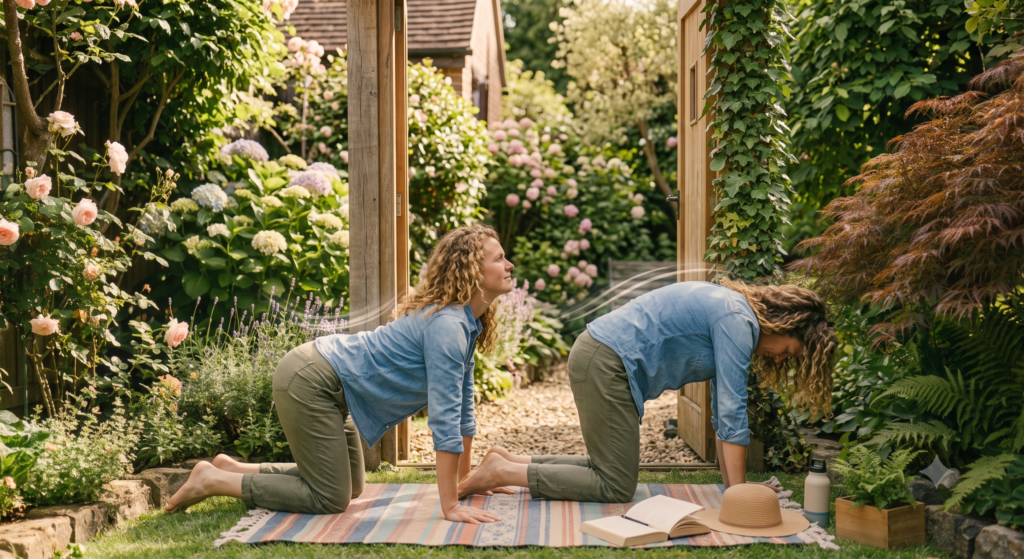
1. The Cat-Cow Flow (Spinal Mobility)
- Target Area: Entire spine, chest, and neck.
- How to do it: Start on all fours with hands under shoulders and knees under hips. On an inhale, arch your back gently, lifting your chest and tailbone toward the sky (Cow). On an exhale, round your spine, tucking your chin toward your chest (Cat). Repeat rhythmically for 8–10 slow breaths.
- Why it matters: Lubricates the spinal discs and relieves upper back and neck tension caused by screen time.
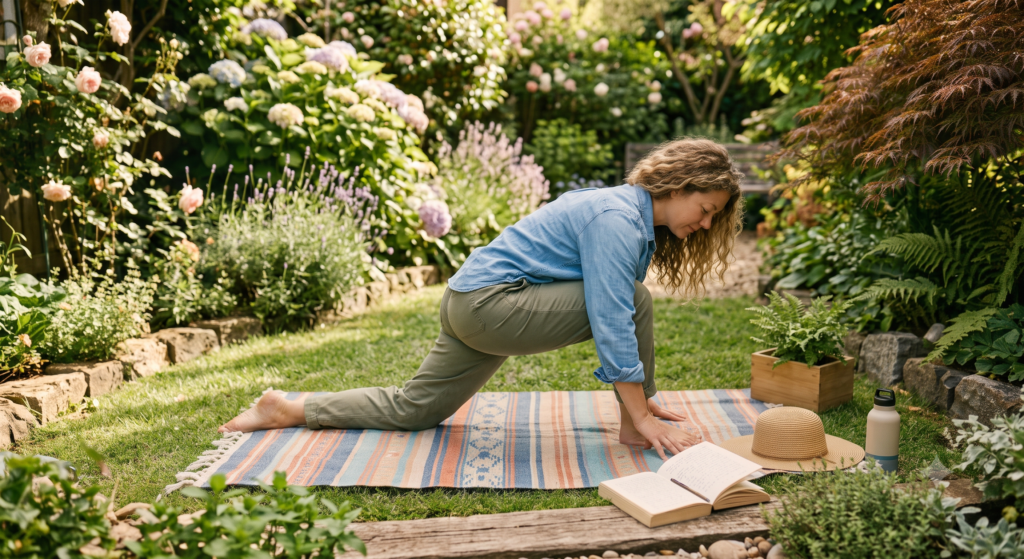
2. Low Lunge with Hip Opener (Releasing Sitting Tension)
- Target Area: Hip flexors, psoas, and quads.
- How to do it: Step your right foot forward into a lunge, dropping your left knee to the floor (use a folded towel for padding if needed). Gently shift your hips forward until you feel a comfortable stretch in the front of your left hip. Keep your torso tall and hold for 30–45 seconds per side, breathing deeply.
- Why it matters: Tight hip flexors from prolonged sitting pull on the lower back, causing anterior pelvic tilt and lower back discomfort.
3. Doorway Chest & Shoulder Opener (Posture Correction)
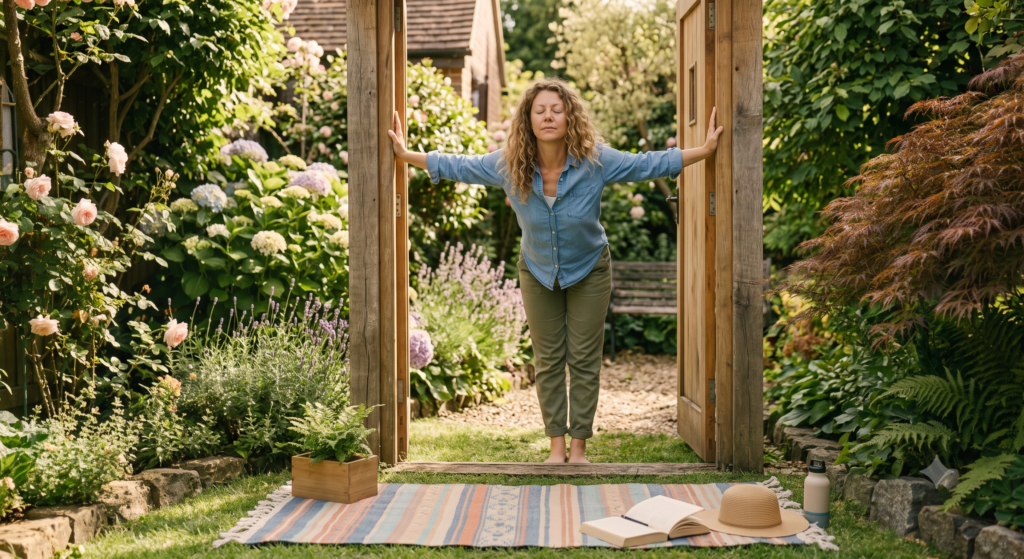
- Target Area: Pectoral muscles, front shoulders, and chest.
- How to do it: Stand in an open doorway. Bend your elbows at a 90-degree angle and place your forearms against the doorframe. Step one foot forward gently until you feel a subtle, restorative opening across your chest and shoulders. Hold for 30–45 seconds.
- Why it matters: Counteracts the rounded-shoulder posture (“tech neck”) that compresses the lungs and limits full diaphragmatic breathing.
4. Legs-Up-the-Wall Pose (Viparita Karani) (Nervous System & Venous Reset)
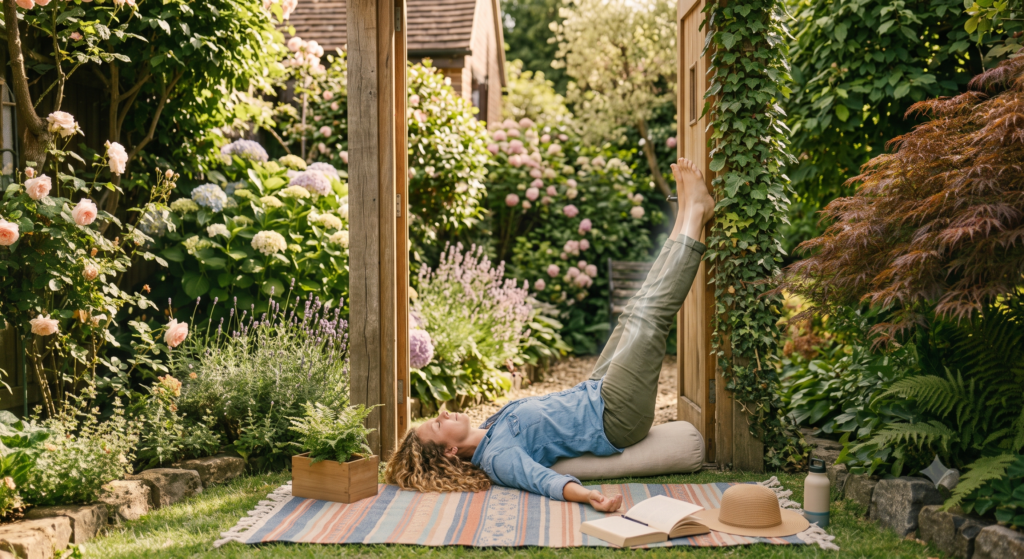
- Target Area: Hamstrings, lower back, and circulatory system.
- How to do it: Sit close to a clear wall, swing your legs up against the wall, and lie flat on your back with your arms resting gently by your sides. Close your eyes and focus on slow, belly-filling exhales for 3 to 5 minutes.
- Why it matters: A classic restorative pose in both modern physical therapy and traditional yoga. It promotes lymphatic drainage, eases heavy legs, and deeply calms the nervous system before sleep.
3 Simple Rules for Safe, Mindful Stretching
- Never Force a Stretch: Stretch to the point of gentle tension, never sharp pain. Your body should feel like it is surrendering into the movement, not fighting it.
- Breathe Into the Resistance: Inhale to create space; exhale to melt deeper into the hold. Deep, slow breathing signals your muscles to relax their protective reflexes.
- Consistency Over Intensity: Five minutes of daily, gentle movement is far more effective for long-term mobility than a single intense session once a week.
Unwind Your Body, Ease Your Mind
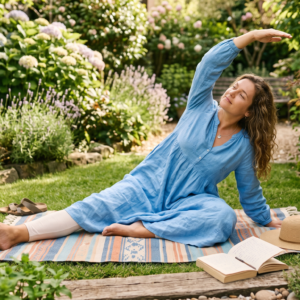
Stretching is a quiet act of self-care—a physical reminder to pause, check in with your body, and release whatever tension you have been holding throughout the day.
Whether you practice these stretches right after waking up to invite morning energy or before bed to prepare for restorative sleep, your body will thank you for the extra care.
What area of your body holds the most tension during the workday—your shoulders, lower back, or hips? What is your favorite daily stretch? Share your thoughts in the comments below!
-
The Mindful Shower: Transforming a Daily Habit into an Everyday Wellness Ritual
At DAYLONGLIFE, we believe that true longevity isn’t built solely through grand lifestyle overhauls. It is woven into the quiet, repetitive micro-habits of your day.
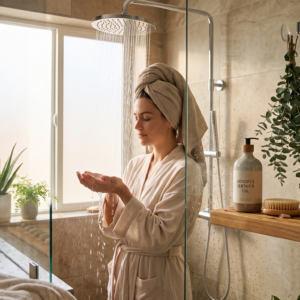
Taking a daily shower is often treated as a rushed item on a morning checklist or a mindless task before bed. But when approached with intention, your daily shower can become a powerful hydrotherapy ritual—a sacred space to wash away stress, regulate your nervous system, and awaken your senses.
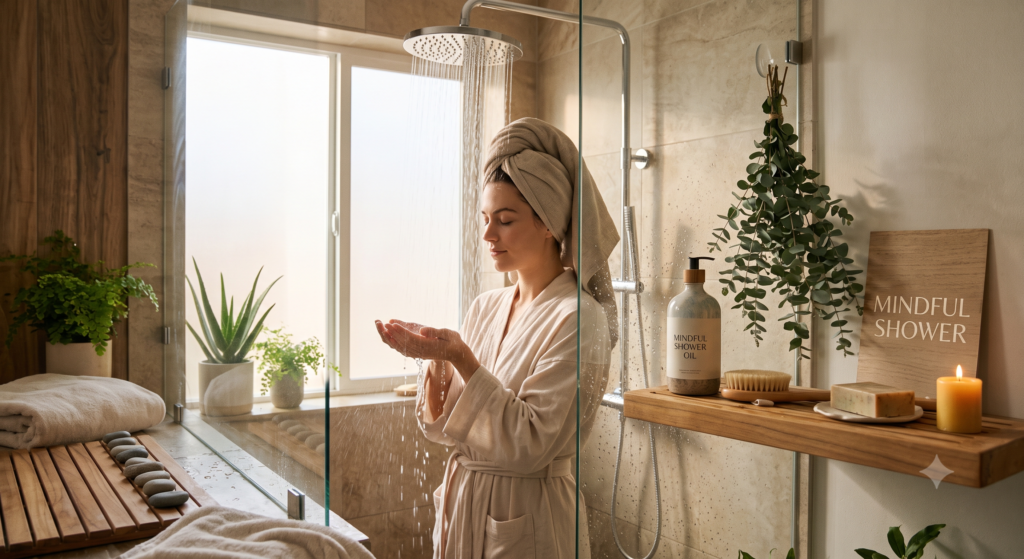
Here is how you can transform your daily shower from a routine chore into a restorative wellness experience for body and mind.
The Physical & Mental Benefits of Mindful Hydrotherapy
Water has been used as a therapeutic tool for centuries across cultures—from ancient Roman baths to traditional Japanese onsen. Adjusting your daily shower routine brings measurable benefits:
- Nervous System Reset: Switching between warm and cool water temperatures stimulates the vagus nerve, helping transition your body from high-alert stress into a calm, centered state.
- Enhanced Circulation: Warm water expands blood vessels (vasodilation) to soothe sore muscles, while a cool finish constricts them, driving oxygenated blood to your vital organs.
- Sensory Grounding: The tactile sensation of flowing water acts as a physical “circuit breaker” for overthinking, pulling your focus back into the present physical moment.
4 Ways to Elevate Your Daily Shower Ritual
1. The Power of Contrast Hydration (Warm to Cool Finish)
Instead of staying at a single warm temperature, end your shower with a deliberate temperature shift.
- How to do it: Enjoy your warm, cleansing shower as usual. During the final 30 to 60 seconds, gradually turn the tap to cool or cold water. Focus on taking steady, deep breaths.
- Why it works: Cold water triggers a brief releasing of endorphins, boosts circulation, tightens skin pores, and leaves you feeling crisp and mentally sharp without caffeine jitters.
2. Aromatherapy Shower Steams
Bring the calming essence of a spa into your home bathroom using the power of natural essential oils.
- How to do it: Before stepping into the water, sprinkle a few drops of Eucalyptus, Lavender, or Peppermint essential oil directly onto the shower floor or a damp washcloth placed away from the direct stream of water.
- Why it works: As the hot steam rises, it diffuses the essential oils. Inhaling eucalyptus opens up respiratory pathways and clears morning sinuses, while lavender calms evening anxiety.
3. Mindful Washing & Sensory Presence
It is easy to spend your shower mentally rehearsing your work day or replaying past conversations. Practice bringing your full awareness to the physical experience.
- How to do it: Notice the temperature of the water against your skin, the sound of the droplets, and the gentle scent of your soap. As you rinse off, visualize washing away mental fatigue, physical tension, and the stress of the day.
4. Post-Shower Nourishment: Locking in Moisture
Wellness doesn’t stop the moment you turn off the tap. The minutes right after your shower are the most critical for skin health.
- How to do it: Gently pat—don’t rub—your skin dry with a soft towel, leaving it slightly damp. Immediately apply a warm natural body oil (such as organic sesame, jojoba, or almond oil) or a rich moisturizer.
- Why it works: Applying oil or moisturizer to damp skin locks in hydration, supports your skin’s natural barrier, and acts as a comforting self-care ritual (inspired by Ayurvedic Abhyanga).
Wash Away the Day, Welcome Vitality
Your daily shower is one of the few moments in a busy day where you are completely free from screens, notifications, and demands. Treat it as a daily sanctuary to reset your energy, honor your physical body, and step back out into the world refreshed.
Do you prefer invigorating morning showers or calming evening showers? Have you ever tried ending your shower with a cool splash? Share your daily routine in the comments below!