-
Stopping Illness Before It Starts: The Ayurvedic Science of Disease Prevention
At DAYLONGLIFE, we view true health not as the absence of illness, but as a state of active, vibrant immunity and systemic balance.
In modern healthcare, we often wait for symptoms to manifest before taking action—reaching for medications only after a virus takes hold or chronic inflammation settles in. In traditional Ayurvedic medicine, prevention is the primary objective of healthcare. The ancient texts state: “Swasthyasya Swasthya Rakshanam”—to protect and preserve the health of the healthy.
Long before a disease expresses itself as a medical diagnosis, it undergoes subtle biological stages of imbalance. By understanding these stages and nourishing your baseline immunity (Ojas), you can stop physical breakdown long before it begins.
The Core Foundations of Ayurvedic Prevention
Ayurvedic preventive care centers around three interconnected pillars that keep your biological systems resilient against environmental pathogens and metabolic stress:
1. Protecting Your Metabolic Fire (Agni)
Your digestive capacity (Agni) is your first line of defense. Strong Agni breaks down food completely into essential nutrients that nourish blood, tissue, and immune cells. Weak or erratic Agni creates undigested metabolic byproduct (Ama), which ferments in the digestive tract and accumulates in vulnerable tissues, creating the ideal conditions for chronic disease.
2. Building Vital Immunity (Ojas)
In Ayurveda, Ojas is the ultimate refined essence of digestion—the biological equivalent of cellular vitality, immune resilience, and stress endurance. When Ojas is strong, pathogens cannot easily take root, energy remains stable, and the mind stays calm under pressure. High Ojas manifests physically as glowing skin, clear eyes, robust digestion, and strong stamina.
3. Aligning with Daily Cycles (Dinacharya)
Your body thrives on rhythmic predictability. Practicing Dinacharya (a structured daily routine) synchronizes your internal biological clock with the natural forces of daylight, temperature, and digestive cycles—optimizing hormone regulation and lowering baseline cortisol.
The 6 Stages of Disease (Shat Kriya Kala)
Ayurveda outlines a sophisticated 6-stage model of disease progression. Disease does not appear overnight; it develops in progressive phases:
- Accumulation (Sanchaya): Doshas (Vata, Pitta, or Kapha) begin to accumulate in their natural digestive sites due to diet, stress, or seasonal shifts.
- Aggravation (Prakopa): Imbalances intensify within the digestive tract, causing early warning signs like mild bloating, heart burn, or heaviness.
- Dissemination (Prasara): The excess imbalance overflows from the gut into the circulatory and lymphatic channels (srotas).
- Relocation (Sthanasamsraya): The imbalanced energy settles into weak points in the body (a vulnerable joint, lung tissue, or organ system).
- Manifestation (Vyakti): Clear physical clinical symptoms emerge (e.g., joint pain, chronic cough, skin rashes).
- Specialization/Chronicity (Bheda): The condition becomes a fully established chronic disease with distinct complications.
The Longevity Advantage: Modern medicine usually detects illness at Stage 5 or 6. Ayurvedic preventive habits are designed to catch and clear imbalances at Stages 1, 2, and 3—nipping health challenges in the bud.
4 Daily Practices to Prevent Illness Naturally
Integrating these four foundational micro-habits into your routine acts as a daily shield for your immune and digestive systems:
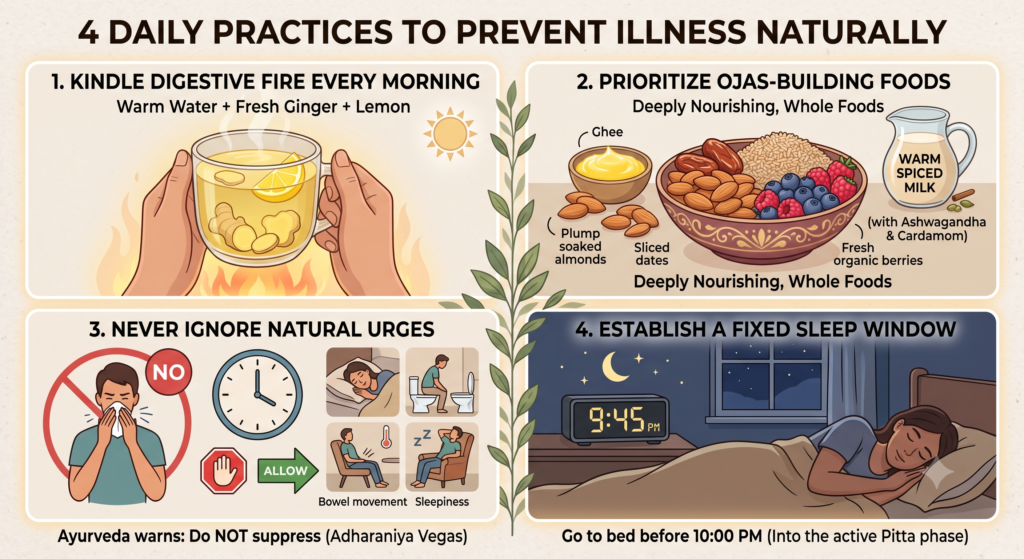
1.Kindle Digestive Fire Every Morning:
Start your day with a cup of warm water infused with fresh ginger slices and a splash of lemon juice. This wakes up sluggish peristalsis, clears overnight metabolic waste, and prepares your stomach for efficient digestion.
2.Prioritize Ojas-Building Foods:
Incorporate deeply nourishing, whole foods into your diet: warm ghee, soaked almonds, dates, cooked whole grains, fresh organic berries, and warm spiced milk (or hemp milk) infused with ashwagandha or cardamom.
3.Never Ignore Natural Urges:
Ayurveda strictly warns against suppressing natural bodily urges (Adharaniya Vegas)—such as sneezing, yawning, urination, bowel movements, or sleepiness. Suppressing these natural release valves creates physical pressure and internal stress in the nervous system.
4.Establish a Fixed Sleep Window:
Go to bed before 10:00 PM (the transition into the active Pitta phase of night). Sleeping during this window allows your liver, brain, and immune system to execute deep cellular repair and detoxification.
Cultivating Your Immune Reserve
Preventive health isn’t about constant worry or overly complex protocols—it is about respecting your body’s natural intelligence. By honoring your digestion, maintaining a steady daily rhythm, and listening to subtle early signals, you create an internal environment where vitality thrives naturally.
How do you support your immune system when you notice early signs of fatigue or stress? Have you tried building a daily wellness routine around digestive health? Share your thoughts in the comments below!
-
Everyday Balance: Five Ancient Ayurvedic Health Tips for Modern Longevity
At DAYLONGLIFE, we are always exploring time-tested wisdom that helps us live healthier, more vibrant lives. Long before modern wellness trends emerged, Ayurveda—India’s 5,000-year-old “science of life”—offered a profound blueprint for longevity based on harmony, natural rhythms, and self-care.
Ayurveda teaches us that health isn’t just the absence of illness; it is a state of dynamic balance between our body, mind, and environment. The best part? You don’t need to transform your entire life overnight to reap its benefits.
Here are 5 simple, practical Ayurvedic health tips you can easily bring into your daily routine to boost digestion, calm your nervous system, and support long-term vitality.
1. Awaken Your Digestion with Warm Lemon Water
In Ayurveda, strong digestive fire (Agni) is considered the absolute cornerstone of good health. Cold or icy water can dampen this fire, making digestion sluggish.
- The Daily Practice: Start your morning by sipping a mug of warm water with a fresh squeeze of lemon juice (and a tiny pinch of ginger or honey if desired).
- The Benefit: This gently wakes up your gastrointestinal tract, flush out overnight metabolic waste (Ama), and prepares your digestive system for breakfast.

2. Eat Your Largest Meal at Midday
Have you ever felt heavy and restless after a late, heavy dinner? Ayurveda aligns our internal clock with the movement of the sun. When the sun is at its highest (between 12:00 PM and 2:00 PM), our digestive energy is naturally at its peak.
- The Daily Practice: Make lunch your primary, most substantial meal of the day. Keep dinner lighter—such as a warm soup, stew, or cooked vegetables—and aim to eat at least 2 to 3 hours before sleep.
- The Benefit: This maximizes nutrient absorption during the day and prevents your body from working overtime to digest food while you sleep, leading to deeper, more restorative rest.
3. Practice Abhyanga (Self-Massage with Warm Oil)
Abhyanga is the traditional Ayurvedic practice of massaging warm, natural oil into the skin before bathing. In Sanskrit, the word for oil (Sneha) is the same word used for “love” or “tenderness.”
- The Daily Practice: Before your morning shower, warm a small tablespoon of organic sesame oil (grounding and warming) or coconut oil (cooling and soothing). Massage it gently into your skin using long strokes on your limbs and circular motions on your joints.
- The Benefit: It deeply nourishes the skin, promotes lymphatic circulation, calms an overactive nervous system, and grounds excess Vata (anxiety or restlessness).

4. Sip Whole-Spice Teas Throughout the Day
Instead of relying solely on caffeine for afternoon energy, turn to aromatic, healing whole spices that support your metabolism and soothe inflammation.
- The Daily Practice: Brew a pot of classical CCF Tea (equal parts whole Cumin, Coriander, and Fennel seeds) or ginger tea. Keep it in a thermos and sip it warm throughout the afternoon.
- The Benefit: These spices ease bloating, reduce internal heat or inflammation, and keep your body hydrated without shocking your system.
5. Align with Dinacharya (Daily Rhythms)
Our bodies thrive on predictability and routine. Dinacharya refers to the daily routine that keeps our circadian rhythms balanced.
- The Daily Practice: Try to wake up, eat meals, and go to bed at roughly the same times every day. Aim to dim overhead lights and turn off screens by 9:30 PM to prepare for sleep by 10:00 PM.
- The Benefit: Consistency reduces stress hormones like cortisol, improves sleep quality, and supports natural immune defense.
Small Steps toward Sustainable Vitality
Living an Ayurvedic lifestyle isn’t about perfection or strict rules—it is about cultivating a deeper awareness of what your body needs in each moment. Pick just one tip from this list to try this week, and observe how your body responds.