-
Red Gold: Slow-Simmered Tuscan Tomato & Herb Elixir
At DAYLONGLIFE, if there is one ingredient that embodies the warmth, flavor, and longevity of the Mediterranean coast, it is the humble tomato.
In Blue Zone regions like Sardinia, Italy, and Ikaria, Greece, tomatoes aren’t just an afterthought—they are a daily dietary cornerstone. Whether slow-roasted, simmered into fragrant sauces, or drizzled with extra virgin olive oil, tomatoes form the heart of anti-inflammatory cooking.
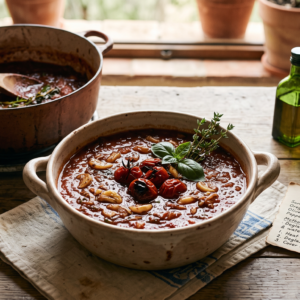
Today, we are sharing a classic Longevity Kitchen staple: Slow-Simmered Tuscan Tomato, Garlic & Herb Elixir. It is rich, velvety, deeply satisfying, and designed to unlock maximum cellular protection.
Why Tomatoes are a Longevity Superfood
While raw tomatoes are refreshing, cooking tomatoes with healthy fats turns them into a true medicinal power food:
- Lycopene Bioavailability: Tomatoes are famous for lycopene, a potent antioxidant that supports cardiovascular health, protects skin against UV damage, and reduces systemic inflammation. Cooking tomatoes in extra virgin olive oil boosts lycopene absorption by up to 300%!
- Heart & Vascular Support: High in potassium and Vitamin C, tomatoes help regulate blood pressure and protect arterial walls from oxidative stress.
- Synergistic Flavor & Health: When paired with garlic, onion, and fresh herbs like basil and oregano, cooked tomatoes create a rich prebiotic sauce that feeds beneficial gut microbes.
Simple Recipe: Slow-Simmered Tuscan Tomato & Herb Elixir
This versatile sauce can be served as a warm, comforting soup, spooned over ancient grains (like quinoa or farro), or used as a rich base for legumes and poached eggs.
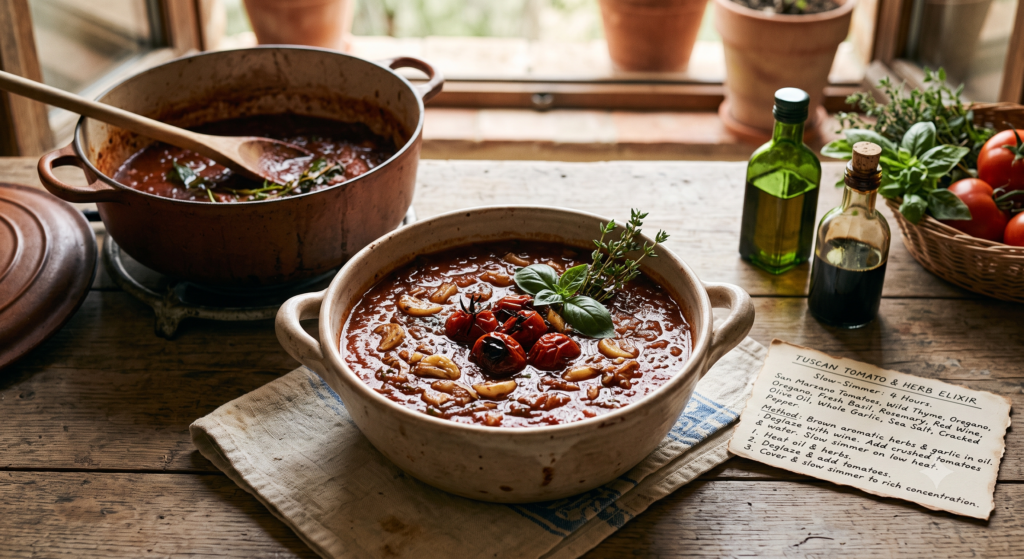
🌿 Ingredients (Serves 4)
- 2.5 lbs (1.1 kg) Ripe vine tomatoes (or 2 cans / 28 oz each of organic San Marzano whole peeled tomatoes)
- 3.5 tbsp High-quality extra virgin olive oil
- 1 medium Yellow onion, finely diced
- 5 cloves Garlic, thinly sliced
- 1 tsp Dried oregano or fresh thyme
- 1 cup Fresh basil leaves, roughly torn
- 1 pinch Sea salt and freshly cracked black pepper
- Optional: A tiny pinch of red pepper flakes for warmth, and toasted sourdough bread for serving
🥣 Step-by-Step Instructions
- Prep the Tomatoes: If using fresh tomatoes, blanch them in boiling water for 60 seconds, peel the skins, and coarsely chop the pulp. If using canned San Marzano tomatoes, crush them gently by hand in a bowl.
- Sauté the Aromatics: In a heavy-bottomed Dutch oven or deep skillet, heat the extra virgin olive oil over medium-low heat. Add the diced onion and garlic slices. Cook slowly for 8 to 10 minutes until soft, sweet, and translucent (do not let the garlic brown!).
- Add Herbs & Tomatoes: Stir in the dried oregano, a pinch of red pepper flakes, sea salt, and black pepper. Pour in the crushed tomatoes and their juices, stirring well to combine with the fragrant olive oil.
- Slow Simmer: Reduce the heat to the lowest setting, cover partially with a lid, and let it simmer gently for 30 to 40 minutes. Stir occasionally until the sauce turns deep red, glossy, and thick.
- Finish with Fresh Basil: Remove from heat and stir in the fresh torn basil leaves. Drizzle an extra tablespoon of raw extra virgin olive oil over the top before serving.
Longevity Tip: The Power of Olive Oil & Time
Never rush a tomato sauce! The slow, low-heat cooking process breaks down tough plant cell walls, allowing the fat-soluble lycopene to bond with the healthy monounsaturated fats in the extra virgin olive oil. This simple culinary synergy is one of the greatest secrets to Mediterranean vitality.
How do you like to cook tomatoes at home? Do you prefer a quick fresh sauce or a slow-simmered Tuscan stew? Share your favorite tomato recipes in the comments below!
-
Crisp Vitality: Braised Lettuce with Garlic, Ginger & Sesame
At DAYLONGLIFE, we often think of lettuce merely as a cold, crunchy base for raw salads. But in traditional longevity cultures—especially in Mediterranean and Asian culinary traditions—lettuce is frequently cooked.
Gentle heating transforms humble greens, breaking down tough plant fibers while preserving delicate vitamins and creating a warm, comforting side dish that is remarkably easy on the digestive system.
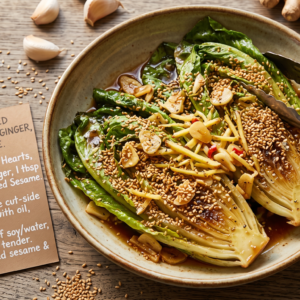
Today, we are showcasing cooked lettuce as a hero ingredient in The Longevity Kitchen with a simple, anti-inflammatory recipe: Warm Braised Lettuce with Garlic, Ginger, and Toasted Sesame.
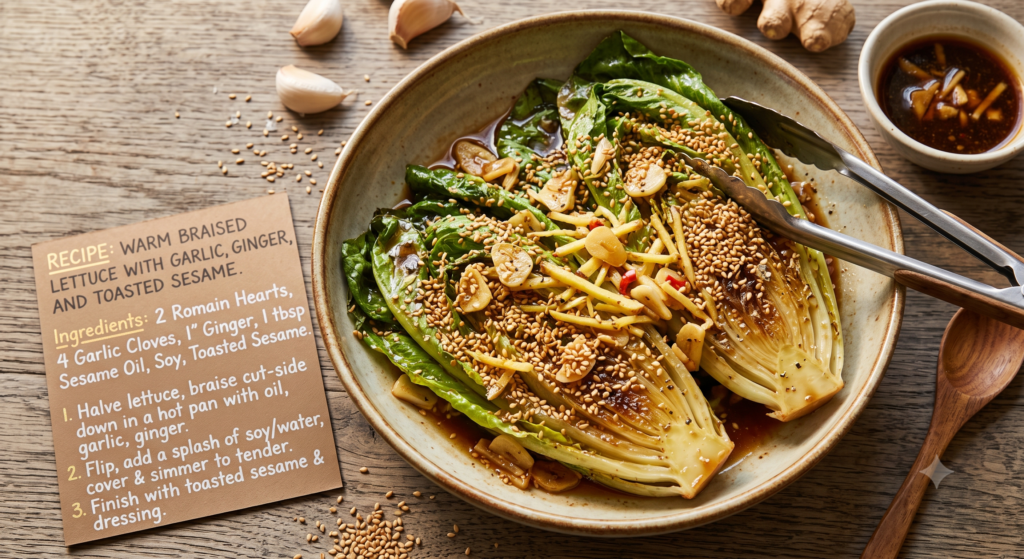
Why Cooked Lettuce Belongs in a Longevity Diet
Lettuce—particularly dark leafy varieties like Romaine, butterhead, or Little Gem—is an understated power vegetable loaded with vital nutrients:
- Heart-Healthy Folate & Vitamin K: Darker lettuces are rich in Vitamin K, which supports bone density and arterial health, as well as folate, an essential B-vitamin for cellular repair and DNA synthesis.
- Gentle on Digestive Fire: While raw salads can sometimes cause bloating or digestive strain (especially for sensitive gut types or during cooler seasons), gently braising or stir-frying lettuce wilts the greens, making their fiber much easier to digest while keeping nutrient absorption high.
- Hydration & Antioxidants: Lettuce has a very high water content combined with polyphenols and quercetin, helping to hydrate cells from within and soothe systemic inflammation.
Simple Recipe: Warm Braised Romaine with Ginger & Garlic
This quick 10-minute dish brings out a mild, buttery sweetness in lettuce, elevated by warming aromatics and healthy fats.
🌿 Ingredients (Serves 2–3)
- 2 heads Fresh Romaine or Little Gem lettuce (washed, dried thoroughly, and sliced lengthwise into halves or quarters)
- 1.5 tbsp Extra virgin olive oil or toasted sesame oil
- 2 cloves Garlic, thinly sliced
- 1 tsp Fresh ginger, julienned or finely grated
- 1.5 tbsp Low-sodium tamari or coconut aminos
- 1 tsp Toasted sesame seeds
- Optional: A light drizzle of raw honey or maple syrup, and a pinch of chili flakes for mild heat
🥣 Step-by-Step Instructions
- Prep the Greens: Trim the base of the lettuce heads, leaving enough stem so the leaves stay intact when cut lengthwise into halves or quarters.
- Warm the Aromatics: Heat the olive oil (or sesame oil) in a wide skillet over medium heat. Add the sliced garlic and ginger, sautéing gently for 30 to 45 seconds until fragrant without burning.
- Sear the Lettuce: Place the lettuce quarters cut-side down in the pan in a single layer. Press down gently with tongs and let them sear undisturbed for 2 minutes until lightly golden and caramelized.
- Glaze & Wilt: Turn the lettuce pieces over. Drizzle the tamari (or coconut aminos) directly over the lettuce. Cover the skillet with a lid and let it steam/braise for 1 to 2 minutes until the leaves are slightly wilted but still retain a bright green color and crisp center.
- Garnish & Serve: Transfer the warm lettuce to a serving platter, pour the garlic-ginger oil juices from the pan over top, and sprinkle generously with toasted sesame seeds.
Longevity Tip: The Art of Light Cooking
The key to cooking lettuce for maximum health benefits is speed. A quick sear or light steam preserves heat-sensitive antioxidants like Vitamin C while softening insoluble fiber.
Pairing warm greens with healthy fats (like sesame oil or extra virgin olive oil) ensures that fat-soluble vitamins (A and K) are easily absorbed by your body!
Have you ever tried cooking or braising lettuce instead of eating it raw? What is your favorite warm leafy green side dish? Share your thoughts in the comments below!