-
The Layers of Longevity: Why the Humble Onion Belongs in Every Healthy Kitchen
At DAYLONGLIFE, we often find that some of the most potent wellness tools aren’t expensive superfood powders or rare supplements. They are the simple, aromatic staples sitting right in your pantry basket.
In The Longevity Kitchen, onions are the unsung heroes of anti-inflammatory cooking. Found at the foundation of traditional recipes across every Blue Zone—from Mediterranean sofritos to Ayurvedic stews—onions provide far more than depth of flavor. They deliver a dense payload of bioactive compounds that protect your heart, nourish your gut microbiome, and support cellular health.
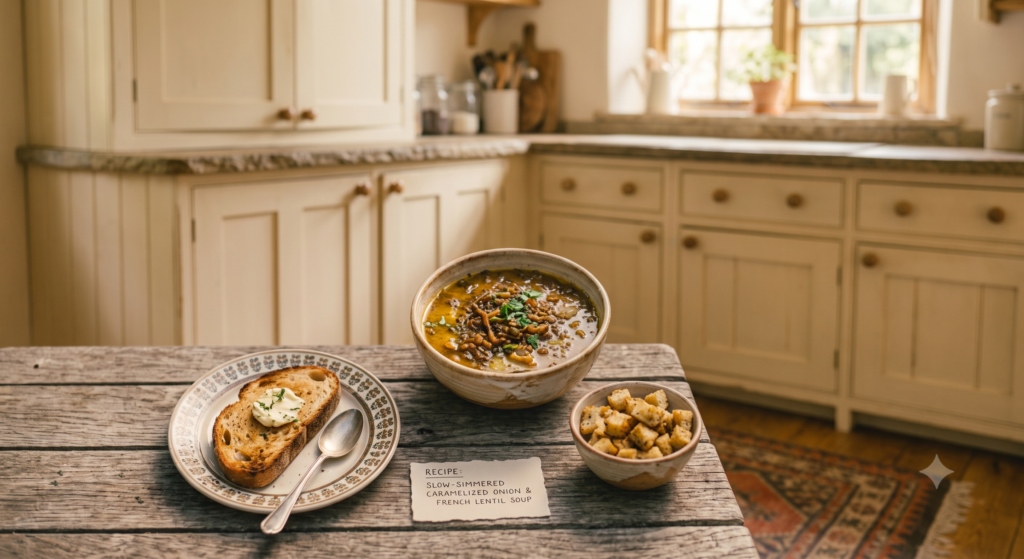
Today, we are diving into the science of onions and sharing a soul-warming recipe: Slow-Simmered Caramelized Onion & French Lentil Soup.
The Longevity Science Behind Onions
Whether yellow, red, white, or sweet, all members of the Allium family (which also includes garlic, shallots, and leeks) carry remarkable health benefits:
- Rich in Quercetin (Cellular Defense): Onions are among the richest dietary sources of quercetin, a potent polyphenol antioxidant. Quercetin acts as a natural senolytic—helping clear aged, dysfunctional cells—while reducing vascular inflammation and supporting healthy blood pressure.
- Gut Health & Prebiotic Fiber: Packed with inulin and fructooligosaccharides (FOS), onions act as fuel for your beneficial gut bacteria. A thriving gut microbiome is linked directly to strong immunity, balanced mood, and lower systemic inflammation.
- Organosulfur Compounds (Detoxification): The pungent compounds that make your eyes water when chopping onions are organosulfur molecules. These sulfur compounds stimulate natural liver detoxification pathways and protect against cellular oxidative damage.
- Cardiovascular Support: Regular onion consumption helps keep blood vessels flexible, inhibits unwanted blood platelet aggregation, and supports balanced cholesterol levels.
Red vs. Yellow vs. White: Which Onion is Best?
While all onions are healthy, their nutrient profiles vary slightly:
- Red Onions: Packed with anthocyanins (the same antioxidants found in berries), making them exceptionally high in total antioxidant capacity. Best eaten raw or lightly pickled in salads.
- Yellow Onions: Contain the highest levels of quercetin and sulfur compounds. Their deep, rich flavor makes them perfect for long, slow cooking, soups, and roasts.
- White & Sweet Onions: Milder and gentler on sensitive digestive systems, though slightly lower in polyphenol concentration than red or yellow varieties.
Simple Recipe: Slow-Simmered Caramelized Onion & French Lentil Soup
This comforting, high-fiber soup combines the sweetness of slowly caramelized onions with nutrient-dense green lentils for a deeply satisfying, gut-nourishing meal.
🌿 Ingredients (Serves 4)
- 3 large Organic yellow onions, thinly sliced
- 1 cup French green lentils (Puy lentils) or brown lentils, rinsed
- 3 tbsp Extra virgin olive oil
- 3 cloves Garlic, minced
- 4 cups Low-sodium vegetable bone broth or mineral broth
- 1 tsp Fresh thyme leaves (or 1/2 tsp dried thyme)
- 1 Dried bay leaf
- 1 tbsp Apple cider vinegar or fresh lemon juice
- Sea salt and freshly cracked black pepper to taste
🥣 Step-by-Step Instructions
- Caramelize the Onions Slowly: Heat the extra virgin olive oil in a heavy Dutch oven or large soup pot over medium-low heat. Add the sliced onions with a generous pinch of sea salt. Cook slowly, stirring occasionally, for 25 to 30 minutes until the onions turn deeply golden brown and sweet. (Patience is key here—slow cooking breaks down the sugars and maximizes flavor!)
- Add Aromatics: Stir in the minced garlic and fresh thyme, cooking for another 1 to 2 minutes until fragrant.
- Simmer the Lentils: Add the rinsed lentils, vegetable broth, and bay leaf to the pot. Bring to a gentle boil, then turn the heat to low, cover, and simmer for 25 to 30 minutes until the lentils are tender but still hold their shape.
- Finish & Brighten: Remove from heat and discard the bay leaf. Stir in the apple cider vinegar (or fresh lemon juice) to brighten the rich, savory flavors. Season with salt and pepper to taste.
- Serve: Ladle into warm bowls, drizzle with a fresh touch of extra virgin olive oil, and garnish with extra fresh thyme leaves.
Kitchen Tip: Don’t Peel Away the Best Parts!
The outermost paper-like layers of an onion contain the highest concentration of quercetin. When making homemade vegetable broths or simmering soups, save clean outer onion skins in a freezer bag and throw them into your broth pot to extract those extra antioxidants before straining!
-
Golden Elixir: Anti-Inflammatory Pumpkin & Ginger Soup for Longevity
At DAYLONGLIFE, autumn and winter cooking is all about warmth, comfort, and deep nourishment. When the air turns crisp, few dishes nurture the body and soul like a vibrant, silky bowl of Pumpkin Soup.
In longevity science and traditional anti-inflammatory cooking, pumpkin isn’t just a seasonal treat—it is a nutrient-dense superfood. Rich in protective antioxidants, fiber, and essential minerals, pumpkin serves as a perfect foundation for a gentle, gut-loving meal that supports healthy aging.
Today, we are sharing our signature Longevity Kitchen recipe: Golden Roasted Pumpkin & Ginger Soup. It combines caramelized roasted pumpkin with warming spices and healthy fats to create a dish that is deeply comforting, easy to digest, and packed with vitality.
Why Pumpkin is a Longevity Superfood
Carotenoid-rich vegetables like pumpkin are dietary staples across many long-living communities. Here is why this golden squash deserves a regular spot on your dinner table:
- Cellular Protection (Beta-Carotene & Alpha-Carotene): Pumpkin is loaded with carotenoids, powerful antioxidants that give it its rich orange hue. These compounds neutralize free radicals, reduce systemic inflammation, and support healthy skin and eye function.
- Gut-Friendly Prebiotic Fiber: The smooth, soluble fiber in pumpkin gently feeds your beneficial gut bacteria without causing digestive distress, supporting a balanced microbiome—a crucial key to healthy immune function.
- Heart & Metabolic Health: Packed with potassium and magnesium, pumpkin helps regulate blood pressure and keeps your cardiovascular system running smoothly.
Simple Recipe: Golden Roasted Pumpkin & Ginger Soup
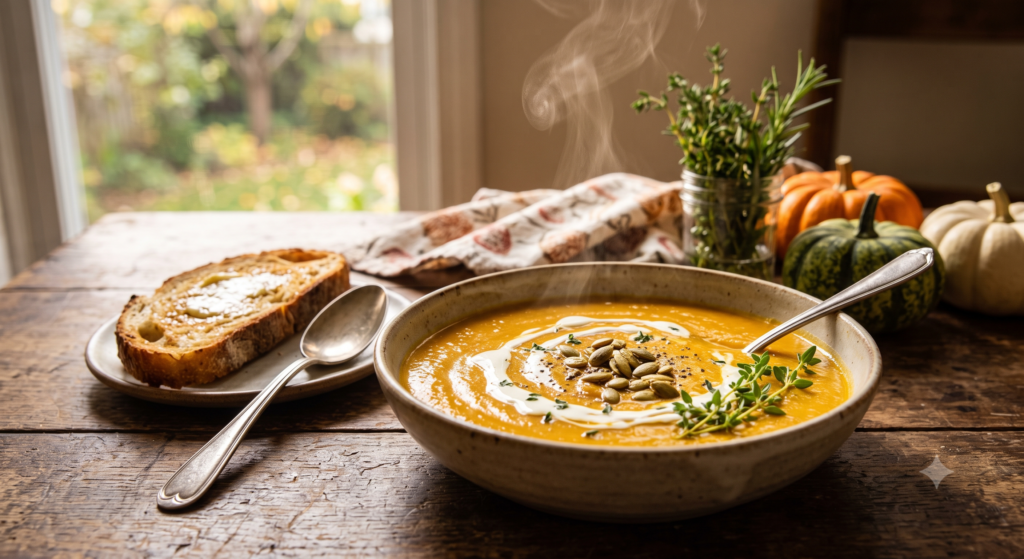
By roasting the pumpkin first with whole spices, we caramelize its natural sugars, enhancing its deep flavor while making its nutrients even more bioavailable.
🌿 Ingredients (Serves 4–6)
- 2.5 lbs (1.2 kg) Kabocha squash, Sugar pumpkin, or Butternut squash (peeled, seeded, and cut into 1-inch cubes)
- 2.5 tbsp Extra virgin olive oil
- 1 medium Yellow onion, chopped
- 3 cloves Garlic, minced
- 1.5 tbsp Fresh ginger, finely grated (adjust based on your preferred heat)
- 1 tsp Ground turmeric
- 1/2 tsp Ground cumin
- 3.5 cups Low-sodium organic vegetable broth
- 1/2 cup Full-fat unsweetened coconut milk (or extra virgin olive oil for richness)
- Sea salt and freshly cracked black pepper to taste
- Optional toppings: Roasted pumpkin seeds (pepitas), a drizzle of extra virgin olive oil, or fresh microgreens
🥣 Step-by-Step Instructions
- Roast the Pumpkin: Preheat your oven to 400°F (200°C). Toss the cubed pumpkin with 1.5 tbsp of extra virgin olive oil, a pinch of sea salt, and black pepper on a baking sheet. Roast for 25–30 minutes until the edges are golden-brown and tender.
- Sauté the Aromatics: In a large soup pot, heat the remaining 1 tbsp of olive oil over medium heat. Add the onion and sauté for 5 minutes until soft and translucent. Add the garlic, fresh grated ginger, turmeric, and cumin, cooking for another 60 seconds until fragrant.
- Simmer: Add the roasted pumpkin and vegetable broth to the pot. Bring to a gentle boil, then reduce heat to low and simmer uncovered for 10 minutes so the flavors melt together.
- Blend to Perfection: Remove from heat. Using an immersion blender (or transferring carefully in batches to a high-speed blender), puree the soup until completely smooth and velvety.
- Finish & Serve: Stir in the coconut milk, season with additional sea salt and black pepper to taste, and warm gently over low heat. Ladle into warm ceramic bowls and garnish with crunchy roasted pumpkin seeds and a swirl of coconut milk or olive oil.
Longevity Tip: The Power of Spicing
Pairing pumpkin with ginger and turmeric creates an anti-inflammatory powerhouse. Ginger aids digestion and eases bloating, while turmeric helps soothe joint discomfort. Always ensure you add a touch of healthy fat (like olive oil or coconut milk) and a pinch of black pepper to ensure maximum nutrient absorption!