-
Discovering Your Dosha and Crafting Your Daily Self-Care Routine (Dinacharya)
At DAYLONGLIFE, we believe true longevity begins with self-awareness. Everything in Ayurveda starts with understanding your unique nature so you can make practical changes that support your energy, strengthen immunity, and prevent disease.
In Ayurvedic wisdom, the three doshas—Vata, Pitta, and Kapha—are the essential building blocks of our health. Unlocking your unique dosha profile gives you a personalized map for choosing the foods, exercises, work patterns, and relaxation habits that suit you best.
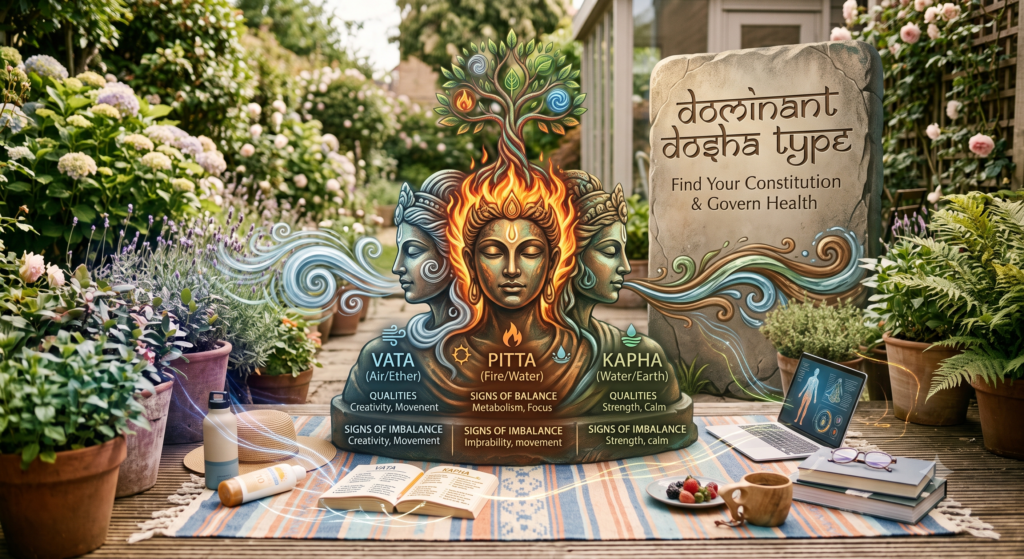
🧘 Understanding Your Prakriti vs. Vikriti
- Prakriti (Your Original Constitution): The natural mix of Vata, Pitta, and Kapha you were born with. It defines your unique physical, mental, and emotional tendencies and remains constant throughout your life.
- Vikriti (Your Current State): Your current state of imbalance, which fluctuates based on diet, lifestyle, stress, weather, and daily habits.
While a complete diagnosis is best done with an experienced Ayurvedic practitioner, you can gain a clear picture of your dominant dosha by observing your body, mind, digestion, and stress tendencies.
🌿 What Is Your Dominant Dosha Type?
💨 1. Vata Type
- Body: Thin frame, dry skin, cold hands and feet.
- Mind: Creative, quick thinker, sometimes forgetful.
- Digestion: Irregular hunger and digestion, prone to gas or bloating.
- Tendencies: Restlessness, insomnia, and anxiety under stress.
🔥 2. Pitta Type
- Body: Medium build, warm body, reddish or sensitive skin.
- Mind: Sharp intellect, determined, goal-oriented.
- Digestion: Strong appetite, prone to heartburn or loose stools.
- Tendencies: Anger and irritability under pressure.
🌊 3. Kapha Type
- Body: Large frame, soft and oily skin, tendency to gain weight.
- Mind: Calm, patient, loyal, with a steady memory.
- Digestion: Slow metabolism, heavy feeling after eating.
- Tendencies: Lethargy, attachment, and emotional eating.
Note: Many people are a combination type (such as Vata-Pitta or Kapha-Vata). In these cases, focus on balancing both doshas, prioritizing whichever feels more disturbed.
⏰ Why Daily Routine (Dinacharya) Matters
Modern life frequently disconnects us from nature’s natural cycles (sunrise, sunset, and changing seasons), causing doshic imbalances that lead to fatigue, anxiety, and digestive issues.
A structured daily routine, or Dinacharya, reconnects you with your body’s internal clock. It clears toxins, regulates digestion, improves sleep quality, and builds long-term immunity.
🌅 Designing Your Dosha-Aligned Daily Schedule
You don’t need to change everything overnight—start small and build your routine step by step.
1. Morning Rituals
- Wake-Up Times:
- Vata: 6:00 AM – 6:30 AM
- Pitta: 5:30 AM – 6:00 AM
- Kapha: 4:30 AM – 5:30 AM (rising early helps Kapha types overcome natural sluggishness)
- Start with Stillness: Begin with a few moments of quiet or gratitude to calm the nervous system.
- Cleanse the Senses:
- Tongue Scraping: Removes overnight metabolic waste (Ama) and wakes up digestion.
- Oil Pulling: Swish sesame or coconut oil for 5–10 minutes to strengthen teeth and gums.
- Nasya (Nasal Drops): Apply a few drops of sesame or medicated oil in each nostril to support respiratory health.
- Eye Wash: Splash eyes with cool water to relieve strain.
- Hydration: Sip a glass of warm water with fresh lemon to flush toxins and stimulate bowel movements.
- Self-Massage (Abhyanga): Massage warm oil into your skin before bathing:
- Vata: Use warm sesame oil.
- Pitta: Use cooling coconut or sunflower oil.
- Kapha: Use mustard or sesame oil with energetic, invigorating strokes.
- Movement & Meditation:
- Vata: Slow, grounding yoga with deep breathing.
- Pitta: Moderate-intensity, cooling poses without overexertion.
- Kapha: Dynamic yoga flow or fast-paced walking.
- Finish with 10–15 minutes of deep breathing or silent meditation to balance the mind.
2. Nourishing Meals & Eating Habits
- Regular Timing: Eat at the same times every day to keep digestion predictable.
- Breakfast:
- Vata: Warm, moist foods like oatmeal with ghee.
- Pitta: Fresh fruits, smoothies, or light porridge.
- Kapha: Warm herbal tea or light fruit.
- Lunch: Make this your largest meal, eaten around noon when your internal digestive fire is strongest.
- Dinner: Eat a light meal (such as soups, stews, or steamed vegetables) by 7:00 PM, at least 2 to 3 hours before bed.
- Mindful Eating: Sit down without screens or distractions, chew slowly, and avoid drinking ice-cold water during meals.
3. Evening Wind-Down & Restful Sleep
In Ayurveda, sleep is considered one of the three pillars of life alongside food and balanced energy.
- Afternoon: Take a short walk after lunch. Sip herbal teas—ginger for Kapha, mint for Pitta, and fennel for Vata.
- Evening: Turn off screens after sunset. Sip a soothing herbal tea like chamomile, tulsi, or a whole cumin-coriander-fennel (CCF) blend.
- Pre-Sleep Care: Massage the soles of your feet with warm sesame or Brahmi oil to soothe the nervous system. Avoid arguments, loud noises, or stressful work late at night.
- Bedtimes:
- Vata: 9:00 PM – 9:30 PM
- Pitta: 10:00 PM
- Kapha: 10:00 PM or earlier
🌺 The Benefits of Living in Doshic Harmony
When you align your daily habits with your dosha, positive shifts occur naturally:
- Your energy becomes steady and consistent.
- Digestion and bowel movements become regular.
- Skin clarity, mood, and mental focus improve noticeably.
- You transition from reacting to illness to proactively preventing it.
Adopting even two or three small habits—like rising earlier, enjoying warm meals, or taking moments for quiet meditation—can deeply transform your inner state. These routines are non-restrictive rituals of self-respect that awaken your body’s inherent wisdom and capacity to heal.
Which small Ayurvedic ritual—a warm lemon drink, morning tongue scraping, or an earlier bedtime—will you try adding to your routine tomorrow? Share your plan in the comments below!
-
The Three Doshas: Understanding Vata, Pitta, and Kapha for Personalized Longevity
At DAYLONGLIFE, we often highlight that true wellness is never a one-size-fits-all formula. What energizes one person might exhaust another, and a diet that cools one body might dampen the digestive fire of another.
This personalized approach to health sits at the heart of Ayurveda, where optimal vitality is achieved by understanding your unique mind-body constitution, known as your Prakriti, governed by three elemental energies called Doshas: Vata, Pitta, and Kapha.
By learning which dosha dominates your system, you can tailor your daily meals, stress-reduction practices, and self-care rituals for lasting balance and graceful aging.
What Are the Three Doshas?
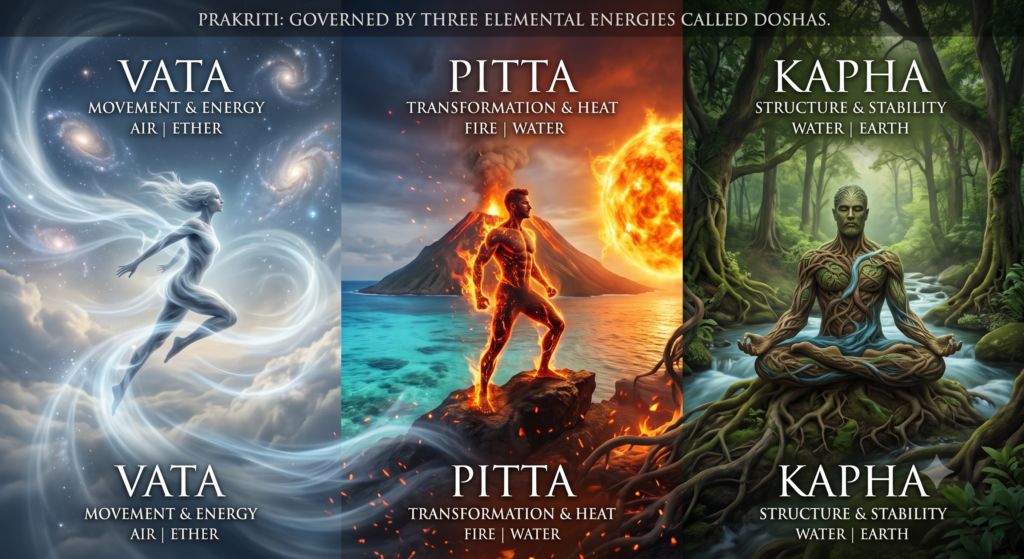
In Ayurvedic philosophy, the universe—and everything within it—is composed of five basic elements: Space, Air, Fire, Water, and Earth. In the human body, these elements combine into three primary physiological energies:
- Vata (Space + Air): The energy of Movement
- Pitta (Fire + Water): The energy of Transformation & Metabolism
- Kapha (Water + Earth): The energy of Structure & Lubrication
Everyone possesses all three doshas, but most of us have one or two that are naturally more dominant. When these energies are in harmony, we feel energetic and clear-minded. When they fall out of balance due to stress, poor diet, or seasonal shifts, discomfort and fatigue arise.
🌬️ 1. Vata Dosha: The Energy of Movement
- Elements: Air & Space
- Qualities: Light, dry, cool, quick, mobile, and subtle
- In Balance: Creative, enthusiastic, quick-learning, flexible, and energetic.
- Out of Balance: Anxiety, racing thoughts, dry skin, cold hands/feet, bloating, and irregular digestion.
How to Balance Vata:
Since Vata is naturally cold, dry, and erratic, it thrives on warmth, routine, and grounding.
- Nutrition: Eat warm, cooked, nourishing foods like hearty root vegetable soups, stews, and whole grains with healthy fats (like extra virgin olive oil or ghee). Avoid cold, raw salads and icy drinks.
- Lifestyle: Establish a consistent daily routine (Dinacharya). Practice daily self-massage (Abhyanga) with warm sesame oil to ground the nervous system.
🔥 2. Pitta Dosha: The Energy of Transformation
- Elements: Fire & Water
- Qualities: Hot, sharp, light, oily, and intense
- In Balance: Sharp intellect, strong digestion, focused, courageous, and direct.
- Out of Balance: Irritability, anger, hyperacidity, skin rashes/inflammation, and burnout.
How to Balance Pitta:
Since Pitta is hot and intense, it benefits most from cooling, soothing, and moderation.
- Nutrition: Choose cooling, naturally sweet, and bitter foods like leafy greens, cucumber, sweet fruits, and coconut oil. Limit spicy, sour, fried, or overly salty foods.
- Lifestyle: Avoid overworking or harsh midday sun. Incorporate calm, non-competitive activities like evening walks, gentle yoga, and soothing herbal teas (such as peppermint or chamomile).
🌊 3. Kapha Dosha: The Energy of Structure
- Elements: Water & Earth
- Qualities: Heavy, slow, cool, oily, smooth, and stable
- In Balance: Calm, loving, patient, grounded, with strong stamina and immunity.
- Out of Balance: Lethargy, weight gain, sinus congestion, attachment, and resistance to change.
How to Balance Kapha:
Since Kapha is heavy, cold, and static, it needs stimulation, warmth, and movement.
- Nutrition: Favor light, warm, and well-spiced foods. Incorporate pungent and bitter flavors like fresh ginger, black pepper, turmeric, and steamed green vegetables. Minimize heavy dairy, sugar, and oily dishes.
- Lifestyle: Stay active with vigorous daily exercise. Seek out new experiences, awaken early (before 6:00 AM), and avoid daytime naps to keep energy flowing freely.
Bringing Dosha Awareness into Your Daily Routine
Discovering your dominant dosha isn’t about putting yourself in a rigid box—it is a compassionate tool for self-awareness. When you notice subtle signs of imbalance (like Vata restlessness on a windy autumn day or Pitta irritability during a hot summer afternoon), you can gently adjust your meals, teas, and rest to restore equilibrium.
Living long and well begins by listening to what your body is asking for in this present moment.
Which dosha qualities (Vata airiness, Pitta intensity, or Kapha grounding) do you feel most strongly in your life right now? Share your thoughts in the comments below!