-
Golden Hour Elixir: The Cellular Longevity & Hydration Benefits of Grapefruit
At DAYLONGLIFE, we treat every beverage served in The Longevity Kitchen as an opportunity to deliver biological nourishment. While ultra-processed sodas and sugary juices cause rapid blood sugar spikes and systemic inflammation, a carefully crafted botanical elixir can stimulate liver detoxification pathways, enhance vascular flexibility, and revitalize cellular health.
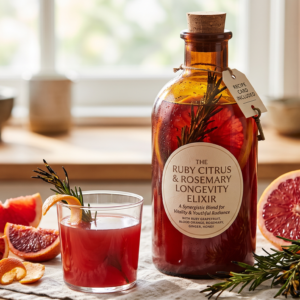
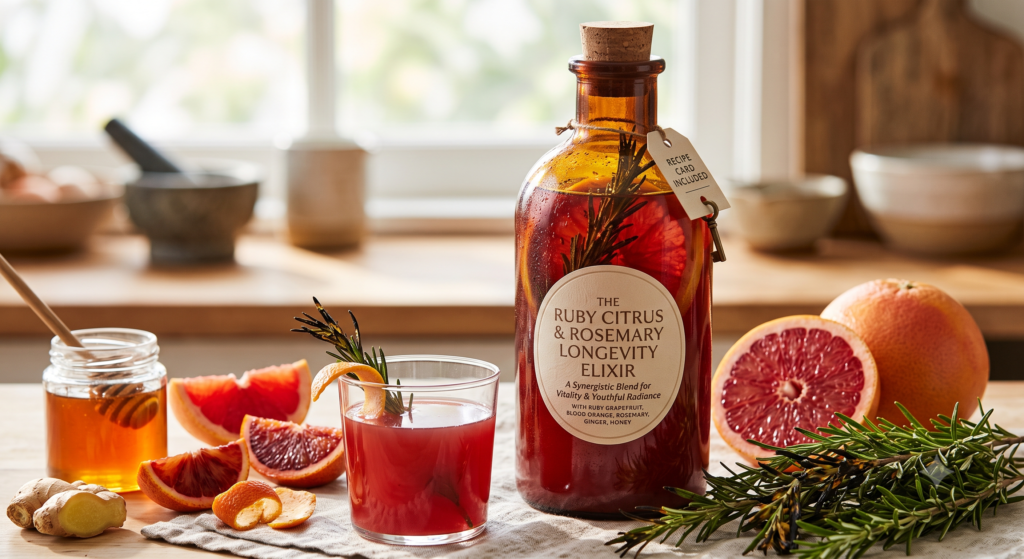
Today, we are showcasing the power of fresh ruby red grapefruit with a crisp, botanical mocktail: The Ruby Citrus & Rosemary Longevity Elixir.
The Science of Grapefruit for Longevity
Bright, aromatic, and pleasantly tart, grapefruit is packed with bioactive plant compounds that support metabolic health and cardiovascular protection:
- Spermidine & Autophagy: Grapefruit contains spermidine, a naturally occurring polyamine compound researched in longevity science for its ability to trigger autophagy—the body’s internal cellular cleanup process that recycles damaged organelles and protein waste.
- Naringenin & Metabolic Balance: The characteristic bitter flavor of grapefruit comes from naringenin, a powerful citrus flavonoid. Naringenin enhances insulin sensitivity, encourages fatty acid oxidation in the liver, and helps maintain balanced blood glucose levels.
- Vascular Health (Vitamin C & Lycopene): Ruby red varieties derive their rich color from lycopene, an antioxidant that protects arterial walls from oxidative damage, paired with high concentrations of Vitamin C for collagen synthesis and endothelial health.
Simple Recipe: The Ruby Citrus & Rosemary Longevity Elixir
This refreshing, low-glycemic drink combines cold-pressed grapefruit juice with anti-inflammatory rosemary, raw apple cider vinegar, and sparkling water for a clean afternoon pick-me-up.
🌿 Ingredients (Serves 2)
- 1 cup Freshly squeezed ruby red grapefruit juice (about 1 large grapefruit)
- 1 tbsp Organic, unfiltered apple cider vinegar (with “the mother”)
- 1 sprig Fresh organic rosemary (plus extra for garnish)
- 1/2 tsp Freshly grated ginger juice or fine ginger paste
- 1 cup Chilled sparkling water or mineral water
- 1 tsp Raw honey or pure liquid stevia (optional, to balance tartness)
- Ice cubes and fresh grapefruit slices for serving
🥣 Step-by-Step Instructions
- Muddle the Aromatics: In a glass cocktail shaker or liquid measuring pitcher, add the fresh rosemary sprig, raw honey (if using), and grated ginger. Gently muddle with a wooden spoon for 15 to 20 seconds to release the aromatic essential oils from the rosemary.
- Combine the Bases: Pour in the fresh ruby red grapefruit juice and apple cider vinegar. Stir briskly so the honey dissolves into the citrus base.
- Strain & Chill: Fill two tall glasses with fresh ice cubes. Strain the grapefruit mixture evenly into both glasses.
- Top & Garnish: Top each glass with chilled sparkling mineral water. Stir gently with a long spoon to combine, then garnish with a fresh sprig of rosemary and a thin slice of ruby red grapefruit.
⚠️ Important Longevity Note: Grapefruit & Medications
Grapefruit contains natural compounds called furanocoumarins, which temporarily inhibit the CYP3A4 enzyme in the small intestine. This enzyme breaks down many common prescription medications (including certain statins, blood pressure drugs, and antihistamines), causing higher absorption levels in the bloodstream.
Safety Check: If you take daily prescription medications, always check with your healthcare provider or pharmacist before introducing fresh grapefruit or grapefruit juice into your regular diet!
-
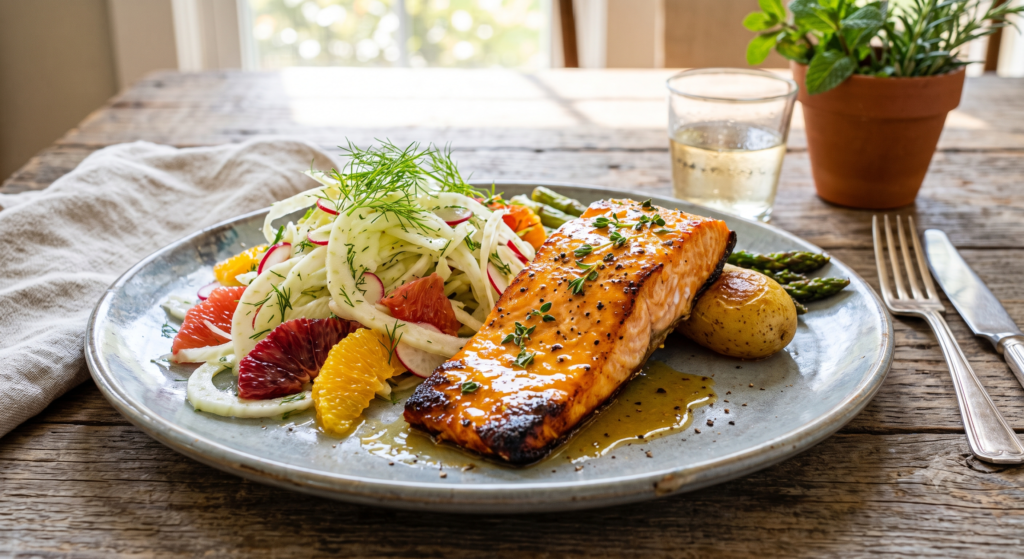
Citrus Vitality: Roasted Salmon with Citrus Glaze & Fennel Salad
At DAYLONGLIFE, we love turning everyday kitchen staples into vibrant remedies for longevity. Among nature’s brightest gifts, oranges stand out as a premier superfood.
While many enjoy oranges merely as a quick breakfast snack or a glass of morning juice, incorporating whole citrus into cooked, anti-inflammatory meals unlocks incredible cellular and cardiovascular benefits.
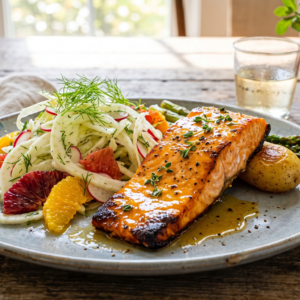
Today, we are showcasing whole oranges as a star ingredient in The Longevity Kitchen with a Mediterranean-inspired recipe: Pan-Seared Salmon with Citrus Glaze & Fresh Orange-Fennel Salad.
Why Oranges are a Longevity Powerhouse
Oranges offer far more than just a sweet, refreshing burst of flavor. When consumed as whole fruit or fresh zest and juice, their longevity benefits shine:
- Cellular Defense (Vitamin C & Hesperidin): Packed with Vitamin C, oranges shield cells from oxidative stress and support collagen synthesis for healthy skin and flexible joints. They also contain hesperidin, a citrus bioflavonoid that helps lower blood pressure and protect blood vessel walls.
- Heart & Vascular Health: The soluble fiber (pectin) found in oranges supports healthy cholesterol levels, while potassium regulates fluid balance and heart rhythm.
- Enhanced Nutrient Absorption: The natural citric acid and Vitamin C in oranges boost your body’s ability to absorb iron from greens, legumes, and seeds, driving energy and cellular oxygenation.
Simple Recipe: Roasted Salmon with Citrus Glaze & Fennel Salad
This light, elegant dish marries warm, rich omega-3 fats with a crisp, antioxidant-dense citrus salad. It takes under 25 minutes to prepare and looks as stunning as it tastes.
🌿 Ingredients (Serves 2)
- 2 wild-caught Salmon fillets (or substitute with organic firm tofu or chickpeas)
- 2 medium Organic oranges (1 squeezed for juice & zest; 1 peeled and sliced into segments)
- 1 small Fresh fennel bulb, thinly shaved
- 1 tbsp Extra virgin olive oil
- 1 tsp Raw honey or maple syrup
- 1 clove Garlic, finely minced
- 1/2 tsp Ground turmeric
- A pinch of sea salt & freshly cracked black pepper
- Garnish: Fresh fennel fronds or fresh parsley
🥣 Step-by-Step Instructions
- Prepare the Citrus Glaze: In a small saucepan, combine the fresh juice and zest of 1 orange, minced garlic, honey, turmeric, sea salt, and black pepper. Simmer gently over low heat for 3 to 5 minutes until it reduces into a light, fragrant glaze.
- Sear the Salmon: Heat extra virgin olive oil in a skillet over medium heat. Season the salmon fillets with a pinch of salt and pepper. Place in the skillet skin-side down and cook for 4 minutes. Flip, brush generously with the warm orange glaze, and cook for another 3 to 4 minutes until cooked through and caramelised.
- Assemble the Salad: In a medium bowl, toss the thinly shaved fennel bulb, orange segments, and a drizzle of raw extra virgin olive oil together. Season with a touch of black pepper.
- Serve & Enjoy: Plate the glazed salmon alongside the crisp orange-fennel salad. Garnish with feathery fresh fennel fronds and enjoy immediately!
Longevity Tip: Don’t Waste the Zest!
The outer peel (zest) of an orange contains the highest concentration of citrus essential oils and anti-inflammatory flavonoids like nobiletin. Always scrub organic citrus clean and grate a touch of fresh zest over your cooked dishes, soups, or herbal teas before serving to double your antioxidant intake!
What is your favorite way to cook with fresh citrus? Do you prefer savory orange dishes or refreshing citrus salads? Share your ideas in the comments below!
-
Red Gold: Slow-Simmered Tuscan Tomato & Herb Elixir
At DAYLONGLIFE, if there is one ingredient that embodies the warmth, flavor, and longevity of the Mediterranean coast, it is the humble tomato.
In Blue Zone regions like Sardinia, Italy, and Ikaria, Greece, tomatoes aren’t just an afterthought—they are a daily dietary cornerstone. Whether slow-roasted, simmered into fragrant sauces, or drizzled with extra virgin olive oil, tomatoes form the heart of anti-inflammatory cooking.
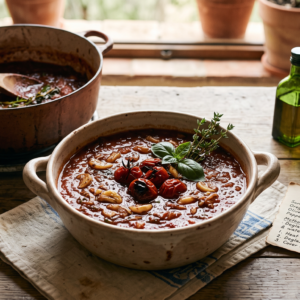
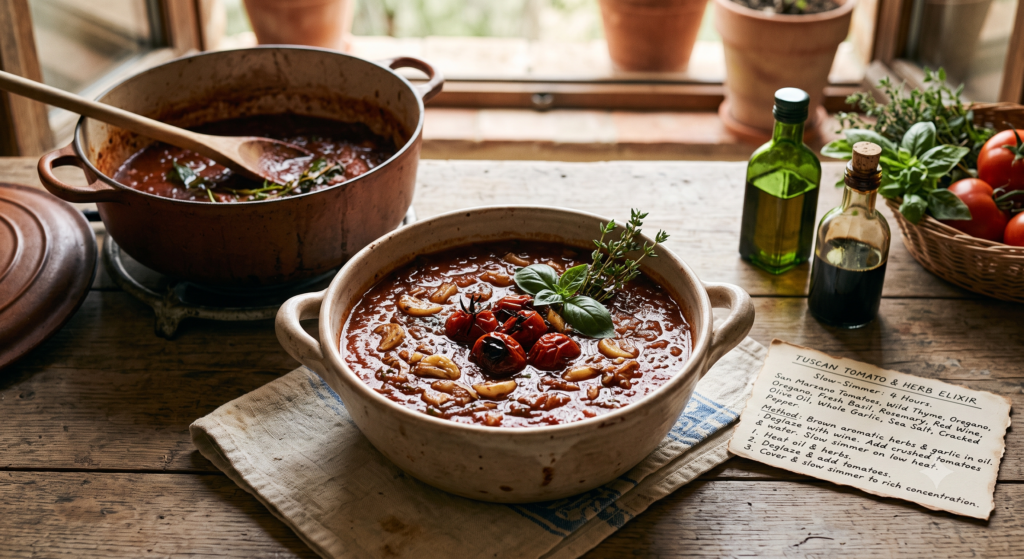
Today, we are sharing a classic Longevity Kitchen staple: Slow-Simmered Tuscan Tomato, Garlic & Herb Elixir. It is rich, velvety, deeply satisfying, and designed to unlock maximum cellular protection.
Why Tomatoes are a Longevity Superfood
While raw tomatoes are refreshing, cooking tomatoes with healthy fats turns them into a true medicinal power food:
- Lycopene Bioavailability: Tomatoes are famous for lycopene, a potent antioxidant that supports cardiovascular health, protects skin against UV damage, and reduces systemic inflammation. Cooking tomatoes in extra virgin olive oil boosts lycopene absorption by up to 300%!
- Heart & Vascular Support: High in potassium and Vitamin C, tomatoes help regulate blood pressure and protect arterial walls from oxidative stress.
- Synergistic Flavor & Health: When paired with garlic, onion, and fresh herbs like basil and oregano, cooked tomatoes create a rich prebiotic sauce that feeds beneficial gut microbes.
Simple Recipe: Slow-Simmered Tuscan Tomato & Herb Elixir
This versatile sauce can be served as a warm, comforting soup, spooned over ancient grains (like quinoa or farro), or used as a rich base for legumes and poached eggs.
🌿 Ingredients (Serves 4)
- 2.5 lbs (1.1 kg) Ripe vine tomatoes (or 2 cans / 28 oz each of organic San Marzano whole peeled tomatoes)
- 3.5 tbsp High-quality extra virgin olive oil
- 1 medium Yellow onion, finely diced
- 5 cloves Garlic, thinly sliced
- 1 tsp Dried oregano or fresh thyme
- 1 cup Fresh basil leaves, roughly torn
- 1 pinch Sea salt and freshly cracked black pepper
- Optional: A tiny pinch of red pepper flakes for warmth, and toasted sourdough bread for serving
🥣 Step-by-Step Instructions
- Prep the Tomatoes: If using fresh tomatoes, blanch them in boiling water for 60 seconds, peel the skins, and coarsely chop the pulp. If using canned San Marzano tomatoes, crush them gently by hand in a bowl.
- Sauté the Aromatics: In a heavy-bottomed Dutch oven or deep skillet, heat the extra virgin olive oil over medium-low heat. Add the diced onion and garlic slices. Cook slowly for 8 to 10 minutes until soft, sweet, and translucent (do not let the garlic brown!).
- Add Herbs & Tomatoes: Stir in the dried oregano, a pinch of red pepper flakes, sea salt, and black pepper. Pour in the crushed tomatoes and their juices, stirring well to combine with the fragrant olive oil.
- Slow Simmer: Reduce the heat to the lowest setting, cover partially with a lid, and let it simmer gently for 30 to 40 minutes. Stir occasionally until the sauce turns deep red, glossy, and thick.
- Finish with Fresh Basil: Remove from heat and stir in the fresh torn basil leaves. Drizzle an extra tablespoon of raw extra virgin olive oil over the top before serving.
Longevity Tip: The Power of Olive Oil & Time
Never rush a tomato sauce! The slow, low-heat cooking process breaks down tough plant cell walls, allowing the fat-soluble lycopene to bond with the healthy monounsaturated fats in the extra virgin olive oil. This simple culinary synergy is one of the greatest secrets to Mediterranean vitality.
How do you like to cook tomatoes at home? Do you prefer a quick fresh sauce or a slow-simmered Tuscan stew? Share your favorite tomato recipes in the comments below!