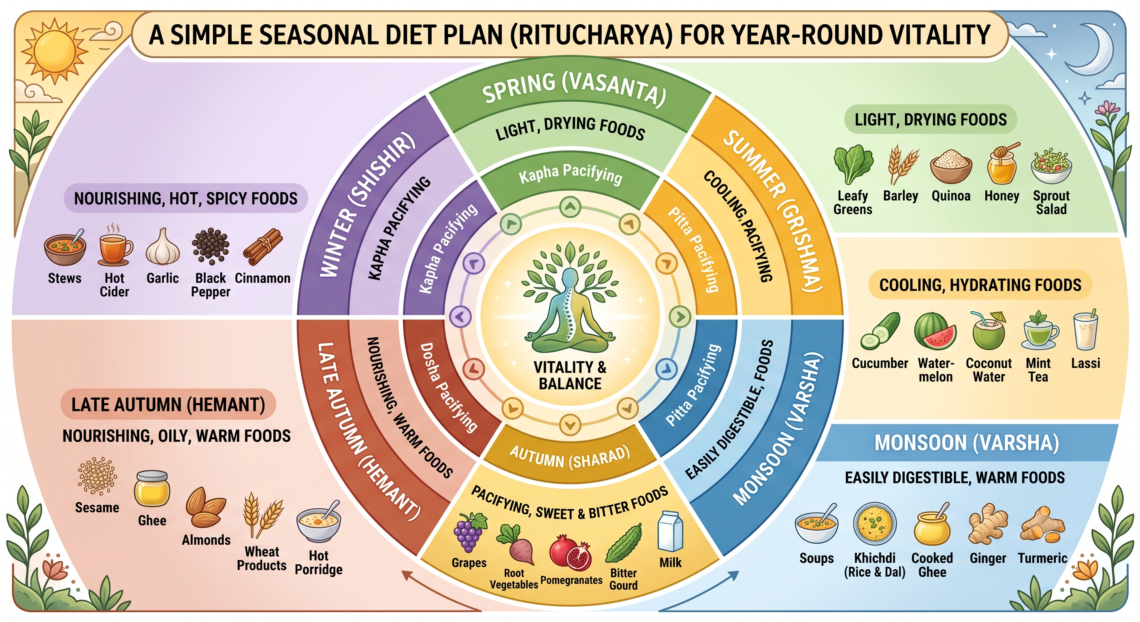
Synchronizing with Nature: A Simple Seasonal Diet Plan (Ritucharya) for Year-Round Vitality
At DAYLONGLIFE, we view true health as an extension of the natural world around us. In modern life, we have access to every fruit and vegetable 365 days a year, yet our internal biology still moves to the ancient rhythm of the changing seasons.
In Ayurvedic medicine, the practice of aligning your diet and habits with seasonal shifts is called Ritucharya (Ritu = season, Charya = regimen). Just as nature sheds its leaves in autumn and blossoms in spring, our digestive fire (Agni) and energetic forces (Doshas) naturally shift throughout the year.
By making simple, seasonal adjustments to what you put on your plate, you can prevent seasonal illness, reduce chronic inflammation, and maintain steady energy year-round.
🌿 The Golden Rule: Ritushandhi (The Seasonal Transition)
Before diving into each season, there is a crucial Ayurvedic concept to remember: Ritushandhi—the 14-day transition period between two seasons (the last 7 days of the outgoing season and the first 7 days of the incoming one).
During this delicate phase, your gut microbiome and digestive capacity fluctuate. Slowly taper off your old dietary habits and gently introduce new seasonal foods rather than changing your diet abruptly.
☀️ 1. Summer (Grishma): Cool, Hydrate & Soothe
- Dominant Element: Fire & Air (Pitta increases, Vata accumulates)
- Digestive State: Mildly lowered Agni due to external ambient heat.
During the intense heat of summer, the body expends energy staying cool. Eating heavy, spicy, or greasy foods overburdens digestion and triggers internal heat (acid reflux, skin flare-ups, and irritability).
- Foods to Emphasize: Hydrating, sweet, and cooling foods. Fresh cucumber, sweet berries, watermelon, coconut water, leafy green salads, zucchini, and ghee.
- Spices to Use: Cooling herbs like fresh mint, cilantro, fennel, cardamom, and rose water.
- What to Minimize: Excessively spicy, salty, sour, or fried foods, as well as iced drinks (which paradoxically shock and dampen digestive fire).
🍂 2. Autumn & Early Winter (Sharad & Hemanta): Ground, Warm & Nourish
- Dominant Element: Air & Ether (Vata rises)
- Digestive State: Strong, active Agni.
As the weather turns cool, dry, and windy, Vata dosha becomes active. The body naturally craves heavier, warming foods to build internal insulation and keep the nervous system grounded.
- Foods to Emphasize: Warm, cooked, and slightly unctuous foods. Roasted root vegetables (sweet potatoes, carrots, pumpkin), whole grains (oats, brown rice, quinoa), cooked lentils, healthy fats (ghee, extra virgin olive oil, sesame oil), and toasted nuts.
- Spices to Use: Ground cinnamon, nutmeg, ginger, clove, and turmeric.
- What to Minimize: Raw, cold salads, dry crackers, iced water, and skipped meals (which exacerbate dryness and bloating).
❄️ 3. Late Winter & Spring (Shishira & Vasanta): Lighten, Cleanse & Invigorate
- Dominant Element: Earth & Water (Kapha accumulates in winter and melts in spring)
- Digestive State: Sluggish or congested Agni.
In late winter and early spring, cold moisture builds up in the environment. As the weather warms, accumulated Kapha begins to “melt,” often manifesting as seasonal allergies, brain fog, heavy fatigue, or sluggish digestion. Spring is nature’s natural detoxification window.
- Foods to Emphasize: Light, bitter, pungent, and astringent foods. Bitter greens (arugula, dandelion, kale), steamed cruciferous vegetables, legumes, mung bean soups, berries, and warm lemon water.
- Spices to Use: Black pepper, cayenne, cumin, mustard seeds, and raw honey (never heated).
- What to Minimize: Heavy dairy (cheese, thick cream), refined sugars, fried or oily foods, and heavy wheat dishes.
🌧️ 4. Monsoon / Rainy Season (Varsha): Protect & Digest
- Dominant Element: Water & Humidity (Vata & Pitta fluctuate)
- Digestive State: Weakened or delicate Agni due to atmospheric dampness.
In regions experiencing a distinct rainy or monsoon season, humidity weakens digestive capacity while environmental bacteria rise. The goal during this time is to protect the digestive tract and consume easily digestible fare.
- Foods to Emphasize: Light, warm, cooked soups, broths, aged grains, kitchari, and thoroughly cooked vegetables.
- Spices to Use: Fresh ginger, garlic, hing (asafoetida), and black pepper to kindle digestive fire.
- What to Minimize: Raw street foods, uncooked leafy greens, heavy seafood, and excessive cold liquids.
💡 3 Simple Steps to Start Today
- Eat What is Locally in Season: Walk through your local farmers’ market. Whatever is growing naturally in your local climate right now is precisely what your body is designed to digest.
- Match Your Food Temperature to the Climate: Drink warm or room-temperature beverages in cold months, and refreshing, room-temperature infusions in peak summer heat.
- Listen to Your Body’s Cues: Observe your hunger, energy, and digestion as the weather shifts. Your body gives you immediate feedback when a seasonal adjustment is needed.


You May Also Like

Discovering Your Dosha and Crafting Your Daily Self-Care Routine (Dinacharya)

The Engine of Vitality: Understanding Agni and Ama in Ayurvedic Digestion