Home
-
Synchronizing with Nature: A Simple Seasonal Diet Plan (Ritucharya) for Year-Round Vitality
At DAYLONGLIFE, we view true health as an extension of the natural world around us. In modern life, we have access to every fruit and vegetable 365 days a year, yet our internal biology still moves to the ancient rhythm of the changing seasons.
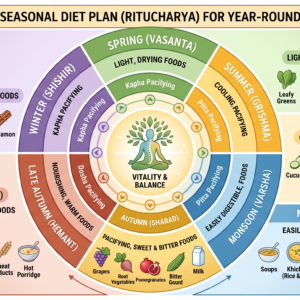
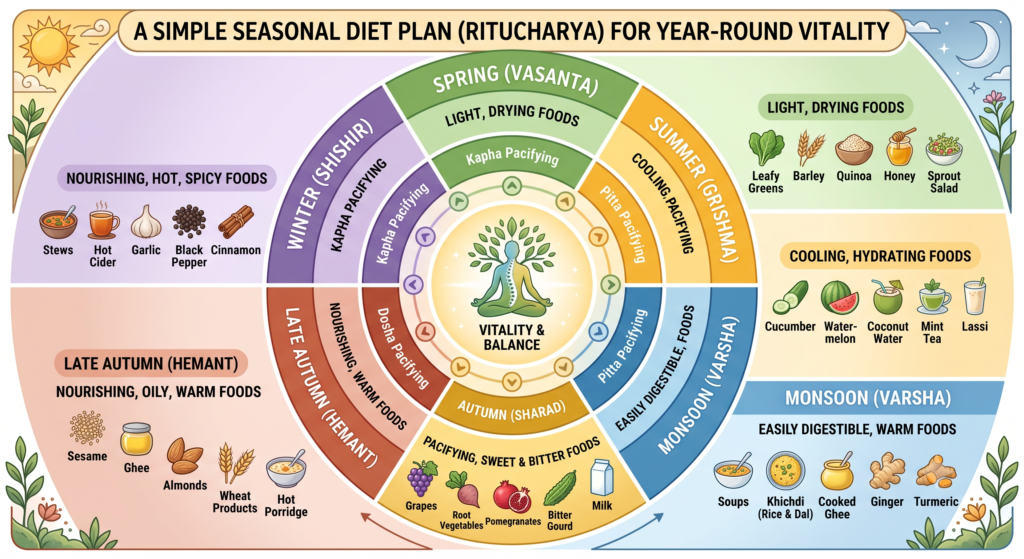
In Ayurvedic medicine, the practice of aligning your diet and habits with seasonal shifts is called Ritucharya (Ritu = season, Charya = regimen). Just as nature sheds its leaves in autumn and blossoms in spring, our digestive fire (Agni) and energetic forces (Doshas) naturally shift throughout the year.
By making simple, seasonal adjustments to what you put on your plate, you can prevent seasonal illness, reduce chronic inflammation, and maintain steady energy year-round.
🌿 The Golden Rule: Ritushandhi (The Seasonal Transition)
Before diving into each season, there is a crucial Ayurvedic concept to remember: Ritushandhi—the 14-day transition period between two seasons (the last 7 days of the outgoing season and the first 7 days of the incoming one).
During this delicate phase, your gut microbiome and digestive capacity fluctuate. Slowly taper off your old dietary habits and gently introduce new seasonal foods rather than changing your diet abruptly.
☀️ 1. Summer (Grishma): Cool, Hydrate & Soothe
- Dominant Element: Fire & Air (Pitta increases, Vata accumulates)
- Digestive State: Mildly lowered Agni due to external ambient heat.
During the intense heat of summer, the body expends energy staying cool. Eating heavy, spicy, or greasy foods overburdens digestion and triggers internal heat (acid reflux, skin flare-ups, and irritability).
- Foods to Emphasize: Hydrating, sweet, and cooling foods. Fresh cucumber, sweet berries, watermelon, coconut water, leafy green salads, zucchini, and ghee.
- Spices to Use: Cooling herbs like fresh mint, cilantro, fennel, cardamom, and rose water.
- What to Minimize: Excessively spicy, salty, sour, or fried foods, as well as iced drinks (which paradoxically shock and dampen digestive fire).
🍂 2. Autumn & Early Winter (Sharad & Hemanta): Ground, Warm & Nourish
- Dominant Element: Air & Ether (Vata rises)
- Digestive State: Strong, active Agni.
As the weather turns cool, dry, and windy, Vata dosha becomes active. The body naturally craves heavier, warming foods to build internal insulation and keep the nervous system grounded.
- Foods to Emphasize: Warm, cooked, and slightly unctuous foods. Roasted root vegetables (sweet potatoes, carrots, pumpkin), whole grains (oats, brown rice, quinoa), cooked lentils, healthy fats (ghee, extra virgin olive oil, sesame oil), and toasted nuts.
- Spices to Use: Ground cinnamon, nutmeg, ginger, clove, and turmeric.
- What to Minimize: Raw, cold salads, dry crackers, iced water, and skipped meals (which exacerbate dryness and bloating).
❄️ 3. Late Winter & Spring (Shishira & Vasanta): Lighten, Cleanse & Invigorate
- Dominant Element: Earth & Water (Kapha accumulates in winter and melts in spring)
- Digestive State: Sluggish or congested Agni.
In late winter and early spring, cold moisture builds up in the environment. As the weather warms, accumulated Kapha begins to “melt,” often manifesting as seasonal allergies, brain fog, heavy fatigue, or sluggish digestion. Spring is nature’s natural detoxification window.
- Foods to Emphasize: Light, bitter, pungent, and astringent foods. Bitter greens (arugula, dandelion, kale), steamed cruciferous vegetables, legumes, mung bean soups, berries, and warm lemon water.
- Spices to Use: Black pepper, cayenne, cumin, mustard seeds, and raw honey (never heated).
- What to Minimize: Heavy dairy (cheese, thick cream), refined sugars, fried or oily foods, and heavy wheat dishes.
🌧️ 4. Monsoon / Rainy Season (Varsha): Protect & Digest
- Dominant Element: Water & Humidity (Vata & Pitta fluctuate)
- Digestive State: Weakened or delicate Agni due to atmospheric dampness.
In regions experiencing a distinct rainy or monsoon season, humidity weakens digestive capacity while environmental bacteria rise. The goal during this time is to protect the digestive tract and consume easily digestible fare.
- Foods to Emphasize: Light, warm, cooked soups, broths, aged grains, kitchari, and thoroughly cooked vegetables.
- Spices to Use: Fresh ginger, garlic, hing (asafoetida), and black pepper to kindle digestive fire.
- What to Minimize: Raw street foods, uncooked leafy greens, heavy seafood, and excessive cold liquids.
💡 3 Simple Steps to Start Today
- Eat What is Locally in Season: Walk through your local farmers’ market. Whatever is growing naturally in your local climate right now is precisely what your body is designed to digest.
- Match Your Food Temperature to the Climate: Drink warm or room-temperature beverages in cold months, and refreshing, room-temperature infusions in peak summer heat.
- Listen to Your Body’s Cues: Observe your hunger, energy, and digestion as the weather shifts. Your body gives you immediate feedback when a seasonal adjustment is needed.
-
The Mindful Rinse: How Washing Your Face Daily Restores Skin, Mind, and Rhythm
At DAYLONGLIFE, we often look for wellness in high-effort habits, but real vitality lives in the subtle, daily rituals we repeat every morning and evening.
Washing your face is one of the very first things you do to greet the day and one of the last things you do before rest. Yet, it is often rushed through as a mindless chore. When approached with intention, this simple two-minute habit becomes a grounding physical reset—clearing environmental pollutants, encouraging skin cell longevity, and signaling a fresh start to your nervous system.
Here is how to turn your daily face wash into a restorative micro-ritual for skin health and mental clarity.
The Health & Longevity Science of Clean Skin
Throughout the day, your skin acts as a protective shield, accumulating urban particulate matter, sweat, sebum, and microscopic environmental pollutants. At night, it undergoes a natural cellular repair cycle. Proper cleansing supports this natural rhythm:
- Preventing Oxidative Stress: Airborne pollution and heavy metals adhere to skin sebum, generating free radicals that break down collagen and accelerate premature photoaging. A gentle wash removes these oxidative triggers before they penetrate deeper layers.
- Encouraging Cellular Renewal: Removing dead surface skin cells and excess oil keeps pores clear, allowing your skin to breathe and absorb nutrients from nighttime facial oils or moisturizers.
- Vagal Nerve Stimulation: Cool or lukewarm water splashed gently across the lower face stimulates sensory nerves, helping quiet an overactive mind and transition your body out of stress mode.

Morning vs. Night: Tailoring Your Face Wash Routine
Your skin has different needs depending on the time of day. Treating morning and evening cleansing differently helps protect your skin’s delicate lipid barrier.
🌅 The Morning Reset: Awakening the Senses
- The Goal: Gently remove overnight oils and metabolic waste without stripping natural moisture.
- The Technique: Splash your face with lukewarm or cool water. If you have dry or sensitive skin, a simple water rinse or a tiny drop of a gentle, non-foaming cleanser is all you need.
- The Mindset: Use the cool water as a sensory alarm clock to clear morning brain fog and set a calm tone for the day ahead.
🌙 The Evening Ritual: Washing Away the Day
- The Goal: Thoroughly clear away buildup, sunscreen, makeup, and urban pollutants gathered throughout the day.
- The Technique: Use a mild, pH-balanced, natural cleanser. Gently massage it into your skin using upward circular motions for at least 60 seconds, paying extra attention to the jawline, nose, and forehead.
- The Mindset: As the water rinses off the cleanser, consciously visualize washing away the mental fatigue, screen strain, and stress accumulated during your workday.
4 Golden Rules for Gentle Facial Cleansing
- Mind Your Water Temperature: Avoid hot water! Hot water strips natural oils, dilates fragile capillaries, and triggers redness or inflammation. Stick to lukewarm water for washing and cool water for a refreshing finish.
- Use Your Fingertips (Ditch the Harsh Scrubs): Aggressive physical scrubs create micro-tears in the skin barrier. Your clean fingertips, using soft circular pressure, are all you need to cleanse effectively.
- Pat, Don’t Rub: When drying off, gently pat your face with a clean, soft cotton or bamboo towel. Avoid dragging or rubbing the towel across delicate facial tissue.
- Seal in Moisture Immediately: Apply your favorite natural facial serum or moisturizer within 60 seconds of washing while your skin is still slightly damp to lock in maximum hydration.
A Moment of Quiet Connection
In a world filled with endless notifications and busy schedules, your morning and evening face wash offers a guaranteed moment of quiet pause. Use it as a daily sanctuary to pause, breathe, feel the water, and show your body a moment of simple appreciation.
-
The Layers of Longevity: Why the Humble Onion Belongs in Every Healthy Kitchen
At DAYLONGLIFE, we often find that some of the most potent wellness tools aren’t expensive superfood powders or rare supplements. They are the simple, aromatic staples sitting right in your pantry basket.
In The Longevity Kitchen, onions are the unsung heroes of anti-inflammatory cooking. Found at the foundation of traditional recipes across every Blue Zone—from Mediterranean sofritos to Ayurvedic stews—onions provide far more than depth of flavor. They deliver a dense payload of bioactive compounds that protect your heart, nourish your gut microbiome, and support cellular health.
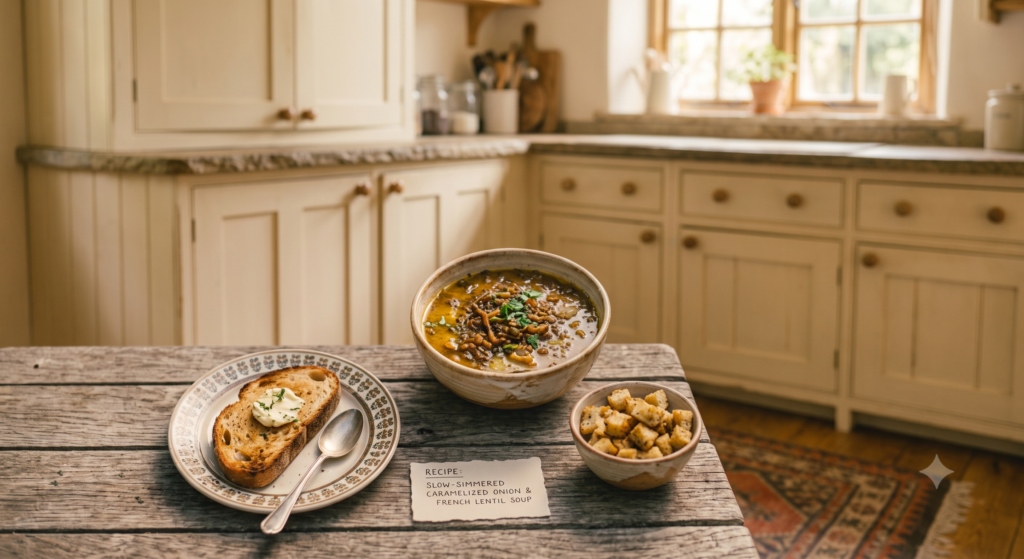
Today, we are diving into the science of onions and sharing a soul-warming recipe: Slow-Simmered Caramelized Onion & French Lentil Soup.
The Longevity Science Behind Onions
Whether yellow, red, white, or sweet, all members of the Allium family (which also includes garlic, shallots, and leeks) carry remarkable health benefits:
- Rich in Quercetin (Cellular Defense): Onions are among the richest dietary sources of quercetin, a potent polyphenol antioxidant. Quercetin acts as a natural senolytic—helping clear aged, dysfunctional cells—while reducing vascular inflammation and supporting healthy blood pressure.
- Gut Health & Prebiotic Fiber: Packed with inulin and fructooligosaccharides (FOS), onions act as fuel for your beneficial gut bacteria. A thriving gut microbiome is linked directly to strong immunity, balanced mood, and lower systemic inflammation.
- Organosulfur Compounds (Detoxification): The pungent compounds that make your eyes water when chopping onions are organosulfur molecules. These sulfur compounds stimulate natural liver detoxification pathways and protect against cellular oxidative damage.
- Cardiovascular Support: Regular onion consumption helps keep blood vessels flexible, inhibits unwanted blood platelet aggregation, and supports balanced cholesterol levels.
Red vs. Yellow vs. White: Which Onion is Best?
While all onions are healthy, their nutrient profiles vary slightly:
- Red Onions: Packed with anthocyanins (the same antioxidants found in berries), making them exceptionally high in total antioxidant capacity. Best eaten raw or lightly pickled in salads.
- Yellow Onions: Contain the highest levels of quercetin and sulfur compounds. Their deep, rich flavor makes them perfect for long, slow cooking, soups, and roasts.
- White & Sweet Onions: Milder and gentler on sensitive digestive systems, though slightly lower in polyphenol concentration than red or yellow varieties.
Simple Recipe: Slow-Simmered Caramelized Onion & French Lentil Soup
This comforting, high-fiber soup combines the sweetness of slowly caramelized onions with nutrient-dense green lentils for a deeply satisfying, gut-nourishing meal.
🌿 Ingredients (Serves 4)
- 3 large Organic yellow onions, thinly sliced
- 1 cup French green lentils (Puy lentils) or brown lentils, rinsed
- 3 tbsp Extra virgin olive oil
- 3 cloves Garlic, minced
- 4 cups Low-sodium vegetable bone broth or mineral broth
- 1 tsp Fresh thyme leaves (or 1/2 tsp dried thyme)
- 1 Dried bay leaf
- 1 tbsp Apple cider vinegar or fresh lemon juice
- Sea salt and freshly cracked black pepper to taste
🥣 Step-by-Step Instructions
- Caramelize the Onions Slowly: Heat the extra virgin olive oil in a heavy Dutch oven or large soup pot over medium-low heat. Add the sliced onions with a generous pinch of sea salt. Cook slowly, stirring occasionally, for 25 to 30 minutes until the onions turn deeply golden brown and sweet. (Patience is key here—slow cooking breaks down the sugars and maximizes flavor!)
- Add Aromatics: Stir in the minced garlic and fresh thyme, cooking for another 1 to 2 minutes until fragrant.
- Simmer the Lentils: Add the rinsed lentils, vegetable broth, and bay leaf to the pot. Bring to a gentle boil, then turn the heat to low, cover, and simmer for 25 to 30 minutes until the lentils are tender but still hold their shape.
- Finish & Brighten: Remove from heat and discard the bay leaf. Stir in the apple cider vinegar (or fresh lemon juice) to brighten the rich, savory flavors. Season with salt and pepper to taste.
- Serve: Ladle into warm bowls, drizzle with a fresh touch of extra virgin olive oil, and garnish with extra fresh thyme leaves.
Kitchen Tip: Don’t Peel Away the Best Parts!
The outermost paper-like layers of an onion contain the highest concentration of quercetin. When making homemade vegetable broths or simmering soups, save clean outer onion skins in a freezer bag and throw them into your broth pot to extract those extra antioxidants before straining!
-
Emerald Armor: The Anti-Inflammatory Science & Simple Preparation of Spinach
At DAYLONGLIFE, we consider dark leafy greens to be the undisputed foundation of Blue Zone cooking. Among these greens, spinach stands out as a versatile, nutrient-dense power vegetable that seamlessly bridges the gap between The Longevity Kitchen and the Ageless Mind.
While raw spinach is a popular base for summer salads, gentle cooking turns this humble green into an anti-inflammatory powerhouse—softening its fibers, boosting nutrient availability, and making it exceptionally kind to your digestive system (Agni).
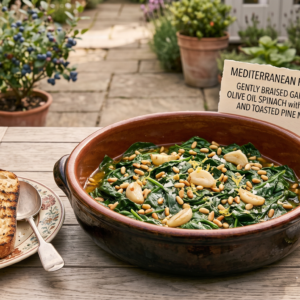
Today, we are showcasing spinach with a classic, warm Mediterranean recipe: Gently Braised Garlic & Olive Oil Spinach with Lemon and Toasted Pine Nuts.
Why Spinach is a Longevity & Brain Superfood
Spinach is packed with vital micronutrients, nitrates, and carotenoids that shield your cardiovascular system and preserve cognitive sharpness:
- Brain Preserving (Lutein & Folate): Spinach is exceptionally high in lutein and zeaxanthin, fat-soluble carotenoids that accumulate directly in brain tissue. Studies show that daily consumption of dark leafy greens like spinach can help keep your brain functioning like that of someone up to 11 years younger!
- Vascular Health & Nitrates: Naturally rich in dietary nitrates, spinach stimulates nitric oxide production in blood vessels, relaxing arterial walls, lowering blood pressure, and boosting circulation to the brain and heart.
- Bone & Blood Support (Vitamin K & Iron): A single serving delivers over 100% of your daily Vitamin K needs to support bone density and arterial health, alongside non-heme iron for cellular oxygenation.
Raw vs. Cooked Spinach: Unlocking Maximum Bioavailability
Many people eat spinach raw, but gently cooking spinach offers distinct longevity benefits:
- Reduces Oxalates: Raw spinach contains naturally occurring oxalates, which can bind to minerals like calcium and iron, making them harder to absorb. Lightly steaming or braising spinach breaks down oxalates, unlocking its rich mineral profile.
- Softens Insoluble Fiber: Cooked greens are significantly easier to digest, preventing the bloating or gas that raw cruciferous and leafy greens can sometimes cause.
- Enhances Carotenoid Absorption: Heat breaks down the tough plant cell walls, freeing up lutein and beta-carotene so your body can absorb them easily—especially when paired with a healthy fat like extra virgin olive oil.
Simple Recipe: Gently Braised Garlic & Olive Oil Spinach
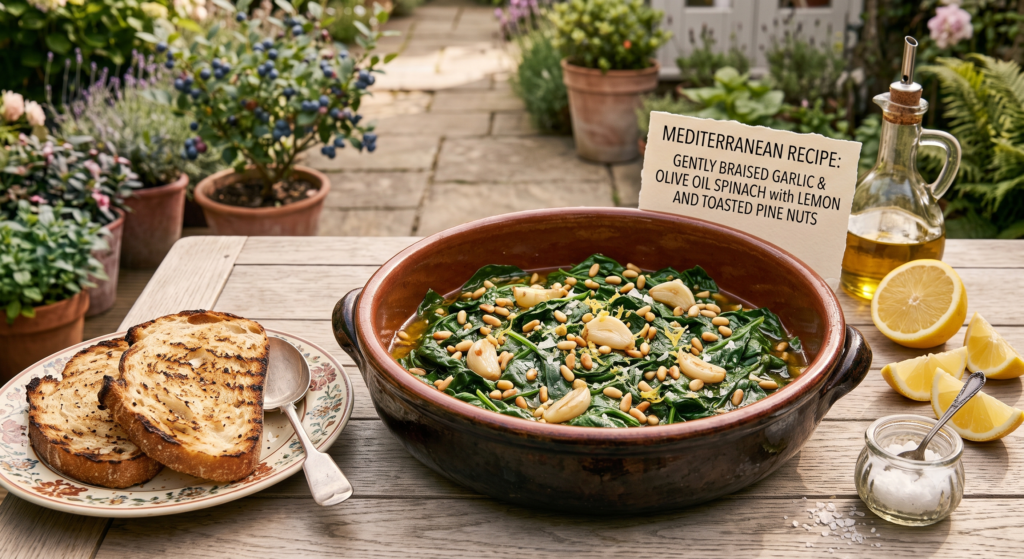
This 10-minute side dish is simple, comforting, and packed with anti-inflammatory synergy.
🌿 Ingredients (Serves 2–3)
- 1 lb (450g) Fresh organic baby spinach (washed and thoroughly dried)
- 2 tbsp High-quality cold-pressed extra virgin olive oil
- 3 cloves Garlic, thinly sliced
- 1 tbsp Fresh lemon juice (plus a pinch of fresh lemon zest)
- 2 tbsp Raw pine nuts or sliced almonds
- Sea salt and freshly cracked black pepper to taste
🥣 Step-by-Step Instructions
- Toast the Nuts: In a wide skillet or pan, toast the pine nuts over medium-low heat for 2 to 3 minutes until lightly golden and fragrant. Transfer them to a small bowl and set aside.
- Warm the Olive Oil & Garlic: In the same skillet, warm the extra virgin olive oil over medium-low heat. Add the sliced garlic and sauté gently for 1 minute until soft and aromatic—be careful not to brown or burn the garlic!
- Wilt the Spinach: Add the fresh baby spinach to the skillet in large handfuls. Using tongs, gently toss the spinach in the warm garlic oil. Cover with a lid for 60 to 90 seconds until the leaves just collapse into a bright, emerald-green texture.
- Finish & Serve: Remove from heat immediately. Drizzle with fresh lemon juice, season with sea salt and cracked black pepper, and toss to combine. Transfer to a warm serving bowl, sprinkle with the toasted pine nuts, and grate a touch of lemon zest over top.
Longevity Tip: The Vitamin C & Iron Connection
The iron found in plant foods (non-heme iron) is best absorbed when paired with Vitamin C. Finishing warm braised spinach with a fresh squeeze of lemon juice not only brightens the earthy flavor but also doubles your body’s ability to absorb its essential iron!
-
Golden Elixir: Anti-Inflammatory Pumpkin & Ginger Soup for Longevity
At DAYLONGLIFE, autumn and winter cooking is all about warmth, comfort, and deep nourishment. When the air turns crisp, few dishes nurture the body and soul like a vibrant, silky bowl of Pumpkin Soup.
In longevity science and traditional anti-inflammatory cooking, pumpkin isn’t just a seasonal treat—it is a nutrient-dense superfood. Rich in protective antioxidants, fiber, and essential minerals, pumpkin serves as a perfect foundation for a gentle, gut-loving meal that supports healthy aging.
Today, we are sharing our signature Longevity Kitchen recipe: Golden Roasted Pumpkin & Ginger Soup. It combines caramelized roasted pumpkin with warming spices and healthy fats to create a dish that is deeply comforting, easy to digest, and packed with vitality.
Why Pumpkin is a Longevity Superfood
Carotenoid-rich vegetables like pumpkin are dietary staples across many long-living communities. Here is why this golden squash deserves a regular spot on your dinner table:
- Cellular Protection (Beta-Carotene & Alpha-Carotene): Pumpkin is loaded with carotenoids, powerful antioxidants that give it its rich orange hue. These compounds neutralize free radicals, reduce systemic inflammation, and support healthy skin and eye function.
- Gut-Friendly Prebiotic Fiber: The smooth, soluble fiber in pumpkin gently feeds your beneficial gut bacteria without causing digestive distress, supporting a balanced microbiome—a crucial key to healthy immune function.
- Heart & Metabolic Health: Packed with potassium and magnesium, pumpkin helps regulate blood pressure and keeps your cardiovascular system running smoothly.
Simple Recipe: Golden Roasted Pumpkin & Ginger Soup

By roasting the pumpkin first with whole spices, we caramelize its natural sugars, enhancing its deep flavor while making its nutrients even more bioavailable.
🌿 Ingredients (Serves 4–6)
- 2.5 lbs (1.2 kg) Kabocha squash, Sugar pumpkin, or Butternut squash (peeled, seeded, and cut into 1-inch cubes)
- 2.5 tbsp Extra virgin olive oil
- 1 medium Yellow onion, chopped
- 3 cloves Garlic, minced
- 1.5 tbsp Fresh ginger, finely grated (adjust based on your preferred heat)
- 1 tsp Ground turmeric
- 1/2 tsp Ground cumin
- 3.5 cups Low-sodium organic vegetable broth
- 1/2 cup Full-fat unsweetened coconut milk (or extra virgin olive oil for richness)
- Sea salt and freshly cracked black pepper to taste
- Optional toppings: Roasted pumpkin seeds (pepitas), a drizzle of extra virgin olive oil, or fresh microgreens
🥣 Step-by-Step Instructions
- Roast the Pumpkin: Preheat your oven to 400°F (200°C). Toss the cubed pumpkin with 1.5 tbsp of extra virgin olive oil, a pinch of sea salt, and black pepper on a baking sheet. Roast for 25–30 minutes until the edges are golden-brown and tender.
- Sauté the Aromatics: In a large soup pot, heat the remaining 1 tbsp of olive oil over medium heat. Add the onion and sauté for 5 minutes until soft and translucent. Add the garlic, fresh grated ginger, turmeric, and cumin, cooking for another 60 seconds until fragrant.
- Simmer: Add the roasted pumpkin and vegetable broth to the pot. Bring to a gentle boil, then reduce heat to low and simmer uncovered for 10 minutes so the flavors melt together.
- Blend to Perfection: Remove from heat. Using an immersion blender (or transferring carefully in batches to a high-speed blender), puree the soup until completely smooth and velvety.
- Finish & Serve: Stir in the coconut milk, season with additional sea salt and black pepper to taste, and warm gently over low heat. Ladle into warm ceramic bowls and garnish with crunchy roasted pumpkin seeds and a swirl of coconut milk or olive oil.
Longevity Tip: The Power of Spicing
Pairing pumpkin with ginger and turmeric creates an anti-inflammatory powerhouse. Ginger aids digestion and eases bloating, while turmeric helps soothe joint discomfort. Always ensure you add a touch of healthy fat (like olive oil or coconut milk) and a pinch of black pepper to ensure maximum nutrient absorption!
-
The Daily Reset: How Gentle Stretching Protects Mobility, Posture, and Vitality
At DAYLONGLIFE, we believe that true longevity isn’t just about adding years to your life—it is about keeping your body fluid, pain-free, and full of energy every single day.
In a world dominated by long hours of sitting, staring at screens, and repetitive posture, our muscles and connective tissues (fascia) naturally tighten. Over time, this chronic tightness leads to poor posture, joint stiffness, shallow breathing, and reduced circulation.
Integrating a short, intentional daily stretching ritual into your routine is one of the most effective, accessible ways to unwind physical stress, protect joint mobility, and keep your body moving gracefully through the decades.
The Biological & Longevity Benefits of Daily Stretching
Stretching does far more than lengthen muscles. It acts as a biological signal that restores balance across your entire system:
- Circulation & Fascial Health: Stretching gently pulls on fascia—the web of connective tissue surrounding your muscles and organs—stimulating blood flow, delivering oxygen, and hydrating tissues to maintain flexibility.
- Vagal Nerve Stimulation & Stress Relief: Slow, deep stretching paired with intentional breathing activates the parasympathetic nervous system (“rest and digest”). This lowers cortisol, drops your heart rate, and signals to your brain that you are safe.
- Joint & Spine Longevity: By maintaining range of motion in your hips, spine, and shoulders, daily stretching distributes physical load evenly, preventing wear and tear on cartilage and protecting against lower back pain.
4 Essential Daily Stretches for Whole-Body Vitality
You don’t need an hour-long yoga class to experience the benefits of stretching. Spending just 5 to 10 minutes on these four foundational movements will reset your posture and ease daily tension:
1. The Cat-Cow Flow (Spinal Mobility)

- Target Area: Entire spine, chest, and neck.
- How to do it: Start on all fours with hands under shoulders and knees under hips. On an inhale, arch your back gently, lifting your chest and tailbone toward the sky (Cow). On an exhale, round your spine, tucking your chin toward your chest (Cat). Repeat rhythmically for 8–10 slow breaths.
- Why it matters: Lubricates the spinal discs and relieves upper back and neck tension caused by screen time.
2. Low Lunge with Hip Opener (Releasing Sitting Tension)

- Target Area: Hip flexors, psoas, and quads.
- How to do it: Step your right foot forward into a lunge, dropping your left knee to the floor (use a folded towel for padding if needed). Gently shift your hips forward until you feel a comfortable stretch in the front of your left hip. Keep your torso tall and hold for 30–45 seconds per side, breathing deeply.
- Why it matters: Tight hip flexors from prolonged sitting pull on the lower back, causing anterior pelvic tilt and lower back discomfort.
3. Doorway Chest & Shoulder Opener (Posture Correction)

- Target Area: Pectoral muscles, front shoulders, and chest.
- How to do it: Stand in an open doorway. Bend your elbows at a 90-degree angle and place your forearms against the doorframe. Step one foot forward gently until you feel a subtle, restorative opening across your chest and shoulders. Hold for 30–45 seconds.
- Why it matters: Counteracts the rounded-shoulder posture (“tech neck”) that compresses the lungs and limits full diaphragmatic breathing.
4. Legs-Up-the-Wall Pose (Viparita Karani) (Nervous System & Venous Reset)

- Target Area: Hamstrings, lower back, and circulatory system.
- How to do it: Sit close to a clear wall, swing your legs up against the wall, and lie flat on your back with your arms resting gently by your sides. Close your eyes and focus on slow, belly-filling exhales for 3 to 5 minutes.
- Why it matters: A classic restorative pose in both modern physical therapy and traditional yoga. It promotes lymphatic drainage, eases heavy legs, and deeply calms the nervous system before sleep.
3 Simple Rules for Safe, Mindful Stretching
- Never Force a Stretch: Stretch to the point of gentle tension, never sharp pain. Your body should feel like it is surrendering into the movement, not fighting it.
- Breathe Into the Resistance: Inhale to create space; exhale to melt deeper into the hold. Deep, slow breathing signals your muscles to relax their protective reflexes.
- Consistency Over Intensity: Five minutes of daily, gentle movement is far more effective for long-term mobility than a single intense session once a week.
Unwind Your Body, Ease Your Mind
Stretching is a quiet act of self-care—a physical reminder to pause, check in with your body, and release whatever tension you have been holding throughout the day.
Whether you practice these stretches right after waking up to invite morning energy or before bed to prepare for restorative sleep, your body will thank you for the extra care.
What area of your body holds the most tension during the workday—your shoulders, lower back, or hips? What is your favorite daily stretch? Share your thoughts in the comments below!
-
The Ageless Mind: 5 Antioxidant-Rich Fruits That Protect Memory and Brain Power
At DAYLONGLIFE, we view the kitchen as the ultimate sanctuary for long-term health. When The Longevity Kitchen aligns with the Ageless Mind, every meal becomes an opportunity to nourish your nervous system and shield your cognitive vitality.
Your brain is constantly working, consuming around 20% of your body’s daily oxygen and energy. This intense metabolic activity leaves neural tissue particularly susceptible to oxidative stress—a biological imbalance where free radicals damage delicate brain cell membranes, slow down neural communication, and contribute to cognitive decline.
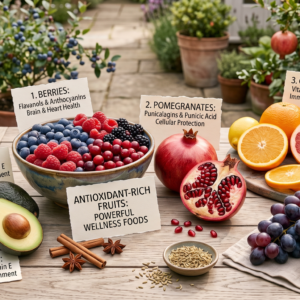
Nature’s sweetest defense against this process comes in the form of antioxidant-dense fruits. Packed with colorful polyphenols, flavonoids, and essential vitamins, these vibrant fruits cross the blood-brain barrier to calm neuroinflammation, support neuroplasticity, and keep your memory sharp.
5 Superior Brain-Boosting Fruits for Cognitive Longevity
Including a variety of deeply pigmented whole fruits in your daily routine provides a steady stream of protective compounds for your brain cells.
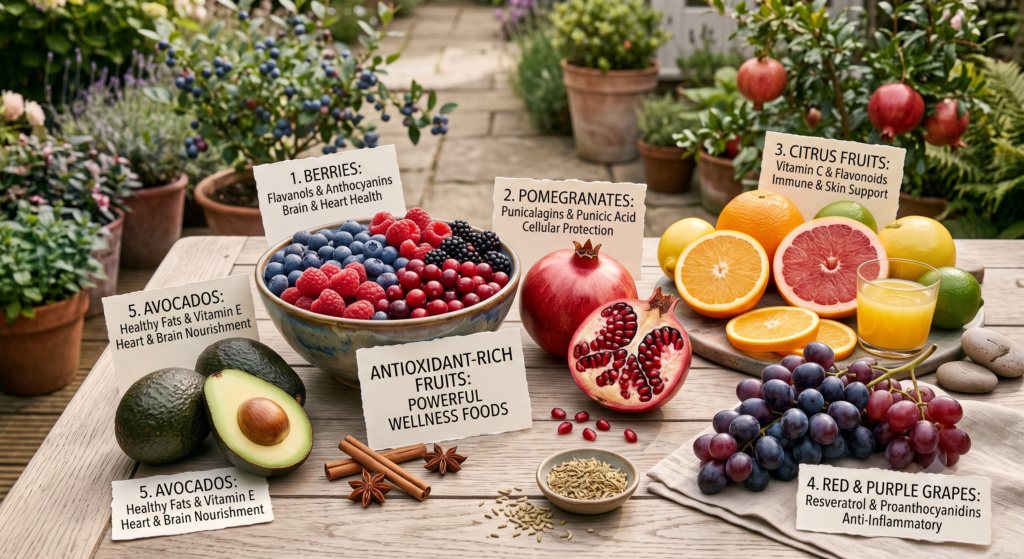
1. Wild Blueberries & Blackberries (The Flavonoid Powerhouses)
Dark berries are consistently celebrated as top-tier brain foods in longevity science.
- The Science: Deep blue and purple berries are rich in anthocyanins, potent flavonoid antioxidants that cross the blood-brain barrier.
- Cognitive Benefit: Anthocyanins accumulate in brain regions responsible for learning and memory (such as the hippocampus). They stimulate brain cell communication, enhance short-term memory recall, and protect against age-related neurodegeneration.
- How to Enjoy: Add a half-cup of fresh or frozen wild blueberries to warm morning oatmeal or enjoy them as a refreshing midday snack.
2. Pomegranates (Cellular Energy & Urolithin A)
Pomegranates have been revered across ancient Mediterranean and Asian cultures for centuries as symbols of life and longevity.
- The Science: Pomegranates are loaded with punicalagins and ellagitannins—unique polyphenols that gut bacteria convert into a compound called Urolithin A.
- Cognitive Benefit: Urolithin A triggers mitophagy, the natural cellular cleanup process that clears damaged mitochondria from brain cells, restoring cellular energy production and fighting mental fatigue.
- How to Enjoy: Sprinkle fresh ruby-red pomegranate seeds over leafy green salads or enjoy a small glass of pure, unsweetened pomegranate juice.
3. Oranges & Citrus Fruits (Hesperidin & Vitamin C)
Bright citrus fruits offer far more than simple immunity support—they are vital for cerebrovascular health.
- The Science: Oranges, lemons, and grapefruits contain high concentrations of Vitamin C along with a powerful citrus bioflavonoid called hesperidin.
- Cognitive Benefit: Hesperidin improves cerebral blood flow, delivering oxygen and glucose efficiently to brain tissue. Vitamin C acts as a primary antioxidant in the brain, neutralizing free radicals before they damage neural membranes.
- How to Enjoy: Eat whole organic oranges to retain their beneficial prebiotic fiber, or grate fresh organic orange zest over cooked grains and salads to capture concentrated citrus essential oils.
4. Red & Purple Grapes (Resveratrol Shield)
The deep skins of dark grapes hold one of the most thoroughly researched longevity molecules in modern science.
- The Science: Purple and red grape skins are abundant in resveratrol, a natural polyphenol that activates sirtuins (genes linked to cellular repair and longevity).
- Cognitive Benefit: Resveratrol promotes healthy circulation in the brain, supports synaptic plasticity, and shields neural connections from oxidative stress and inflammatory damage.
- How to Enjoy: Keep a bowl of chilled organic Concord or red grapes on your kitchen counter for a clean, sweet afternoon treat.
5. Avocados (Monounsaturated Fats & Lutein)
While often treated as a vegetable in cooking, the avocado is botanically a fruit—and a singular power food for the mind.
- The Science: Avocados combine healthy monounsaturated fatty acids with lutein, a fat-soluble carotenoid antioxidant that accumulates in brain tissue.
- Cognitive Benefit: The monounsaturated fats lower blood pressure and ensure smooth blood flow to the brain, while lutein enhances processing speed, working memory, and spatial focus.
- How to Enjoy: Slice fresh avocado over warm whole-grain toast, mash it into light dressings with lemon juice and olive oil, or pair it with sliced tomatoes and sea salt.
3 Simple Rules for Maximizing Fruit Antioxidants
- Eat the Whole Fruit: Always prefer whole fruits over filtered commercial juices. The natural fiber slows sugar absorption, preventing insulin spikes that cause brain fog.
- Choose Deep, Rich Colors: The higher the color intensity (deep blues, dark purples, vibrant reds), the higher the antioxidant concentration.
- Pair with Healthy Fats or Spices: Enjoying fruits alongside healthy fats (like a handful of walnuts or seeds) or warming spices (like Ceylon cinnamon) enhances the absorption of fat-soluble antioxidants and keeps blood sugar completely steady.
A Sweet Investment in Mental Clarity
Protecting your ageless mind doesn’t require complex interventions—it begins with simple, colorful choices at your table. By adding a handful of antioxidant-rich fruits to your daily routine, you provide your brain with the precise biological armor it needs to stay clear, vibrant, and resilient for life.
What is your favorite brain-boosting fruit to enjoy during the day? Do you prefer fresh berries in the morning or pomegranate seeds on your afternoon salads? Share your ideas in the comments below!
-
The Engine of Vitality: Understanding Agni and Ama in Ayurvedic Digestion
At DAYLONGLIFE, we often say that you aren’t just what you eat—you are what you digest and absorb.
In modern longevity science, the gut microbiome is considered ground zero for immunity, inflammation control, and brain health. Thousands of years ago, Ayurvedic medicine identified this exact truth through two foundational concepts: Agni (your digestive fire) and Ama (metabolic toxins).
Understanding how Agni and Ama interact is the ultimate key to effortless digestion, deep energy, and long-term metabolic health.
🔥 1. Agni: Your Inner Digestive Fire
In Ayurveda, Agni represents the transformative metabolic fire responsible for breaking down food, absorbing nutrients, and converting physical matter into vital life energy (Ojas).
When your Agni is strong, balanced, and steady:
- You experience clear, natural hunger cues at regular meal times.
- Food digests smoothly without bloating, heaviness, or gas.
- Your skin glows, your mind stays sharp, and your immunity remains resilient.
The 4 States of Agni:
- Balanced Agni (Sama Agni): Complete digestion, steady energy, and optimal health.
- Irregular Agni (Visham Agni): Common in Vata types; causes unpredictable hunger, sudden bloating, and constipation.
- Intense Agni (Tikshna Agni): Common in Pitta types; causes rapid digestion, hyperacidity, heartburn, and excessive hunger.
- Sluggish Agni (Manda Agni): Common in Kapha types; causes slow digestion, heaviness after meals, lethargy, and a thick tongue coating.

🦠 2. Ama: The Root of Metabolic Toxicity
When Agni is weak, compromised, or overwhelmed by poor eating habits, food cannot be properly transformed. Undigested food remains in the gastrointestinal tract, ferments, and creates Ama—a sticky, toxic residue.
Over time, Ama circulates through the bloodstream, clogging physical channels (srotas) and dampening cellular metabolism. In modern terms, Ama is closely linked to systemic chronic inflammation, gut dysbiosis, and metabolic dysfunction.
Signs You Have Accumulated Ama:
- A white or yellow coating on your tongue upon waking.
- A persistent heavy, sluggish feeling after meals or in the morning.
- Brain fog, joint stiffness, or skin breakouts.
- Foul-smelling breath, gas, or stool.
🌿 5 Everyday Habits to Ignite Agni and Clear Ama
Restoring your digestive strength doesn’t require extreme cleanses. Small, intentional daily rituals will kindle your digestive fire naturally:
1. Sip Warm Water or Herbal Tea Throughout the Day
Cold and iced water act like throwing ice on a burning fire—they instantly extinguish Agni.
- The Habit: Swap iced drinks for warm water or a gentle spiced tea brewed with whole cumin, coriander, and fennel seeds (CCF Tea) to soothe the gut lining and flush out Ama.
2. Practice Morning Tongue Scraping (Jihva Prakshalana)
Overnight, your body works to excrete metabolic waste onto the surface of your tongue.
- The Habit: Use a copper or stainless steel tongue scraper first thing in the morning to remove this coating before brushing or drinking water. This prevents Ama from being re-absorbed into your digestive tract.
3. Make Lunch Your Largest Meal
Agni follows the rhythm of the sun—it peaks when the sun is highest in the sky.
- The Habit: Eat your heaviest, most nutrient-dense meal between 12:00 PM and 1:30 PM when your metabolic enzymes are at maximum strength. Keep dinners light, cooked, and consumed by 7:00 PM.
4. Avoid Cold, Raw Foods When Feeling Sluggish
Raw salads and icy smoothies take immense digestive energy to break down.
- The Habit: If you suffer from bloating or cold hands/feet, choose warm, cooked, anti-inflammatory foods—such as simmered root vegetable soups, roasted pumpkin, or grains seasoned with ground turmeric, ginger, and black pepper.
5. Leave Space Between Meals
Constant snacking forces Agni to work continuously without a break, leading to incomplete digestion and Ama accumulation.
- The Habit: Allow 3 to 5 hours between meals without snacking, giving your migrating motor complex (MMC) time to sweep the digestive tract clean.
Nourishing Your Inner Fire for Life
Caring for your digestive fire is an act of daily self-respect. When you listen to your body’s natural hunger cues and honor its rhythm, you transform meals into true medicine that fuels an energized mind and an ageless body.
Do you tend to experience strong Pitta acidity, Vata bloating, or Kapha sluggishness after meals? What is your favorite warm spice to cook with? Share your thoughts in the comments below!
-
Discovering Your Dosha and Crafting Your Daily Self-Care Routine (Dinacharya)
At DAYLONGLIFE, we believe true longevity begins with self-awareness. Everything in Ayurveda starts with understanding your unique nature so you can make practical changes that support your energy, strengthen immunity, and prevent disease.
In Ayurvedic wisdom, the three doshas—Vata, Pitta, and Kapha—are the essential building blocks of our health. Unlocking your unique dosha profile gives you a personalized map for choosing the foods, exercises, work patterns, and relaxation habits that suit you best.

🧘 Understanding Your Prakriti vs. Vikriti
- Prakriti (Your Original Constitution): The natural mix of Vata, Pitta, and Kapha you were born with. It defines your unique physical, mental, and emotional tendencies and remains constant throughout your life.
- Vikriti (Your Current State): Your current state of imbalance, which fluctuates based on diet, lifestyle, stress, weather, and daily habits.
While a complete diagnosis is best done with an experienced Ayurvedic practitioner, you can gain a clear picture of your dominant dosha by observing your body, mind, digestion, and stress tendencies.
🌿 What Is Your Dominant Dosha Type?
💨 1. Vata Type
- Body: Thin frame, dry skin, cold hands and feet.
- Mind: Creative, quick thinker, sometimes forgetful.
- Digestion: Irregular hunger and digestion, prone to gas or bloating.
- Tendencies: Restlessness, insomnia, and anxiety under stress.
🔥 2. Pitta Type
- Body: Medium build, warm body, reddish or sensitive skin.
- Mind: Sharp intellect, determined, goal-oriented.
- Digestion: Strong appetite, prone to heartburn or loose stools.
- Tendencies: Anger and irritability under pressure.
🌊 3. Kapha Type
- Body: Large frame, soft and oily skin, tendency to gain weight.
- Mind: Calm, patient, loyal, with a steady memory.
- Digestion: Slow metabolism, heavy feeling after eating.
- Tendencies: Lethargy, attachment, and emotional eating.
Note: Many people are a combination type (such as Vata-Pitta or Kapha-Vata). In these cases, focus on balancing both doshas, prioritizing whichever feels more disturbed.
⏰ Why Daily Routine (Dinacharya) Matters
Modern life frequently disconnects us from nature’s natural cycles (sunrise, sunset, and changing seasons), causing doshic imbalances that lead to fatigue, anxiety, and digestive issues.
A structured daily routine, or Dinacharya, reconnects you with your body’s internal clock. It clears toxins, regulates digestion, improves sleep quality, and builds long-term immunity.
🌅 Designing Your Dosha-Aligned Daily Schedule
You don’t need to change everything overnight—start small and build your routine step by step.
1. Morning Rituals
- Wake-Up Times:
- Vata: 6:00 AM – 6:30 AM
- Pitta: 5:30 AM – 6:00 AM
- Kapha: 4:30 AM – 5:30 AM (rising early helps Kapha types overcome natural sluggishness)
- Start with Stillness: Begin with a few moments of quiet or gratitude to calm the nervous system.
- Cleanse the Senses:
- Tongue Scraping: Removes overnight metabolic waste (Ama) and wakes up digestion.
- Oil Pulling: Swish sesame or coconut oil for 5–10 minutes to strengthen teeth and gums.
- Nasya (Nasal Drops): Apply a few drops of sesame or medicated oil in each nostril to support respiratory health.
- Eye Wash: Splash eyes with cool water to relieve strain.
- Hydration: Sip a glass of warm water with fresh lemon to flush toxins and stimulate bowel movements.
- Self-Massage (Abhyanga): Massage warm oil into your skin before bathing:
- Vata: Use warm sesame oil.
- Pitta: Use cooling coconut or sunflower oil.
- Kapha: Use mustard or sesame oil with energetic, invigorating strokes.
- Movement & Meditation:
- Vata: Slow, grounding yoga with deep breathing.
- Pitta: Moderate-intensity, cooling poses without overexertion.
- Kapha: Dynamic yoga flow or fast-paced walking.
- Finish with 10–15 minutes of deep breathing or silent meditation to balance the mind.
2. Nourishing Meals & Eating Habits
- Regular Timing: Eat at the same times every day to keep digestion predictable.
- Breakfast:
- Vata: Warm, moist foods like oatmeal with ghee.
- Pitta: Fresh fruits, smoothies, or light porridge.
- Kapha: Warm herbal tea or light fruit.
- Lunch: Make this your largest meal, eaten around noon when your internal digestive fire is strongest.
- Dinner: Eat a light meal (such as soups, stews, or steamed vegetables) by 7:00 PM, at least 2 to 3 hours before bed.
- Mindful Eating: Sit down without screens or distractions, chew slowly, and avoid drinking ice-cold water during meals.
3. Evening Wind-Down & Restful Sleep
In Ayurveda, sleep is considered one of the three pillars of life alongside food and balanced energy.
- Afternoon: Take a short walk after lunch. Sip herbal teas—ginger for Kapha, mint for Pitta, and fennel for Vata.
- Evening: Turn off screens after sunset. Sip a soothing herbal tea like chamomile, tulsi, or a whole cumin-coriander-fennel (CCF) blend.
- Pre-Sleep Care: Massage the soles of your feet with warm sesame or Brahmi oil to soothe the nervous system. Avoid arguments, loud noises, or stressful work late at night.
- Bedtimes:
- Vata: 9:00 PM – 9:30 PM
- Pitta: 10:00 PM
- Kapha: 10:00 PM or earlier
🌺 The Benefits of Living in Doshic Harmony
When you align your daily habits with your dosha, positive shifts occur naturally:
- Your energy becomes steady and consistent.
- Digestion and bowel movements become regular.
- Skin clarity, mood, and mental focus improve noticeably.
- You transition from reacting to illness to proactively preventing it.
Adopting even two or three small habits—like rising earlier, enjoying warm meals, or taking moments for quiet meditation—can deeply transform your inner state. These routines are non-restrictive rituals of self-respect that awaken your body’s inherent wisdom and capacity to heal.
Which small Ayurvedic ritual—a warm lemon drink, morning tongue scraping, or an earlier bedtime—will you try adding to your routine tomorrow? Share your plan in the comments below!
-
The Ageless Mind: The Power of Strategic Working Breaks for Cognitive Longevity
At DAYLONGLIFE, we often think of cognitive vitality in terms of what we do when we are “active”—learning new skills, eating nutrient-dense foods, or solving complex problems. But modern neuroscience reveals a surprising truth: your brain’s long-term health depends just as much on how effectively you rest between tasks.
In today’s fast-paced world, pushing through hours of continuous, uninterrupted focus is often praised. However, constant mental strain without recovery leads to chronic cognitive fatigue, elevated stress hormones, and mental burnout.
Integrating intentional, strategic working breaks throughout your day isn’t a sign of distraction—it is an essential practice for neuroplasticity, memory consolidation, and long-term brain health.
What Happens to the Brain During a Break?
When you step away from intense mental work, your brain doesn’t simply shut down. Instead, it switches from the Focused Mode to the Default Mode Network (DMN)—a complex neural network that becomes active when you are not engaged in a goal-directed task.
- Memory Consolidation: The DMN processes, organizes, and files away information you recently learned, transferring short-term memories into stable, long-term neural pathways.
- Creative Insights: Have you ever had a breakthrough idea while taking a walk or showering? That is the Default Mode Network at work, connecting seemingly unrelated thoughts in the background.
- Clearing Metabolic Waste: Brief mental pauses lower cortisol (the stress hormone) and prevent the accumulation of neuro-chemical fatigue, keeping your focus sharp when you return to work.
4 Science-Backed Break Habits for Mental Clarity
Not all breaks are created equal. Mindlessly scrolling through social media or checking news updates keeps your brain’s processing centers active and tired. To truly refresh your mind, try these intentional micro-breaks:

1. The “20-20-20” & Movement Pause
Sitting still for extended periods reduces cerebral blood flow, slowing down reaction time and mental stamina.
- The Habit: Every 50 to 60 minutes, step away from your desk for 5 minutes. Look at an object at least 20 feet away to relax your eye muscles, stretch your shoulders, and take a quick walk around your room or office.
- The Brain Benefit: Restores blood and oxygen circulation to the prefrontal cortex, enhancing focus and reducing physical tension.
2. Natural Sunlight & Outdoor Grounding
Stepping into natural light during a work break provides an immediate cognitive reset.
- The Habit: Spend 5 to 10 minutes sitting or standing outdoors during your midday break without your phone. Feel the natural light on your face and take steady, deep breaths.
- The Brain Benefit: Re-anchors your circadian rhythm, lowers stress markers, and gives your visual system a break from harsh artificial blue light.
3. Sensory Hydration & Tea Rituals
Turning a hydration break into a quiet, sensory ritual transforms a mundane task into a moment of mindfulness.
- The Habit: Leave your workspace to brew a fresh cup of warm herbal tea (like Ayurvedic CCF tea or peppermint) or prepare a glass of warm water with lemon. Pay full attention to the steam, the aroma, and the warmth of the mug in your hands.
- The Brain Benefit: Pulls you out of stressful internal dialogue and grounds your nervous system in the present physical moment.
4. Non-Sleep Deep Rest (NSDR) or Breathwork
When mental fatigue hits in the early afternoon, a 10-minute micro-rest can restore mental acuity better than an extra cup of coffee.
- The Habit: Lie down or sit comfortably in a quiet space, close your eyes, and practice 4-7-8 breathing (inhale for 4 seconds, hold for 7, exhale slowly for 8) or listen to a 10-minute guided NSDR session.
- The Brain Benefit: Calms the sympathetic nervous system, restores dopamine levels, and clears brain fog without causing nighttime sleep disruption.
Rest Is an Investment in Longevity
Building an ageless mind isn’t about working harder—it is about working in harmony with your brain’s natural ultradian rhythms (90-minute cycles of high focus followed by a need for recovery).
Next time you feel your concentration slipping, don’t force it. Step away, take a breath, let your mind wander, and give your brain the space it needs to stay vibrant, flexible, and sharp for years to come.
How do you like to reset during a busy workday? Do you prefer a short walk, a warm cup of tea, or a quick breathing exercise? Share your routine in the comments below!