Home
-
Solar Vitality: The Science & Ritual of Mindful Sunbathing for Longevity
At DAYLONGLIFE, we believe that true longevity isn’t found only in what we eat or drink, but in how we align our bodies with the natural forces around us. Chief among these is light.
Long before modern supplements existed, traditional cultures revered the sun as a primary source of vitality, healing, and balance. In today’s indoor-centric world, intentional, mindful sunbathing—getting safe, natural sunlight exposure—is one of the most effective, free habits you can adopt for overall wellness.
Here is how light shapes human biology, and how you can harness the sun safely to support sleep, mood, immunity, and cellular health.
The Health Science Behind Natural Sunlight
Sunlight is far more than visible light; it is a complex spectrum of electromagnetic radiation, including ultraviolet (UV) and infrared light, that triggers critical chemical reactions in the body:
- Circadian Rhythm & Sleep Quality: Morning sunlight hitting the photoreceptors in your eyes signals your brain’s master clock (the suprachiasmatic nucleus) to stop melatonin production and boost morning cortisol. This sets an internal timer, ensuring robust melatonin synthesis 12 to 14 hours later for deep, restorative sleep.
- Vitamin D & Immune Resilience: Sunlight exposure (specifically UVB rays) triggers the synthesis of Vitamin D3 in the skin. Vitamin D acts like a hormone, regulating bone density, calcium absorption, immune defense, and cardiovascular function.
- Nitric Oxide & Heart Health: Sunlight stimulates the release of nitric oxide from skin storage into the bloodstream, dilating blood vessels, lowering blood pressure, and supporting vascular health.
- Serotonin & Mental Clarity: Sun exposure stimulates serotonin production in the brain, improving mood, reducing anxiety, and creating a sense of calm focus.
4 Principles for Safe & Mindful Sunbathing

To gain maximum vitality from the sun without risking skin damage or accelerated photoaging, mindfulness and timing are key.
1. The Morning Light Anchor (No Sunglasses, No Glass)
- The Ritual: Within 30 to 60 minutes of waking, step outside for 10 to 15 minutes. Look toward the morning sky (never directly at the sun) without wearing sunglasses, glasses, or looking through a window.
- Why It Matters: Windows block essential wavelengths (like infrared and specific UV spectrums). Unfiltered morning light anchors your biological clock, clears brain fog, and prepares your nervous system for the day ahead.
2. Gentle Skin Exposure (Mid-Morning to Midday)
- The Ritual: Expose large areas of skin (arms, legs, torso) to natural sunlight for 10 to 20 minutes, depending on your skin sensitivity, climate, and time of year.
- Why It Matters: Short, un-sunscreened exposure allows your skin to synthesize natural Vitamin D efficiently. Once your short exposure window ends, apply a clean, non-toxic mineral sunscreen (zinc oxide) or seek shade to prevent redness or sunburn.
3. Practice Infrared Grounding in Late Afternoon
- The Ritual: As the sun sets, the light spectrum shifts toward near-infrared wavelengths. Spend 15 minutes sitting outdoors during the golden hour.
- Why It Matters: Near-infrared light penetrates deep into muscle tissue and mitochondria, stimulating cellular repair (ATP production) and soothing systemic inflammation without the burning risk of intense UV rays.
4. Hydrate and Nourish Your Skin from Within
- The Ritual: Sip warm water or antioxidant-rich herbal teas after sun exposure, and nourish your skin internally with healthy fats (like extra virgin olive oil and wild salmon) rich in polyphenols and omega-3s.
- Why It Matters: Internal antioxidants enhance your skin’s natural resilience to light, while proper hydration maintains skin elasticity and moisture balance.
Solar Energy as Everyday Medicine
Sunlight is a fundamental nutrient that modern life often starves us of. Stepping outside to feel warm rays on your skin isn’t just a pleasant break—it is a vital biological reset.
Tomorrow morning, take your warm water or tea outside, pause for a few quiet minutes in the sunlight, and welcome the day’s vitality.
Do you have a morning outdoor routine? How does stepping into natural sunlight change your energy levels during the day? Share your experiences in the comments below!
-
Golden Spice: How Cinnamon Warmly Nourishes Your Metabolism and Mind
At DAYLONGLIFE, we love highlighting everyday culinary ingredients that effortlessly turn simple meals into restorative remedies. Sitting right inside your spice rack is one of the most ancient, revered powerhouses in natural medicine: cinnamon.
In traditional Ayurvedic practices, Mediterranean cooking, and modern longevity science, cinnamon is celebrated not just as a cozy autumnal spice, but as an active metabolic protectant. It adds a natural, comforting sweetness without spiking blood sugar, making it an essential staple in The Longevity Kitchen.
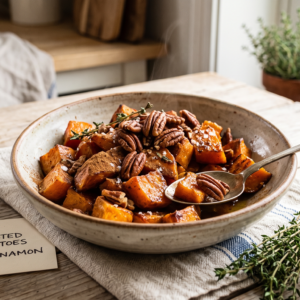
Today, we are exploring the health secrets of true cinnamon and sharing a simple, anti-inflammatory recipe: Warm Roasted Sweet Potatoes with Ceylon Cinnamon & Toasted Pecans.
Why Cinnamon is a Longevity Powerhouse
Cinnamon has been traded across continents for thousands of years, cherished for its medicinal value long before it became a kitchen favorite. When enjoyed daily, its longevity benefits are profound:
- Blood Sugar & Insulin Sensitivity: Cinnamon is famously rich in active polyphenols that mimic insulin and improve cellular glucose uptake. Adding cinnamon to meals helps flatten blood sugar spikes, protecting arteries and slowing metabolic aging.
- Potent Anti-Inflammatory Compounds: Packed with cinnamaldehyde and antioxidant flavonoids, cinnamon neutralizes cellular free radicals, soothing systemic inflammation and supporting joint health.
- Gut Health & Digestion: Cinnamon acts as a natural carminative—it warms the digestive fire (Agni), relieves bloating, and supports the growth of healthy gut microbiota.
Ceylon vs. Cassia: Choosing the Right Cinnamon
When cooking for longevity, the type of cinnamon matters:
- Ceylon Cinnamon (“True Cinnamon”): Native to Sri Lanka, Ceylon cinnamon has a subtle, sweet, delicate flavor and low levels of coumarin (a compound that can burden the liver in high doses). This is the gold standard for daily, long-term wellness use.
- Cassia Cinnamon: The common variety found in most grocery stores. It is darker, stronger, and spicy-sweet, but contains higher coumarin levels. Enjoy it occasionally, but opt for organic Ceylon for your everyday longevity habits.
Simple Recipe: Warm Roasted Sweet Potatoes with Ceylon Cinnamon & Pecans
This grounding side dish pairs complex, gut-loving carbohydrates with healthy fats and warming spices to deliver sustained, steady energy.
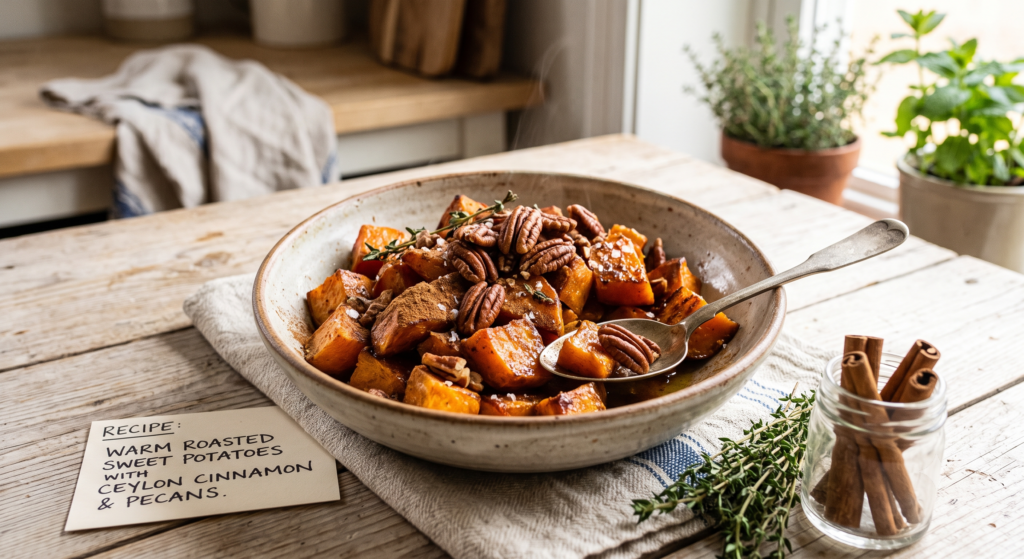
🌿 Ingredients (Serves 4)
- 2 large Organic sweet potatoes or Japanese purple yams (scrubbed clean and cut into 3/4-inch cubes)
- 2 tbsp Extra virgin olive oil or melted ghee
- 1.5 tsp Organic Ceylon cinnamon
- 1/2 tsp Ground ginger
- 1/4 tsp Sea salt
- 1/3 cup Raw pecans, roughly chopped
- Optional: A drizzle of raw honey or a pinch of fresh thyme for serving
🥣 Step-by-Step Instructions
- Prep & Preheat: Preheat your oven to 400°F (200°C). Line a large baking sheet with parchment paper.
- Spice & Coat: In a large bowl, toss the sweet potato cubes with olive oil (or ghee), Ceylon cinnamon, ground ginger, and sea salt until every piece is evenly coated.
- Roast: Spread the sweet potatoes in a single layer on the baking sheet. Roast for 25 minutes, tossing once halfway through.
- Add Pecans: Scatter the chopped pecans over the sweet potatoes and roast for an additional 5 minutes until the nuts are fragrant and the potatoes are fork-tender with caramelized edges.
- Serve: Transfer to a warm platter. Garnish with a light pinch of extra cinnamon or fresh thyme leaves, and enjoy warm!
Longevity Tip: The Daily Cinnamon Habit
You don’t need large amounts to experience cinnamon’s benefits—just 1/2 to 1 teaspoon a day is enough to support healthy blood sugar balance. Stir it into your morning warm oatmeal, whisk it into herbal teas, or sprinkle it over roasted root vegetables and squash for an effortless daily boost.
How do you like to use cinnamon in your kitchen? Do you prefer it in warm morning drinks or savory roasted dishes? Share your ideas in the comments below!
-
Citrus Vitality: Roasted Salmon with Citrus Glaze & Fennel Salad
At DAYLONGLIFE, we love turning everyday kitchen staples into vibrant remedies for longevity. Among nature’s brightest gifts, oranges stand out as a premier superfood.
While many enjoy oranges merely as a quick breakfast snack or a glass of morning juice, incorporating whole citrus into cooked, anti-inflammatory meals unlocks incredible cellular and cardiovascular benefits.
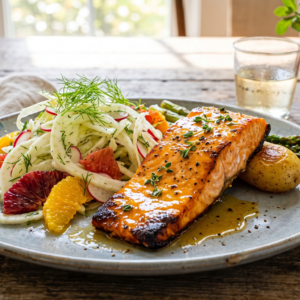
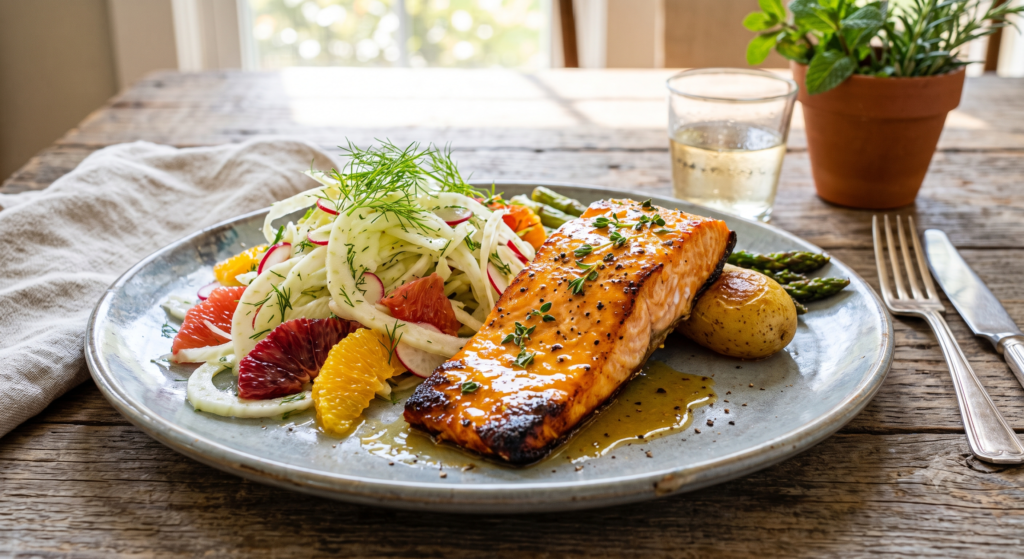
Today, we are showcasing whole oranges as a star ingredient in The Longevity Kitchen with a Mediterranean-inspired recipe: Pan-Seared Salmon with Citrus Glaze & Fresh Orange-Fennel Salad.
Why Oranges are a Longevity Powerhouse
Oranges offer far more than just a sweet, refreshing burst of flavor. When consumed as whole fruit or fresh zest and juice, their longevity benefits shine:
- Cellular Defense (Vitamin C & Hesperidin): Packed with Vitamin C, oranges shield cells from oxidative stress and support collagen synthesis for healthy skin and flexible joints. They also contain hesperidin, a citrus bioflavonoid that helps lower blood pressure and protect blood vessel walls.
- Heart & Vascular Health: The soluble fiber (pectin) found in oranges supports healthy cholesterol levels, while potassium regulates fluid balance and heart rhythm.
- Enhanced Nutrient Absorption: The natural citric acid and Vitamin C in oranges boost your body’s ability to absorb iron from greens, legumes, and seeds, driving energy and cellular oxygenation.
Simple Recipe: Roasted Salmon with Citrus Glaze & Fennel Salad
This light, elegant dish marries warm, rich omega-3 fats with a crisp, antioxidant-dense citrus salad. It takes under 25 minutes to prepare and looks as stunning as it tastes.
🌿 Ingredients (Serves 2)
- 2 wild-caught Salmon fillets (or substitute with organic firm tofu or chickpeas)
- 2 medium Organic oranges (1 squeezed for juice & zest; 1 peeled and sliced into segments)
- 1 small Fresh fennel bulb, thinly shaved
- 1 tbsp Extra virgin olive oil
- 1 tsp Raw honey or maple syrup
- 1 clove Garlic, finely minced
- 1/2 tsp Ground turmeric
- A pinch of sea salt & freshly cracked black pepper
- Garnish: Fresh fennel fronds or fresh parsley
🥣 Step-by-Step Instructions
- Prepare the Citrus Glaze: In a small saucepan, combine the fresh juice and zest of 1 orange, minced garlic, honey, turmeric, sea salt, and black pepper. Simmer gently over low heat for 3 to 5 minutes until it reduces into a light, fragrant glaze.
- Sear the Salmon: Heat extra virgin olive oil in a skillet over medium heat. Season the salmon fillets with a pinch of salt and pepper. Place in the skillet skin-side down and cook for 4 minutes. Flip, brush generously with the warm orange glaze, and cook for another 3 to 4 minutes until cooked through and caramelised.
- Assemble the Salad: In a medium bowl, toss the thinly shaved fennel bulb, orange segments, and a drizzle of raw extra virgin olive oil together. Season with a touch of black pepper.
- Serve & Enjoy: Plate the glazed salmon alongside the crisp orange-fennel salad. Garnish with feathery fresh fennel fronds and enjoy immediately!
Longevity Tip: Don’t Waste the Zest!
The outer peel (zest) of an orange contains the highest concentration of citrus essential oils and anti-inflammatory flavonoids like nobiletin. Always scrub organic citrus clean and grate a touch of fresh zest over your cooked dishes, soups, or herbal teas before serving to double your antioxidant intake!
What is your favorite way to cook with fresh citrus? Do you prefer savory orange dishes or refreshing citrus salads? Share your ideas in the comments below!
-
The Ageless Mind: 6 Essential Brain Foods to Protect Memory and Boost Cognitive Vitality
What you put on your plate today directly shapes your memory, focus, and cognitive resilience tomorrow. At DAYLONGLIFE, our two favorite philosophies—The Longevity Kitchen and the Ageless Mind—meet at a powerful crossroads: nutritional neuroscience.
Your brain is the most energy-demanding organ in your body. While it accounts for only about 2% of your total body weight, it consumes roughly 20% of your daily energy and oxygen intake. Because of this high metabolic activity, your brain cells are especially vulnerable to oxidative stress and chronic inflammation—two primary drivers of cognitive decline and brain fog.
By incorporating nutrient-dense, anti-inflammatory “brain foods” into your daily routine, you can actively repair cellular damage, stimulate the growth of new neural connections (neuroplasticity), and keep your mind sharp at every stage of life.
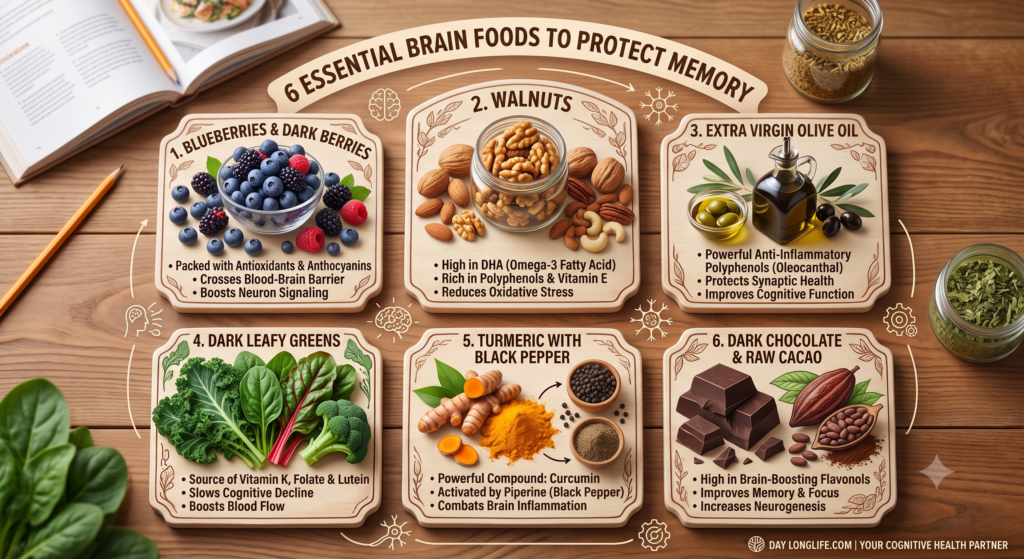
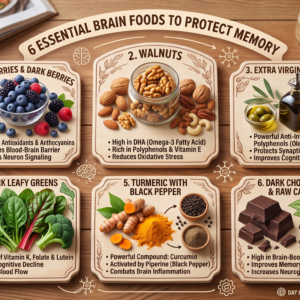
6 Powerful Brain Foods to Add to Your Pantry
You don’t need complex dietary supplements to nourish your nervous system. Nature has already packaged the essential compounds for brain longevity into vibrant, whole foods.
1. Blueberries & Dark Berries (The Antioxidant Powerhouses)
Berries are consistently ranked among the top foods for brain health, and for good reason.
- The Science: Dark berries are loaded with anthocyanins, a subclass of flavonoids with potent antioxidant and anti-inflammatory effects. These compounds cross the blood-brain barrier to neutralize free radicals and reduce neuroinflammation.
- The Benefit: Regular consumption of blueberries has been shown to improve communication between brain cells, increase brain plasticity, and delay age-related memory decline.
- How to Enjoy: Stir a handful of fresh or frozen blueberries into your morning warm oatmeal or enjoy them as a simple afternoon snack.
2. Walnuts (The Plant-Based Omega-3 Shield)
It is no coincidence that a walnut looks remarkably like a miniature human brain.
- The Science: Walnuts are exceptionally high in alpha-linolenic acid (ALA), a plant-based omega-3 fatty acid, along with polyphenols and vitamin E. Omega-3s are critical building blocks for brain cell membranes.
- The Benefit: They help lower blood pressure, protect arteries, and reduce oxidative stress in the brain, which supports faster information processing and improved memory retention.
- How to Enjoy: Sprinkle a small handful of toasted walnuts over roasted root vegetables or leafy green salads for a satisfying crunch.
3. Dark Leafy Greens (The Cognitive Preservers)
Leafy greens are dietary staples in every Blue Zone across the globe, acting as daily armor against cognitive aging.
- The Science: Spinach, kale, Swiss chard, and collard greens are rich in brain-protecting nutrients, including vitamin K, lutein, folate, and beta-carotene.
- The Benefit: Research indicates that individuals who consume just one serving of leafy greens per day experience a slower rate of cognitive decline—their brain scans resemble those of people up to 11 years younger!
- How to Enjoy: Gently braise greens in olive oil and garlic, or stir fresh kale into your favorite slow-simmered soups and stews.
4. Turmeric with Black Pepper (The Neuro-Inflammation Soother)
This golden spice is a celebrated staple in both Ayurvedic medicine and modern longevity science.
- The Science: Curcumin, the active compound in turmeric, has been shown to boost Brain-Derived Neurotrophic Factor (BDNF)—a vital growth hormone that functions like “fertilizer” for your brain cells, encouraging new neurons to grow and thrive.
- The Benefit: Curcumin helps clear protein plaques associated with age-related cognitive decline while soothing systemic inflammation.
- How to Enjoy: Always pair turmeric with a pinch of black pepper (which boosts curcumin absorption by 2,000%) and a healthy fat like extra virgin olive oil or coconut milk.
5. Extra Virgin Olive Oil (The Mediterranean Elixir)
Healthy dietary fats are essential for cognitive longevity, and cold-pressed extra virgin olive oil reigns supreme.
- The Science: Packed with monounsaturated fats and powerful polyphenols like oleocanthal, extra virgin olive oil protects the vascular system that feeds the brain.
- The Benefit: It promotes autophagy—the brain’s natural cellular cleanup process that breaks down and clears out damaged cell debris and toxins before they accumulate.
- How to Enjoy: Use it generously as a finishing oil, drizzling it raw over warm soups, roasted carrots, and fresh tomato salads just before serving.
6. Dark Chocolate & Raw Cacao (The Focus Enhancer)
Nourishing your brain should feel indulgent, and dark chocolate is proof that healthy eating can be deeply satisfying.
- The Science: High-percentage dark chocolate (70% cocoa or higher) and raw cacao are packed with brain-boosting flavanols, caffeine, and antioxidants.
- The Benefit: Cacao flavonoids gather in the areas of the brain responsible for learning and memory. They increase cerebral blood flow, enhance focus, and provide a gentle, sustained mood lift by stimulating endorphin and serotonin production.
- How to Enjoy: Savor one or two squares of 80% dark chocolate alongside your afternoon cup of herbal tea.
Building a Brain-Boosting Daily Plate
You don’t have to overhaul your entire diet overnight to see benefits in your mental clarity. Start by making simple, delicious swaps that build cumulative resilience over time:
- Swap your cooking oil: Reach for extra virgin olive oil instead of refined vegetable oils.
- Add color to your breakfast: Throw half a cup of dark berries onto your morning porridge or toast.
- Upgrade your snacks: Keep a jar of raw walnuts or almonds on your kitchen counter instead of processed crackers.
- Spice generously: Add a daily dash of golden turmeric and black pepper to your soups, roasted vegetables, and grains.
Nourishing an ageless mind begins in the kitchen. When you feed your body with real, antioxidant-rich, anti-inflammatory whole foods, you are actively investing in a clearer, sharper, and more vibrant future.
What is your favorite “brain food” to cook with at home? Have you ever noticed a shift in your mental clarity after eating a clean, nutrient-dense meal? Share your experience in the comments below!
-
The Mindful Shower: Transforming a Daily Habit into an Everyday Wellness Ritual
At DAYLONGLIFE, we believe that true longevity isn’t built solely through grand lifestyle overhauls. It is woven into the quiet, repetitive micro-habits of your day.
Taking a daily shower is often treated as a rushed item on a morning checklist or a mindless task before bed. But when approached with intention, your daily shower can become a powerful hydrotherapy ritual—a sacred space to wash away stress, regulate your nervous system, and awaken your senses.

Here is how you can transform your daily shower from a routine chore into a restorative wellness experience for body and mind.
The Physical & Mental Benefits of Mindful Hydrotherapy
Water has been used as a therapeutic tool for centuries across cultures—from ancient Roman baths to traditional Japanese onsen. Adjusting your daily shower routine brings measurable benefits:
- Nervous System Reset: Switching between warm and cool water temperatures stimulates the vagus nerve, helping transition your body from high-alert stress into a calm, centered state.
- Enhanced Circulation: Warm water expands blood vessels (vasodilation) to soothe sore muscles, while a cool finish constricts them, driving oxygenated blood to your vital organs.
- Sensory Grounding: The tactile sensation of flowing water acts as a physical “circuit breaker” for overthinking, pulling your focus back into the present physical moment.
4 Ways to Elevate Your Daily Shower Ritual
1. The Power of Contrast Hydration (Warm to Cool Finish)
Instead of staying at a single warm temperature, end your shower with a deliberate temperature shift.
- How to do it: Enjoy your warm, cleansing shower as usual. During the final 30 to 60 seconds, gradually turn the tap to cool or cold water. Focus on taking steady, deep breaths.
- Why it works: Cold water triggers a brief releasing of endorphins, boosts circulation, tightens skin pores, and leaves you feeling crisp and mentally sharp without caffeine jitters.
2. Aromatherapy Shower Steams
Bring the calming essence of a spa into your home bathroom using the power of natural essential oils.
- How to do it: Before stepping into the water, sprinkle a few drops of Eucalyptus, Lavender, or Peppermint essential oil directly onto the shower floor or a damp washcloth placed away from the direct stream of water.
- Why it works: As the hot steam rises, it diffuses the essential oils. Inhaling eucalyptus opens up respiratory pathways and clears morning sinuses, while lavender calms evening anxiety.
3. Mindful Washing & Sensory Presence
It is easy to spend your shower mentally rehearsing your work day or replaying past conversations. Practice bringing your full awareness to the physical experience.
- How to do it: Notice the temperature of the water against your skin, the sound of the droplets, and the gentle scent of your soap. As you rinse off, visualize washing away mental fatigue, physical tension, and the stress of the day.
4. Post-Shower Nourishment: Locking in Moisture
Wellness doesn’t stop the moment you turn off the tap. The minutes right after your shower are the most critical for skin health.
- How to do it: Gently pat—don’t rub—your skin dry with a soft towel, leaving it slightly damp. Immediately apply a warm natural body oil (such as organic sesame, jojoba, or almond oil) or a rich moisturizer.
- Why it works: Applying oil or moisturizer to damp skin locks in hydration, supports your skin’s natural barrier, and acts as a comforting self-care ritual (inspired by Ayurvedic Abhyanga).
Wash Away the Day, Welcome Vitality
Your daily shower is one of the few moments in a busy day where you are completely free from screens, notifications, and demands. Treat it as a daily sanctuary to reset your energy, honor your physical body, and step back out into the world refreshed.
Do you prefer invigorating morning showers or calming evening showers? Have you ever tried ending your shower with a cool splash? Share your daily routine in the comments below!
-
The Three Doshas: Understanding Vata, Pitta, and Kapha for Personalized Longevity
At DAYLONGLIFE, we often highlight that true wellness is never a one-size-fits-all formula. What energizes one person might exhaust another, and a diet that cools one body might dampen the digestive fire of another.
This personalized approach to health sits at the heart of Ayurveda, where optimal vitality is achieved by understanding your unique mind-body constitution, known as your Prakriti, governed by three elemental energies called Doshas: Vata, Pitta, and Kapha.
By learning which dosha dominates your system, you can tailor your daily meals, stress-reduction practices, and self-care rituals for lasting balance and graceful aging.
What Are the Three Doshas?

In Ayurvedic philosophy, the universe—and everything within it—is composed of five basic elements: Space, Air, Fire, Water, and Earth. In the human body, these elements combine into three primary physiological energies:
- Vata (Space + Air): The energy of Movement
- Pitta (Fire + Water): The energy of Transformation & Metabolism
- Kapha (Water + Earth): The energy of Structure & Lubrication
Everyone possesses all three doshas, but most of us have one or two that are naturally more dominant. When these energies are in harmony, we feel energetic and clear-minded. When they fall out of balance due to stress, poor diet, or seasonal shifts, discomfort and fatigue arise.
🌬️ 1. Vata Dosha: The Energy of Movement
- Elements: Air & Space
- Qualities: Light, dry, cool, quick, mobile, and subtle
- In Balance: Creative, enthusiastic, quick-learning, flexible, and energetic.
- Out of Balance: Anxiety, racing thoughts, dry skin, cold hands/feet, bloating, and irregular digestion.
How to Balance Vata:
Since Vata is naturally cold, dry, and erratic, it thrives on warmth, routine, and grounding.
- Nutrition: Eat warm, cooked, nourishing foods like hearty root vegetable soups, stews, and whole grains with healthy fats (like extra virgin olive oil or ghee). Avoid cold, raw salads and icy drinks.
- Lifestyle: Establish a consistent daily routine (Dinacharya). Practice daily self-massage (Abhyanga) with warm sesame oil to ground the nervous system.
🔥 2. Pitta Dosha: The Energy of Transformation
- Elements: Fire & Water
- Qualities: Hot, sharp, light, oily, and intense
- In Balance: Sharp intellect, strong digestion, focused, courageous, and direct.
- Out of Balance: Irritability, anger, hyperacidity, skin rashes/inflammation, and burnout.
How to Balance Pitta:
Since Pitta is hot and intense, it benefits most from cooling, soothing, and moderation.
- Nutrition: Choose cooling, naturally sweet, and bitter foods like leafy greens, cucumber, sweet fruits, and coconut oil. Limit spicy, sour, fried, or overly salty foods.
- Lifestyle: Avoid overworking or harsh midday sun. Incorporate calm, non-competitive activities like evening walks, gentle yoga, and soothing herbal teas (such as peppermint or chamomile).
🌊 3. Kapha Dosha: The Energy of Structure
- Elements: Water & Earth
- Qualities: Heavy, slow, cool, oily, smooth, and stable
- In Balance: Calm, loving, patient, grounded, with strong stamina and immunity.
- Out of Balance: Lethargy, weight gain, sinus congestion, attachment, and resistance to change.
How to Balance Kapha:
Since Kapha is heavy, cold, and static, it needs stimulation, warmth, and movement.
- Nutrition: Favor light, warm, and well-spiced foods. Incorporate pungent and bitter flavors like fresh ginger, black pepper, turmeric, and steamed green vegetables. Minimize heavy dairy, sugar, and oily dishes.
- Lifestyle: Stay active with vigorous daily exercise. Seek out new experiences, awaken early (before 6:00 AM), and avoid daytime naps to keep energy flowing freely.
Bringing Dosha Awareness into Your Daily Routine
Discovering your dominant dosha isn’t about putting yourself in a rigid box—it is a compassionate tool for self-awareness. When you notice subtle signs of imbalance (like Vata restlessness on a windy autumn day or Pitta irritability during a hot summer afternoon), you can gently adjust your meals, teas, and rest to restore equilibrium.
Living long and well begins by listening to what your body is asking for in this present moment.
Which dosha qualities (Vata airiness, Pitta intensity, or Kapha grounding) do you feel most strongly in your life right now? Share your thoughts in the comments below!
-
DAYLONGLIFE.COM
Healthy Cooking. Ageless Mind. Everyday Wellness.
🌿 Welcome to Day Long Life
“Longevity is not about chasing eternal youth; it is about nourishing every single day with purpose, vitality, and peace.”
At DAYLONGLIFE, we believe that living a long, vibrant life is built through simple, intentional choices made right in your home. From anti-inflammatory dishes simmered in your kitchen to quiet daily rituals that soothe the nervous system, we provide timeless, sustainable guidance to help you walk gracefully alongside the passage of time.
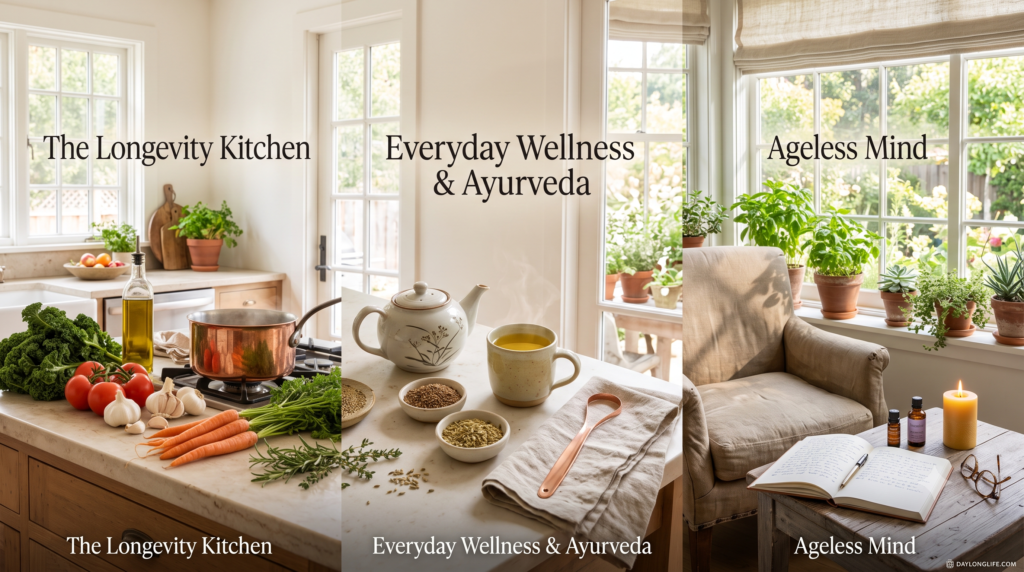
🏛️ Explore Our Core Pillars
1. 🍲 The Longevity Kitchen
Discover the power of Blue Zone cooking, anti-inflammatory recipes, and wholesome ingredients that turn healthy eating into a daily celebration.
- Blue Zone & Mediterranean Cooking: Wholesome, plant-forward dishes inspired by the world’s longest-living communities.
- Anti-Inflammatory Staples: Recipes rich in extra virgin olive oil, golden turmeric, fresh herbs, and gut-nourishing roots.
- Gentle Digestion: Learn why cooked greens, warm spices, and slow-simmered soups nourish your digestive fire (Agni).
👉 [Explore The Longevity Kitchen Recipes →]
2. 🧠 Ageless Mind
Protect your cognitive clarity, cultivate emotional resilience, and build a stress-resistant brain for life.
- Neuroscience & Stress Reduction: How daily breathwork, grounding rituals, and mindfulness protect your brain structure.
- Affirmations & Intentionality: Harnessing neuroplasticity to rewire self-talk, boost focus, and foster inner calm.
- Mindful Sabbaticals: Simple habits to clear brain fog, prevent mental fatigue, and restore creativity.
👉 [Read Ageless Mind Articles →]
3. ☀️ Everyday Wellness & Ayurvedic Health
Micro-wellness rituals and ancient Ayurvedic principles designed to bring balance into your modern routine.
- The Art of Hydration: Why warm water, morning sunlight, and mineral elixirs transform cellular vitality.
- Ayurvedic Morning Detox (Jihva Prakshalana): Cleansing overnight metabolic waste (Ama) with gentle tongue scraping to wake up digestion and taste buds.
- Whole-Spice Elixirs: Time-tested herbal tea blends (like CCF tea) and daily natural rhythms (Dinacharya) for dynamic energy.
👉 [Discover Everyday Wellness Habits →]
👉 [Discover Ayurvedic Health tips →]
🌟 Featured Stories & Recipes
🍵 Ayurveda Wellness Tea 🍅 Tuscan Tomato Elixir 🧘 Neuroplasticity & Calm An introduction to brewing whole cumin, coriander, and fennel seeds to awaken digestion. Why slow-cooked tomatoes and olive oil boost lycopene absorption by 300%. 7 daily affirmations and breathwork practices to lower cortisol and keep the brain sharp. 💌 Join The Day Long Life Community
Receive weekly anti-inflammatory recipes, mindful longevity practices, and peaceful wellness inspiration delivered gently to your inbox.
No spam, no fad diets—just honest, nourishing guidance for a vibrant life.
💬 What Our Readers Say
“DAYLONGLIFE reminded me that healthy living doesn’t need to be complicated or restrictive. The pumpkin soup and CCF tea have become non-negotiable parts of my weekly routine!”
— Sarah M.
© DAYLONGLIFE.COM | Nourishing Body, Mind & Spirit for a Lifetime.
-
Red Gold: Slow-Simmered Tuscan Tomato & Herb Elixir
At DAYLONGLIFE, if there is one ingredient that embodies the warmth, flavor, and longevity of the Mediterranean coast, it is the humble tomato.
In Blue Zone regions like Sardinia, Italy, and Ikaria, Greece, tomatoes aren’t just an afterthought—they are a daily dietary cornerstone. Whether slow-roasted, simmered into fragrant sauces, or drizzled with extra virgin olive oil, tomatoes form the heart of anti-inflammatory cooking.
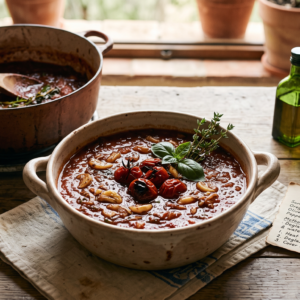
Today, we are sharing a classic Longevity Kitchen staple: Slow-Simmered Tuscan Tomato, Garlic & Herb Elixir. It is rich, velvety, deeply satisfying, and designed to unlock maximum cellular protection.
Why Tomatoes are a Longevity Superfood
While raw tomatoes are refreshing, cooking tomatoes with healthy fats turns them into a true medicinal power food:
- Lycopene Bioavailability: Tomatoes are famous for lycopene, a potent antioxidant that supports cardiovascular health, protects skin against UV damage, and reduces systemic inflammation. Cooking tomatoes in extra virgin olive oil boosts lycopene absorption by up to 300%!
- Heart & Vascular Support: High in potassium and Vitamin C, tomatoes help regulate blood pressure and protect arterial walls from oxidative stress.
- Synergistic Flavor & Health: When paired with garlic, onion, and fresh herbs like basil and oregano, cooked tomatoes create a rich prebiotic sauce that feeds beneficial gut microbes.
Simple Recipe: Slow-Simmered Tuscan Tomato & Herb Elixir
This versatile sauce can be served as a warm, comforting soup, spooned over ancient grains (like quinoa or farro), or used as a rich base for legumes and poached eggs.
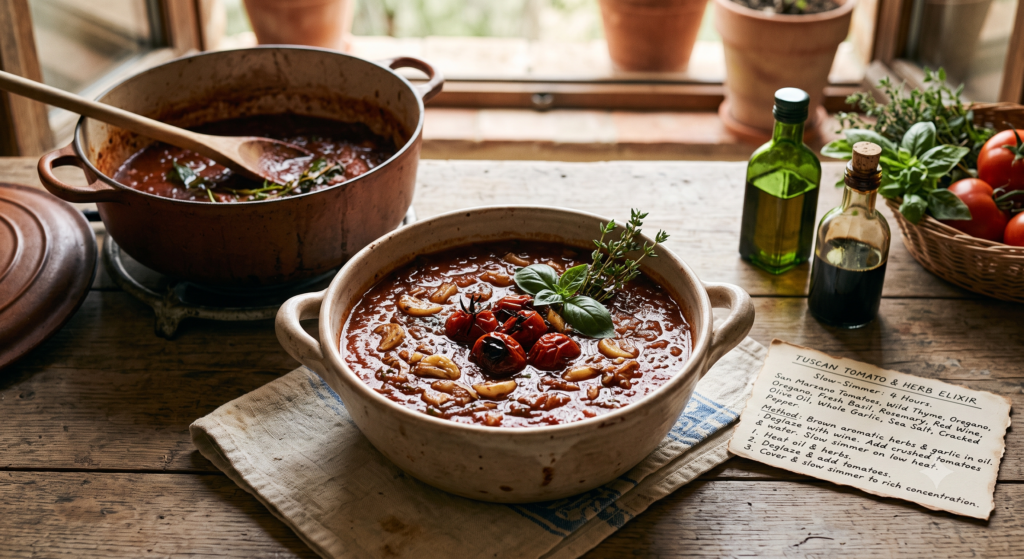
🌿 Ingredients (Serves 4)
- 2.5 lbs (1.1 kg) Ripe vine tomatoes (or 2 cans / 28 oz each of organic San Marzano whole peeled tomatoes)
- 3.5 tbsp High-quality extra virgin olive oil
- 1 medium Yellow onion, finely diced
- 5 cloves Garlic, thinly sliced
- 1 tsp Dried oregano or fresh thyme
- 1 cup Fresh basil leaves, roughly torn
- 1 pinch Sea salt and freshly cracked black pepper
- Optional: A tiny pinch of red pepper flakes for warmth, and toasted sourdough bread for serving
🥣 Step-by-Step Instructions
- Prep the Tomatoes: If using fresh tomatoes, blanch them in boiling water for 60 seconds, peel the skins, and coarsely chop the pulp. If using canned San Marzano tomatoes, crush them gently by hand in a bowl.
- Sauté the Aromatics: In a heavy-bottomed Dutch oven or deep skillet, heat the extra virgin olive oil over medium-low heat. Add the diced onion and garlic slices. Cook slowly for 8 to 10 minutes until soft, sweet, and translucent (do not let the garlic brown!).
- Add Herbs & Tomatoes: Stir in the dried oregano, a pinch of red pepper flakes, sea salt, and black pepper. Pour in the crushed tomatoes and their juices, stirring well to combine with the fragrant olive oil.
- Slow Simmer: Reduce the heat to the lowest setting, cover partially with a lid, and let it simmer gently for 30 to 40 minutes. Stir occasionally until the sauce turns deep red, glossy, and thick.
- Finish with Fresh Basil: Remove from heat and stir in the fresh torn basil leaves. Drizzle an extra tablespoon of raw extra virgin olive oil over the top before serving.
Longevity Tip: The Power of Olive Oil & Time
Never rush a tomato sauce! The slow, low-heat cooking process breaks down tough plant cell walls, allowing the fat-soluble lycopene to bond with the healthy monounsaturated fats in the extra virgin olive oil. This simple culinary synergy is one of the greatest secrets to Mediterranean vitality.
How do you like to cook tomatoes at home? Do you prefer a quick fresh sauce or a slow-simmered Tuscan stew? Share your favorite tomato recipes in the comments below!
-
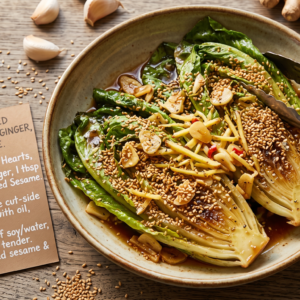
Crisp Vitality: Braised Lettuce with Garlic, Ginger & Sesame
At DAYLONGLIFE, we often think of lettuce merely as a cold, crunchy base for raw salads. But in traditional longevity cultures—especially in Mediterranean and Asian culinary traditions—lettuce is frequently cooked.
Gentle heating transforms humble greens, breaking down tough plant fibers while preserving delicate vitamins and creating a warm, comforting side dish that is remarkably easy on the digestive system.
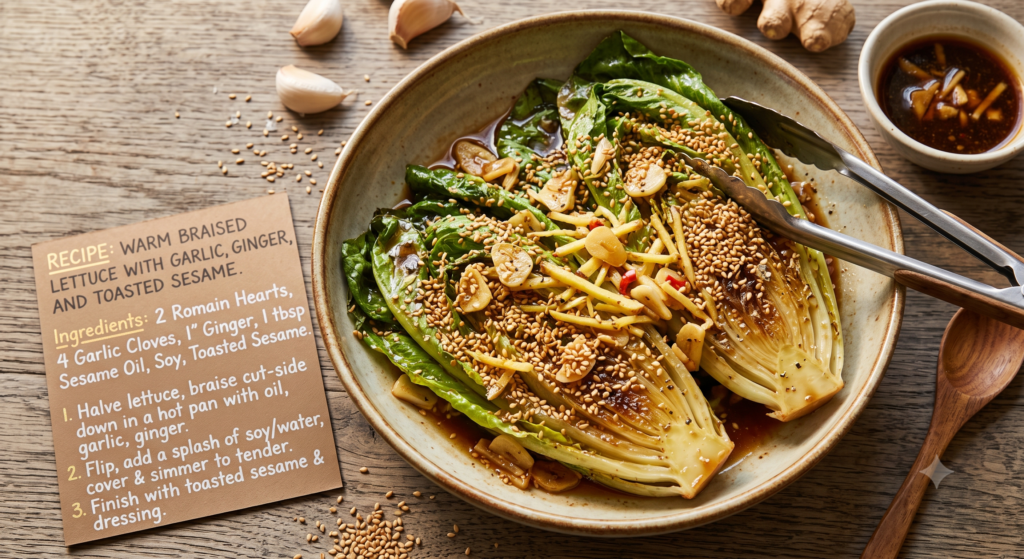
Today, we are showcasing cooked lettuce as a hero ingredient in The Longevity Kitchen with a simple, anti-inflammatory recipe: Warm Braised Lettuce with Garlic, Ginger, and Toasted Sesame.
Why Cooked Lettuce Belongs in a Longevity Diet
Lettuce—particularly dark leafy varieties like Romaine, butterhead, or Little Gem—is an understated power vegetable loaded with vital nutrients:
- Heart-Healthy Folate & Vitamin K: Darker lettuces are rich in Vitamin K, which supports bone density and arterial health, as well as folate, an essential B-vitamin for cellular repair and DNA synthesis.
- Gentle on Digestive Fire: While raw salads can sometimes cause bloating or digestive strain (especially for sensitive gut types or during cooler seasons), gently braising or stir-frying lettuce wilts the greens, making their fiber much easier to digest while keeping nutrient absorption high.
- Hydration & Antioxidants: Lettuce has a very high water content combined with polyphenols and quercetin, helping to hydrate cells from within and soothe systemic inflammation.
Simple Recipe: Warm Braised Romaine with Ginger & Garlic
This quick 10-minute dish brings out a mild, buttery sweetness in lettuce, elevated by warming aromatics and healthy fats.
🌿 Ingredients (Serves 2–3)
- 2 heads Fresh Romaine or Little Gem lettuce (washed, dried thoroughly, and sliced lengthwise into halves or quarters)
- 1.5 tbsp Extra virgin olive oil or toasted sesame oil
- 2 cloves Garlic, thinly sliced
- 1 tsp Fresh ginger, julienned or finely grated
- 1.5 tbsp Low-sodium tamari or coconut aminos
- 1 tsp Toasted sesame seeds
- Optional: A light drizzle of raw honey or maple syrup, and a pinch of chili flakes for mild heat
🥣 Step-by-Step Instructions
- Prep the Greens: Trim the base of the lettuce heads, leaving enough stem so the leaves stay intact when cut lengthwise into halves or quarters.
- Warm the Aromatics: Heat the olive oil (or sesame oil) in a wide skillet over medium heat. Add the sliced garlic and ginger, sautéing gently for 30 to 45 seconds until fragrant without burning.
- Sear the Lettuce: Place the lettuce quarters cut-side down in the pan in a single layer. Press down gently with tongs and let them sear undisturbed for 2 minutes until lightly golden and caramelized.
- Glaze & Wilt: Turn the lettuce pieces over. Drizzle the tamari (or coconut aminos) directly over the lettuce. Cover the skillet with a lid and let it steam/braise for 1 to 2 minutes until the leaves are slightly wilted but still retain a bright green color and crisp center.
- Garnish & Serve: Transfer the warm lettuce to a serving platter, pour the garlic-ginger oil juices from the pan over top, and sprinkle generously with toasted sesame seeds.
Longevity Tip: The Art of Light Cooking
The key to cooking lettuce for maximum health benefits is speed. A quick sear or light steam preserves heat-sensitive antioxidants like Vitamin C while softening insoluble fiber.
Pairing warm greens with healthy fats (like sesame oil or extra virgin olive oil) ensures that fat-soluble vitamins (A and K) are easily absorbed by your body!
Have you ever tried cooking or braising lettuce instead of eating it raw? What is your favorite warm leafy green side dish? Share your thoughts in the comments below!
-
The Ageless Mind: Harnessing the Power of Daily Affirmations for Cognitive Vitality
At DAYLONGLIFE, we often talk about how the food on our plates and the water in our mugs shape our health. But there is another vital input that influences your nervous system, stress levels, and brain longevity every single day: your inner dialogue.
An “ageless mind” isn’t just maintained through crosswords, nutritious meals, or proper sleep. It is actively shaped by the thoughts you repeat. In modern neuroscience, this concept is backed by neuroplasticity—the brain’s remarkable ability to reorganize itself, form new neural connections, and adapt throughout your entire life.
By practicing positive, intentional affirmations, you can rewire automatic thought patterns, calm chronic stress response, and cultivate mental sharpness and emotional resilience.
The Science: How Affirmations Protect Your Brain
When you experience stress, self-doubt, or anxiety about aging, your brain releases cortisol and adrenaline. Over time, chronic exposure to these stress hormones causes neuroinflammation and impairs memory processing in the hippocampus.
Positive affirmations act as a mental pause button:
- Interrupts Fight-or-Flight: Repeating calming, empowering phrases shifts your nervous system from sympathetic (stress) to parasympathetic (rest and repair) mode.
- Strengthens Neural Pathways: Just as physical exercise strengthens muscles, repeating constructive thoughts reinforces adaptive pathways in your prefrontal cortex—the center for decision-making, focus, and emotional regulation.
- Enhances Self-Efficacy: Research shows that self-affirmation activates the brain’s reward centers, making you more resilient to daily setbacks and more likely to maintain healthy lifestyle choices.
7 Affirmations for an Ageless Mind
To get the most out of affirmations, pair them with deep breathing or a quiet morning ritual (like sipping warm herbal tea or journaling). Repeat each statement slowly, allowing your mind and body to fully feel its truth.
1. On Cognitive Vitality
“My mind is clear, adaptable, and constantly expanding with wisdom and curiosity.”
2. On Stress Release & Calm
“I release what I cannot control and welcome peace into my nervous system.”
3. On Graceful Aging
“Every year adds depth, strength, and vitality to my mind and body.”
4. On Focus & Mental Clarity
“I nourish my brain with rest, presence, and calm intention.”
5. On Resilience & Health
“My body knows how to heal, balance, and thrive at every stage of life.”
6. On Mindfulness & Being Present
“I am grounded in this moment, free from the burdens of yesterday and tomorrow.”
7. On Gratitude & Vitality
“I am grateful for the vitality flowing through my mind, body, and spirit today.”
How to Integrate Affirmations into Your Daily Routine
- Morning Light Anchor: Speak 2 or 3 affirmations aloud while standing near a sunlit window or sipping your morning water.
- Post-Meditation / Breathwork: Repeat your chosen affirmation right after a 4-7-8 breathing session when your brain is in a receptive, calm state.
- Sticky Note Reminders: Write one statement on a card and place it on your desk, bathroom mirror, or kitchen counter as a gentle reminder throughout the afternoon.
Cultivating Mental Longevity Every Day
Your thoughts are the soundtrack to your life. Choosing self-compassion, clarity, and calm isn’t just positive thinking—it is active, loving care for your brain’s long-term vitality.
Which affirmation resonated with you most today? Do you have a personal daily mantra that keeps your mind clear and calm? Share it in the comments below!